The country's top drug advisory authority has proposed making it mandatory for all licensed blood centres to register on the e-RaktKosh portal to improve blood safety and accessibility to quality blood for patients. It has also recommended compulsory participation in EQAS (External Quality Assessment Schemes), a quality-control system which assesses if blood banks are performing blood tests accurately and consistently.
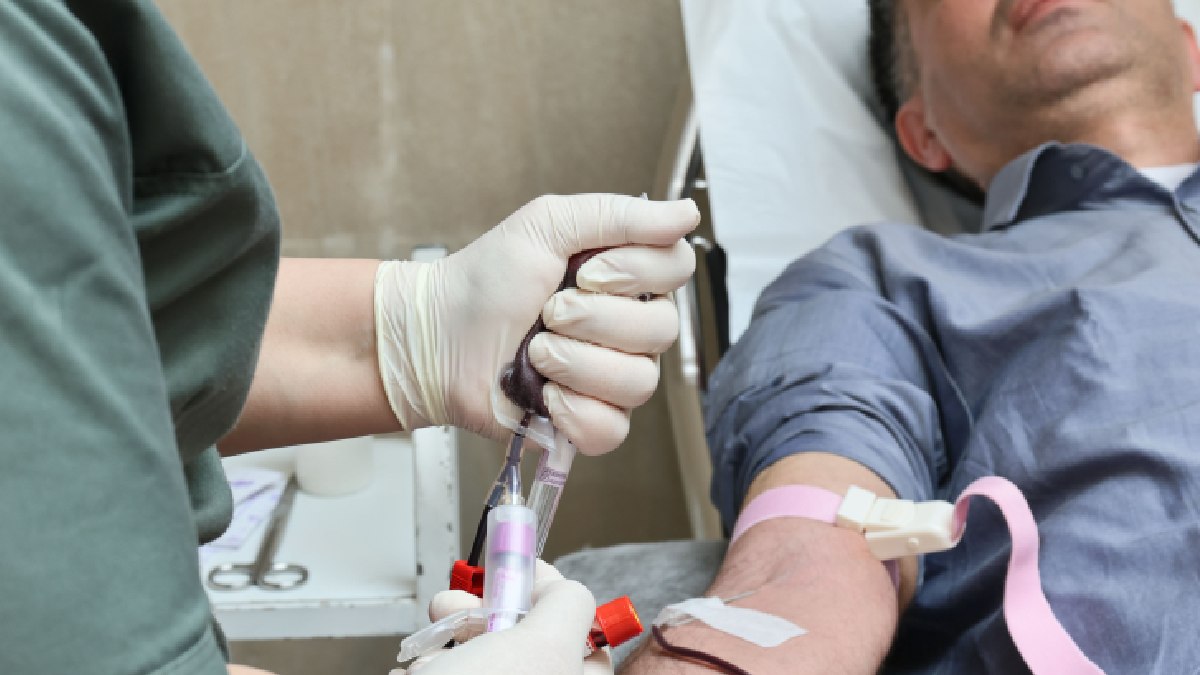
The proposal will be discussed by the Drugs Consultative Committee (DCC) and will help to improve transparency, accountability and standardisation in India’s blood banking system, with thousands of patients being served on regular blood transfusions due to thalassemia, sickle cell anaemia, cancer and other blood diseases.
Why the Proposal Is Important
The most challenging thing for patients with frequent blood transfusions is not the transfusion itself, but to ensure that safe and properly screened blood is available when they are needed.
Currently, participation in external quality assessment schemes is encouraged but not legally mandatory. EQAS participation is only recommended and thus not legally binding according to existing statutory provisions, the DCC said in its meeting minutes.
To fill this gap, the committee recommended making necessary amendments to the Drugs Rules so that registration of all licensed blood centres on the e-RaktKosh portal becomes mandatory rather than voluntary.
If implemented, the move would create a complete digital database of blood centres across the country for better monitoring of blood availability, inventory management and quality standards.
Mandatory Quality Checks and Biometric Verification
The DCC also recommended the formation of a sub-committee to work out the operational framework for mandatory EQAS implementation.
Also, the panel recommended studying biometric authentication of blood donors at blood centres and donation camps.
With biometric identifiers like fingerprints, donors could be verified using this method to avoid duplicate registration, fraudulent donations and identity-related issues.
The committee also stressed the need for timely processing of blood centre licence renewals, saying that delays in renewing licences have occasionally disrupted blood supply in different regions.
Benefits for Patients and Hospitals
Medical experts believe the recommendations will enhance the efficiency of India's blood banking network.
Dr. Gaurav Dixit, Head of Haematology, Oncology and Bone Marrow Transplant at Artemis Hospital, said e-RaktKosh was an important initiative which would benefit patients and healthcare providers.
In emergencies, the digital platform will help patients locate available blood and help hospitals to better manage rare blood groups and improve blood inventory at different facilities.
He also said that better digital tracking would help the quality of blood products overall if the platform is able to reach its full potential.
Patient Groups Seek Broader Reforms
But patient advocacy groups are very happy with the proposal, so further changes will need to be made.
Jharana Mallick, of the Sarvesham Mangalam Foundation (SMF), praised the move as “a step in the right direction” but also said more effective blood screening is also important.
Patients have repeatedly called for wider implementation of nucleic acid testing (NAT), an advanced screening method, to detect HIV, Hepatitis B and Hepatitis C much earlier than traditional testing methods.
Demand for a National Blood Law
Just weeks before the DCC meeting, the Sarvesham Mangalam Foundation sent a letter to the Union Health Minister J.P. Nadda and asked the government to introduce a national blood law.
The group says India still relies on the Drugs and Cosmetics Act, 1940, which was passed before Independence. It believes it is not sufficient to regulate modern blood safety standards.
The foundation also mentioned a December 2025 Jharkhand High Court order after six patients reportedly contracted HIV through contaminated blood transfusions. This was a tragic case of the need for better oversight and stronger legal provisions, to ensure blood safety across the country.
Towards a Safer Blood Banking System
If the DCC’s recommendations are accepted and incorporated into the Drugs Rules, India’s blood banking system could undergo one of its most significant regulatory reforms in recent years.
The e-RaktKosh mandatory registration requirement, legally enforceable quality checks, biometric donor verification and better licensing procedures can also help in improving transparency, reducing errors and enhancing patient safety.
For the millions of Indians who depend on regular blood transfusions to survive, these reforms could give confidence that the blood they receive is not only available but also safe, well tested, and traceable.