In an inspiring example of community service and compassion, Gram Vikas Sanstha, Dharwad, has launched a free food distribution programme for students and underprivileged people with a mobile food service in Dharwad, where a group of students and underprivileged people now have access to meals every week. It has become a beacon of hope to those who are hungry and who are preparing for exams and economically weaker sections of society; students preparing for competitive exams and lower strata of society.
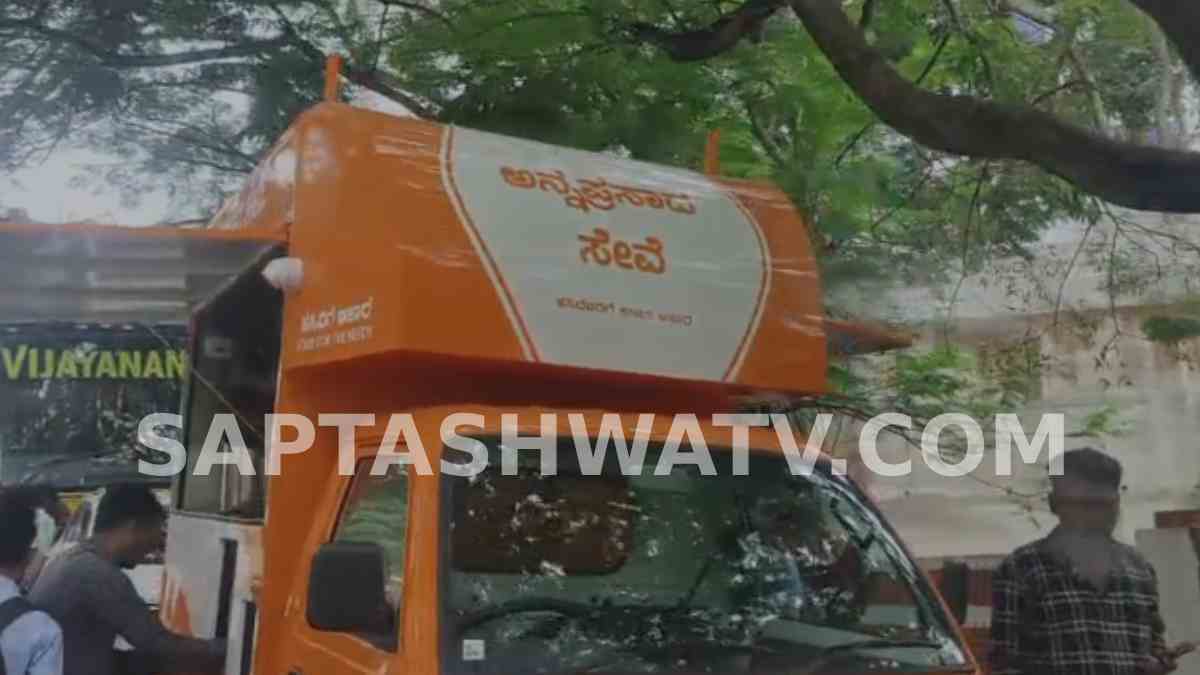
Each week, the organisation parks its food service vehicle close to Central Library Road in Dharwad, which is populated by hundreds of students and job aspirants. The service is designed to ensure that no one studying or working hard to build a better future has to remain hungry because of financial hardships.
The programme has been well received by residents, students, and social activists for its dedication to addressing hunger with dignity and consistency. Rather than expecting beneficiaries to go to a particular place that they are expected to go, Gram Vikas Sanstha employs a mobile outreach model so food can be easily accessed by those who need it the most.
The meals are free of charge and are distributed without discrimination based on the organisation’s belief that food is a basic human need. In addition to students, daily wage workers, senior citizens, homeless people, and other needy people also benefit from the initiative. Volunteers of the organisation help ensure that the food is served in a manner that is organised, hygienic, and respectful.
Members of the organisation stated that the main objective is to support students who spend long hours at the Central Library preparing for competitive examinations and higher education. Many of these students have come from poor and rural backgrounds, and the meals will be an important part of their educational experience.
It also serves as a reminder of the vital role that non-governmental organisations and community groups play in addressing social problems. Government welfare schemes are, of course, important to the community, but local organisations often bridge key gaps with quick responses to community needs.
Volunteers have been the backbone of this programme and every week contribute their time, effort, and resources. Their dedication demonstrates how collective action can create meaningful change in society. Well-wishers and donors have also provided financial and material support so that the service is not interrupted.
Not only is food distribution important, but it is also an initiative based on empathy and social responsibility. It teaches people about the suffering of others and inspires them to do more in their community to fight hunger.
Food insecurity continues to hurt the most vulnerable communities, including students living away from home and low-wage workers, so programmes like this provide immediate relief and hope. The consistency of the weekly service has built trust among beneficiaries who have been relying on it as a source of nourishment.
Gram Vikas Sanstha is a shining example of grassroots humanitarian work. By ensuring that students can focus on their education without worrying about their next meal and by supporting those facing economic hardship, the organisation continues to make a meaningful impact on countless lives in Dharwad.
The initiative makes an important point— for an ordinary person with a good heart and compassion, even a simple meal can change a person’s life, strengthen communities, and motivate others to serve humanity.