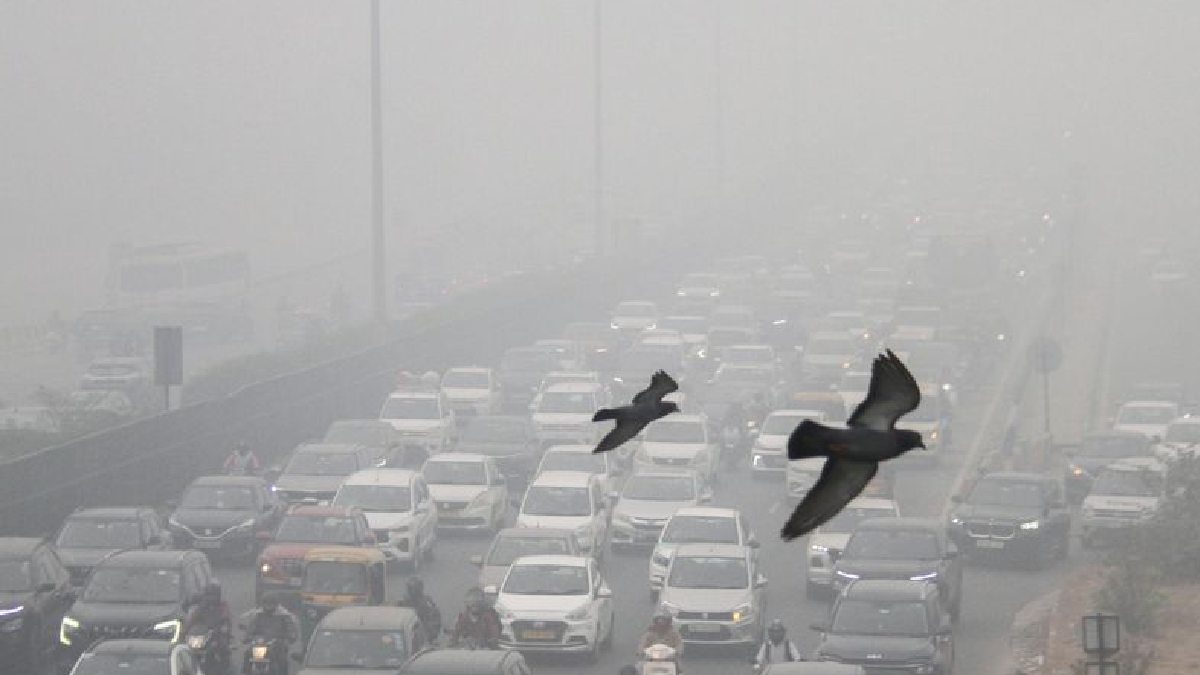
New Delhi: Gurugram has emerged as the most polluted city in Haryana, recording 458 days of poor, very poor, or severe air quality between 2023 and 2025, according to data presented by the Central Government in Lok Sabha.
The figures were released by the Ministry of Environment, Forest and Climate Change in response to a question in Parliament. Gurugram’s air pollution remains a challenge despite several measures taken to clean it up in the National Capital Region (NCR).
Air quality is measured by the Air Quality Index (AQI), which defines air quality as good, satisfactory, moderate, poor, very poor or severe depending on the concentration of pollutants (PM2.5, PM10, nitrogen dioxide, sulphur dioxide, ozone and carbon monoxide). Poor and severe AQI levels can have serious health consequences in children, the elderly and those with respiratory or cardiovascular issues.
Gurugram recorded 458 days with poor or worse air quality during the three-year period, according to the government, making it the worst city in Haryana.
The city has long been plagued by pollution as a result of rapid urbanization, increasing vehicle numbers, construction activities, industrial emissions, road dust and seasonal stubble-burning smoke drifting from neighboring states.
Environmental experts have repeatedly warned that prolonged exposure to polluted air increases the risk of asthma, lung infections, heart disease, stroke, and other chronic health problems.
During winter months, poor weather conditions such as low wind speeds and temperature inversion often trap pollutants close to the ground, leading to hazardous AQI levels.
To combat pollution, the authorities have implemented several pollution control measures under the National Clean Air Programme (NCAP) and the Commission for Air Quality Management (CAQM).
These include stricter construction norms, mechanized road sweeping, anti-smog guns at major construction sites, dust suppression, better public transport, and tighter emission standards for industries.
The government has also introduced the Graded Response Action Plan (GRAP) in the NCR that puts restrictions on construction, diesel generators, industries, and vehicle movement whenever pollution reaches alarming levels.
Even the long-term progress experts hope for will take stronger enforcement, wider adoption of clean energy, green spaces, better public transportation and greater public involvement in reducing emissions.
As people have often said, air quality is poor and worse in winter, when schools, play and everyday life are affected by pollution. Health professionals say to limit outdoor exposure during high pollution episodes and take masks with you.
The latest figures presented in Parliament underscore the urgent need for sustained and coordinated efforts by central, state and local authorities to reduce pollution levels in Gurugram.
The city is one of India’s fastest-growing urban centers; so balancing economic growth with environmental sustainability is a challenge.