A disturbing food safety incident at a premium restaurant in Gurugram has raised the alarm among restaurant customers after a customer noticed a worm inside a salad sandwich during breakfast. The incident took place on Friday at PAUL restaurant at One Horizon Centre where Sulabh Mathur was having breakfast with friends. Mathur shot the incident and posted the video online.
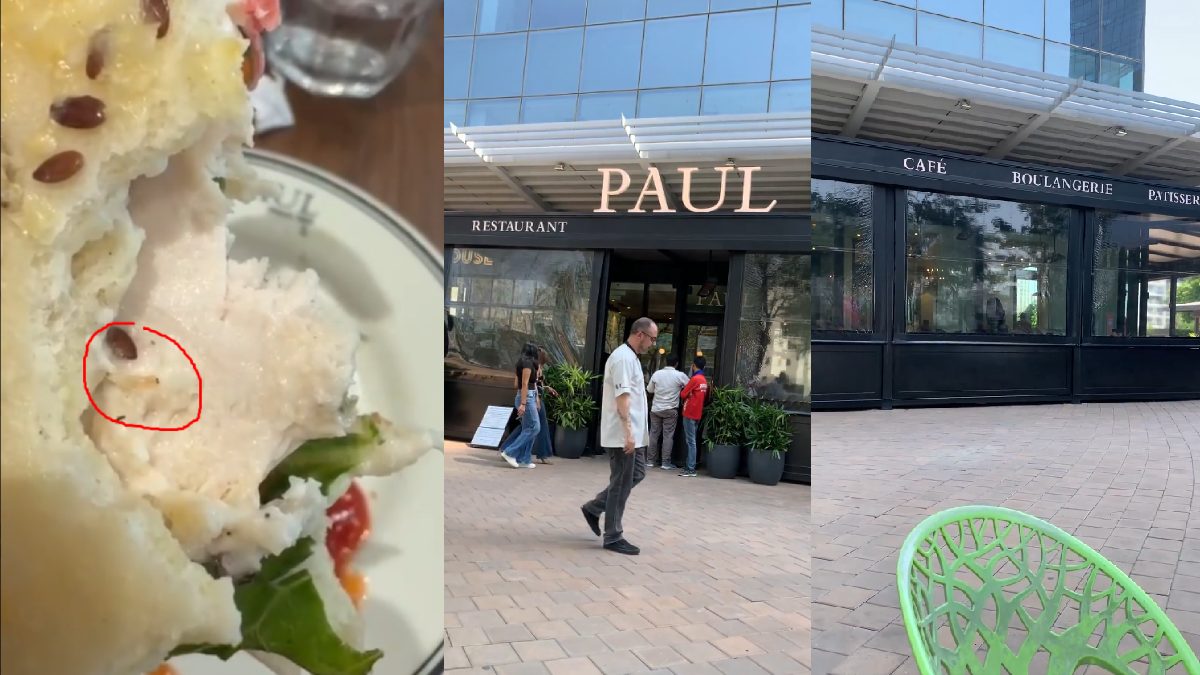
According to the report, Mathur noticed the worm while he was eating a salad sandwich. Rather than throwing it away he recorded it on camera, and what appeared to be a live worm in the sandwich was captured. He posted the video online and tagged the restaurant, bringing the matter into the public domain.
The discovery is particularly disturbing given salad-based foods have fresh vegetables and other ingredients that need to be washed, sorted, refrigerated and prepared. A live insect or worm may lead to questions about how ingredients were grown and stored and evaluated before being given to customers.
Following the complaint, PAUL's management contacted Mathur by phone to apologise for the incident. The restaurant also said it had launched an internal investigation to determine how the problem may have occurred. Possible issues might include ingredient storage, handling or preparation although the exact cause was not understood based on data at this stage.
Mathur, however, said the restaurant’s response was generic and that the apology did not address his concerns. A simple apology might not be enough for a customer who comes across a foreign organism in ready-to-eat food. Consumers often require restaurants to explain what went wrong, whether other food items were affected and what corrective steps will be taken to avoid a repeat.
The incident has also opened up a wider discussion of food safety in Gurugram, a city with a huge corporate population, very expensive restaurants and a rapidly expanding dining scene. Premium prices and a premium atmosphere can create an expectation that restaurants are committed to hygiene and food preparation and for the most part they are not. Contaminated or improperly handled food can have a negative effect on consumer confidence.
Food safety is not limited to the appearance of a restaurant or the quality of its dining room. It is about the entire chain of handling food from procurement and transportation to storage, washing, preparation and serving. Fresh produce has to be cleaned and examined because insects, larvae, soil and other contaminants can hide under leaves or vegetables if not properly handled.
As a result, the reported incident comes as public confidence in local systems that oversee food safety is in question. One survey cited in connection with the issue says only 7% of Gurugram residents trust local authorities. While that is more in line with general perception and not about this particular restaurant, it has added another dimension to the debate as to whether consumers are confident in regulatory oversight.
When the matter comes under review by the Food Safety Department, if the complaint is picked up the issue could be brought up by the Food Safety Department of Haryana. If it is made official inspection, that could help determine if the incident was an isolated incident or a broader problem with food handling. Regulatory scrutiny can also give consumers an insight into how food hygiene is done at food establishments in the country.
Such incidents underscore the importance of very specific food safety procedures for restaurant operators, when business is very busy. An effective food safety system is all about training staff, proper refrigeration, clean up, supplier checks and careful inspection of fresh produce.
For consumers, the incident is yet another reminder to report serious food safety concerns rather than hide them. Photographs or videos, purchase details and information about the restaurant and meal can help determine what happened and help authorities or management to investigate complaints.
At present, the worm discovery is an investigation that needs to be done and the available data is not clear at all as to what was causing the contamination. PAUL's internal investigation would shed light on whether it happened during storage, preparation or at some other stage of food handling. Yet the episode shows a very important truth: quality food safety standards need to be at the forefront of any restaurant industry, regardless of whether it is premium or established.
Gurugram’s incident has thus transcended a bad breakfast experience of a customer to a bigger conversation about hygiene, accountability and consumer trust. In an age where diners are sharing their experience online, restaurants have become ever more in demand from the public to respond transparently and show that they are working on issues of food safety and not only to correct the food safety problems if they start to come up with food safety issues.