Jharkhand Chief Minister Hemant Soren has assured protesting students that his government is taking their concerns seriously as unrest over alleged irregularities in the recruitment process of Jharkhand Public Service Commission (JPSC) grows. He said he was ‘sensitive’ to the issues raised and asked for patience; the government must take action and be fair to the students.
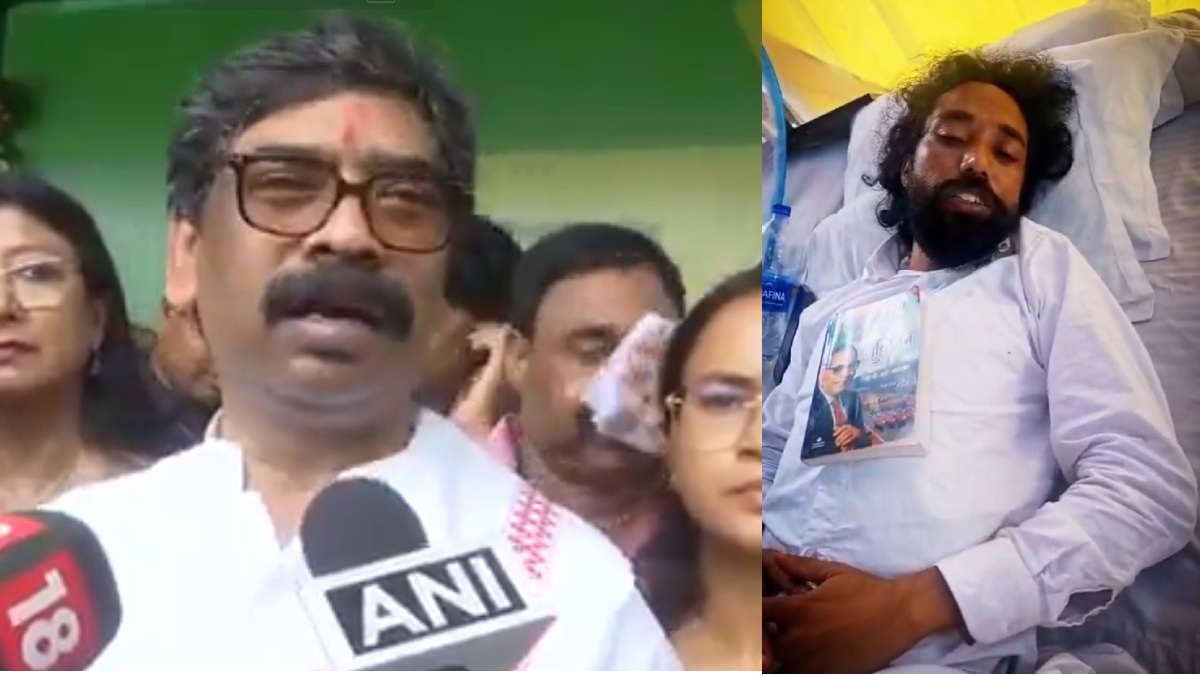
The Chief Minister said in response to the ongoing protests, “I can’t rip open my chest to show how sensitive I am,” he told reporters at the meeting. Also, student organizations have intensified the pressure on the JPSC 14th Preliminary Test (PT) as student organizations in the state have been protesting the JPSC 14th Preliminary Test (PT) examination to have more transparency and accountability in the recruitment system of the state.
Students activist Devendra Nath Mahato, who has been on a hunger strike for the last six weeks, is leading the protests for the first time. Mahato and other student organizations say there is so much wrong with the examination process that the most qualified candidates have been sidelined. The protests have been supported by students from different parts of Jharkhand, and students from other districts have rallied around the demands.
The protesters main demand is that the JPSC 14th PT examination be cancelled. Students have claimed that the recruitment process is not fair and that procedural failures exist. The aspirants have spent years preparing for government jobs, and the need for a new examination is the only way to repair their confidence, they say.
Demonstrators not only want the examination to stop but also demand that the CBI and ED conduct an independent investigation so there is no doubt as to whether any irregularities or corruption came to light during the recruitment process. They say an external investigation would lend credibility and identify those responsible if there is any wrongdoing.
भूख हड़ताल का तीसरा दिन,सत्याग्रह का 11वाँ दिन संदेश- हेमंत सोरेन बात करो या इस्तीफा दो। #JPSC #JSSC #satyagarh #devendranathmahto #hungarstarik @Wangchuk66 pic.twitter.com/3KBIpKNOHK
— Devendra Nath Mahto (@DevendraNathMa9) August 4, 2026
One of the key demands at the time of publication is an update on the optical mark recognition (OMR) answer sheet system. Protesters have insisted that the evaluation process should be transparent, and answer sheets and response records should be made available. They say that it would reduce disputes, and accountability and trust in future recruitment tests by the commission would be built on them and would be increased with changes in the OMR system.
As for students concerns, Chief Minister Hemant Soren said his government is committed to fair recruitment. His administration has always been working to improve governance and employment opportunities in the state, he said. But he said public examinations must be made via legal process and investigation and not due to political pressure.
Students say that if their demands are not met, a gherao of Jharkhand Assembly is going to be organized, and they have appealed to aspirants from all over the state to join the proposed demonstration as it is the first step in their campaign for justice and transparency.
The issue has also become politically significant, with opposition parties closely monitoring the developments. Critics have accused the government of failing to address recruitment-related grievances promptly, while supporters of the ruling administration argue that the government is willing to engage with students and resolve the matter through lawful means.
#WATCH | Ramgarh, Jharkhand: On the student’s protest, CM Hemant Soren says, “I have said this before as well, the government has eyes, ears, it is sensitive to the issue…the way the investigation team is working day and night, we are waiting for its answer, and a… pic.twitter.com/ISCNIL0R6B
— ANI (@ANI) August 4, 2026
Competitive examination controversies have been a major issue in several Indian states in recent years, and demands for stronger institutional safeguards and technology-driven reforms have been made. It is widely recognized that transparent evaluation systems, instant publication of answer keys, digital monitoring, and grievance redressal mechanisms are critical to maintaining public trust in recruitment examinations.
As the hunger strike continues and student pressure mounts, all eyes are on the Jharkhand government and the JPSC. Negotiations will be of the utmost importance to determine if there will be a resolution to the impasse before the protests become more intense and if it can be resolved or the protests will go on further. The outcome will have a major impact on both the career prospects for thousands of government job aspirants and the confidence in the state’s recruitment process, and how they are going to go on with their jobs.