Himachal Pradesh is to undergo a major change in the admission process of government schools as the state government will delete the caste column from school admission forms from the 2027-28 academic session. It is to encourage equality of children to avoid caste-based differences from being embedded in the early education system.
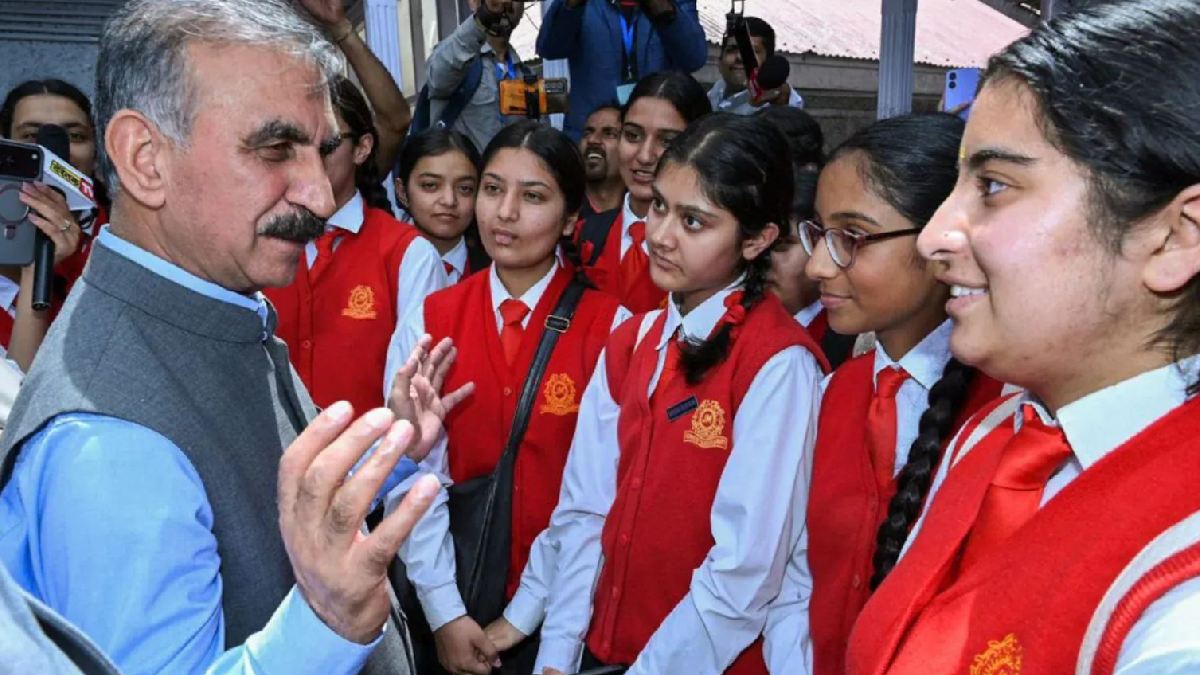
The decision by Himachal Pradesh Chief Minister Sukhvinder Singh Sukhu came after a meeting of the Scheduled Caste Welfare Board. Schools should provide children with an environment where they can learn, participate and grow without feeling that caste determines their social standing or opportunities, the government has said.
The proposed change is seen as a response to discrimination at an early stage. School often is one of the first public spaces where children of different social and economic backgrounds interact regularly. This will also help to remove caste identity from the standard admission form and prevent children from being categorised or treated differently on the basis of caste in the classroom setting.
Sukhu stressed that no child can be considered inferior or superior because of caste. The objective is to make education more inclusive in the sense that students are seen first and foremost as learners and not as a product of their social background.
But the removal of the caste column from the regular admission form doesn’t mean the state will stop collecting caste-related information altogether. The government has said that the necessary details will still be collected through a separate mechanism for administrative and welfare purposes.
This is a crucial distinction because caste-related information is often required to determine eligibility for various government schemes, scholarships, reservations and other welfare programmes. Keeping the information collection process separate is to ensure that eligible students do not lose access to benefits simply because the information no longer appears on the standard school admission form.
The proposed system would therefore make a separation between a student's educational identity and the administrative information necessary for welfare implementation. Teachers and schools will continue to have access to the information necessary for government schemes through appropriate channels, but caste will no longer be a routine field prominently displayed as part of the admission process.
The announcement has been supported by a part of society who view it as a symbolic and practical step to create equal opportunities in education. Children should go into classrooms on the same footing and administrative processes shouldn’t serve to reinforce social division.
The policy will need to be applied carefully, though. The government will have to ensure that the separate collection of caste information is accurate, secure and accessible for welfare schemes. Schools will have to have clear guidelines to understand how to collect and maintain the information in order to not compromise on the objective of removing caste-based identification in their everyday classroom interactions.
The decision is in the context of wider efforts to make education more inclusive and fair. Schools affect children’s attitudes towards society in a big way in this regard, and policies introduced at this stage affect how children perceive equality, diversity and social differences.
For families, the immediate change will become relevant when the new admission system is introduced for the 2027-28 academic session. Parents and students will probably see revised government school admission forms without a dedicated caste column, and welfare-related documentation will continue through separate procedures.
So the Himachal Pradesh government’s move is not just paperwork. It is also a bid to send a message about what children should be taught: as equals and how their skills and capability should be considered over social labels. If properly implemented, it might be an example of how administrative changes can be integrated with wider educational measures to help build confidence, inclusion and equal treatment in schools.