CAPTCHA is one of the most familiar security tools of the Internet. From clicking a checkbox that says “I’m not a robot” to finding things in a series of photos, in the same way that people have to navigate a website, or create an account or fill out an online form on their own, people use CAPTCHA all the time. But how does CAPTCHA tell if someone is human or not?
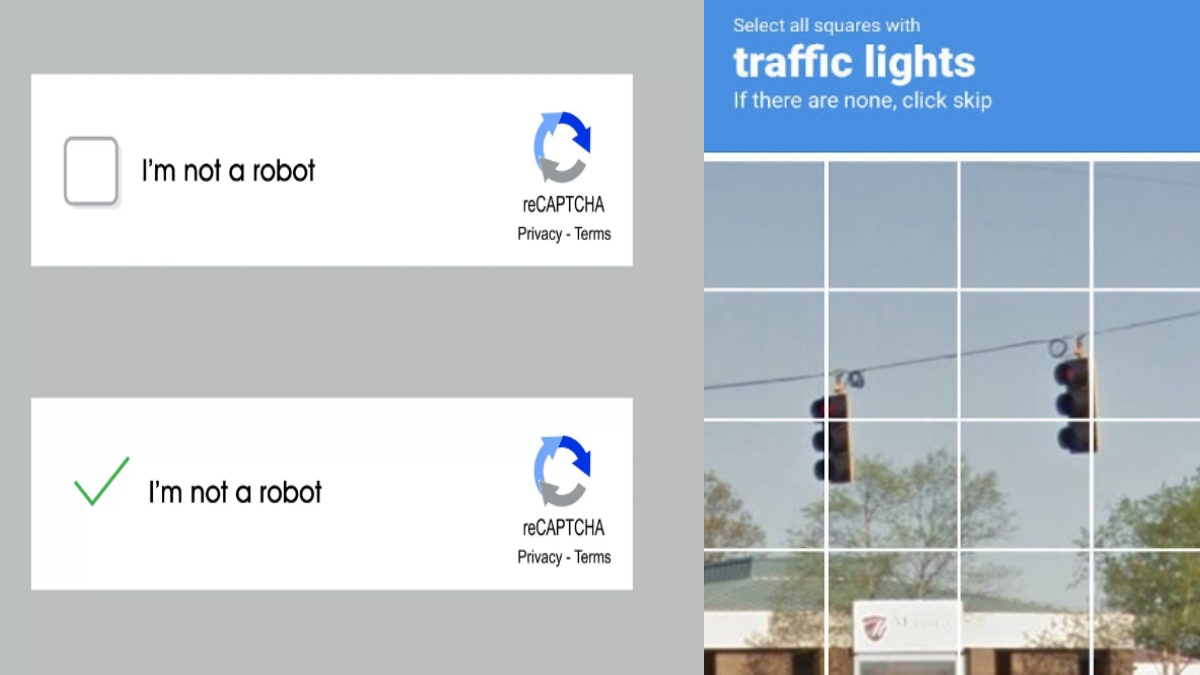
CAPTCHA stands for “Completely Automated Public Turing test to tell Computers and Humans Apart.” It’s primarily for making automated abuse harder. Websites can face massive numbers of automated requests from bots trying to create fake accounts, submit spam, scrape information, purchase limited products or repeatedly test login credentials. CAPTCHA adds an additional verification layer to differentiate legitimate users from automated systems.
Early CAPTCHA systems had distorted letters and numbers on an image. Users were asked to type the characters they could see and the distortion was designed to make the text so hard for computers to read. The basic idea was that humans could interpret the distorted characters better than machines. But as computer vision and artificial intelligence developed, and more sophisticated software could solve many traditional text-based CAPTCHAs, so did the CAPTCHA techniques.
This led to the development of more advanced methods. Image-based CAPTCHA tests, for example, may ask the users to select pictures that contain a specific object. Today, rather than just testing whether a person can recognise an image, the modern system can examine how a user interacts with the challenge and combine the information with other signals.
One of the biggest changes in CAPTCHA technology is that users don’t often have to solve an obvious puzzle. Today’s systems can analyse behaviour and technical signals in the background to determine whether an interaction appears to come from a genuine user or an automated system. Factors include how a person interacts with a webpage, the sequence of actions taken, browser information and other signals associated with suspicious or normal traffic.
That means the familiar "I'm not a robot" checkbox is not a full test of humanity by itself. It is only one part of the interaction. Depending on the system at hand, more analysis can be done behind the scenes. If the system can detect suspicious behaviour, then there is a more difficult verification step to take.
CAPTCHA systems are especially relevant in defense of online forms and services from automation. A website that has user registration could be targeted by bots generating thousands of fake accounts or even more. CAPTCHA makes that harder, since it requires interactions that automated programs may not be able to reproduce consistently.
In the same way, websites can use CAPTCHA to mitigate automated spam. Comment sections, contact forms and registration pages are all likely targets for bots. Requiring some form of verification to reduce automated submissions can reduce the volume of automatically generated submissions and make it more difficult for attackers to abuse online services.
CAPTCHA is not an ideal method for identifying humans. Modern AI systems are better at identifying images, analyzing text, and interacting with websites. As a result, security providers have developed ever more sophisticated techniques for detecting automated behaviour.
There is also another issue: CAPTCHAs must remain usable for people. A test that is difficult for bots but frustrating or inaccessible for humans can make for a bad user experience. Which is why modern systems try to verify things with minimal effort from the user.
Accessibility is another matter. Images and visual CAPTCHA challenges can be hard to select for people with disabilities. Providers have therefore developed alternative verification mechanisms, such as audio-based ones and systems that rely more on background signals for verification as opposed to requiring users to solve visual puzzles.
The technology behind CAPTCHA is thus evolving from a simple “Can you solve this puzzle?” approach to broader risk assessment. Today’s systems can look beyond one question or challenge to multiple signals and determine whether an interaction is likely to be automated.
It is important to note that CAPTCHA is only one layer of website security. Websites typically integrate bot detection with rate limiting and account security as well as suspicious activity monitoring and other protective techniques. CAPTCHA does make automated abuse much harder, but it won’t solve every cybersecurity issue all by itself.
So, is CAPTCHA really able to distinguish humans from bots? The answer is yes, but not with absolute certainty. CAPTCHA systems have the capability to determine whether an interaction looks human or automated from a combination of challenge responses and behavioural signals. Bots and AI technology are continuously improving, so CAPTCHA providers need to keep improving their detection methods.
Ultimately, CAPTCHA is a continuing battle for automated systems to mimic human behaviour and security technology that seeks to detect that automation. What began as a simple distorted-text puzzle has become a sophisticated part of current web security, often quietly in the background as users browse the web.