A Wing Commander of the Indian Air Force (IAF) has been arrested by Delhi Police on the charge of leaking sensitive defence-related information on the internet. The officer was arrested on May 31 and is being held under the Official Secrets Act and has been detained in judicial custody. Investigators are trying to discover if the case is linked to a larger espionage network that is alleged to be gathering strategic military information.
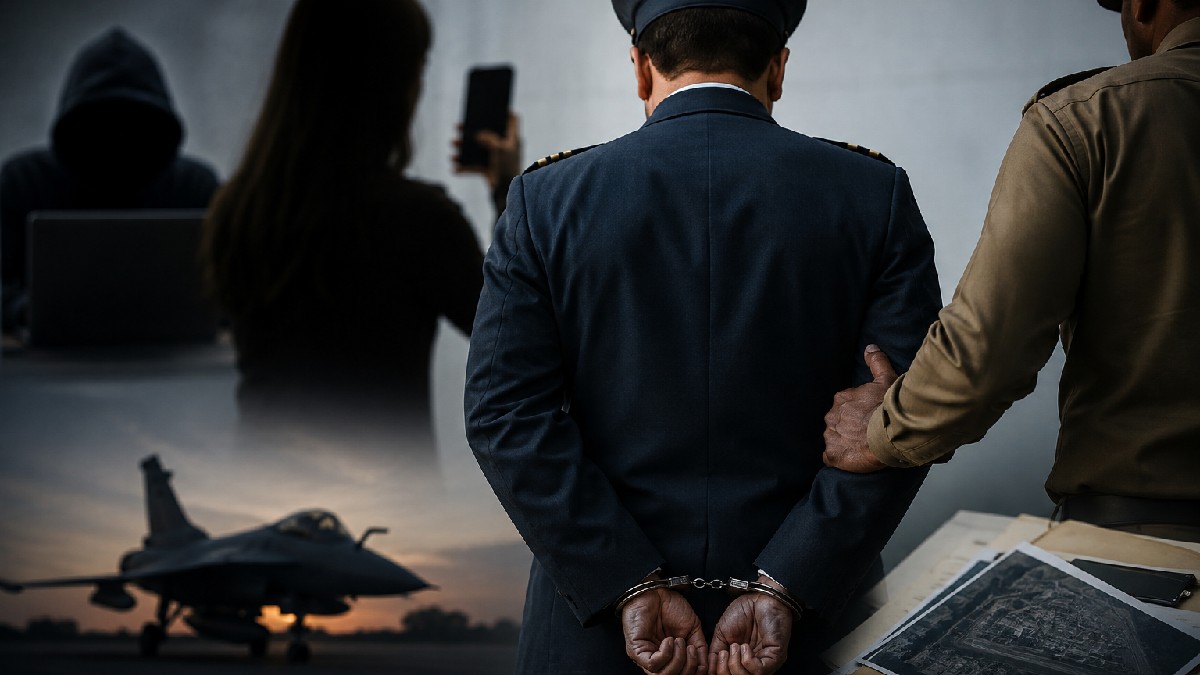
According to senior Delhi police officials, the officer was targeted through a honey-trap operation on social media. A woman allegedly contacted him online and developed a mutual interest through chats and video calls. The encounter was apparently used to persuade him to share information about military and other critical matters.
According to police sources, the woman asked the Wing Commander for photographs, videos and information relating to military moves and troop deployments. The police are now trying to determine exactly what information was shared and if any of it could have compromised national security.
The investigation indicates that the officer was struggling in his personal life at the time when he was approached on the internet, sources said. The woman had taken advantage of his vulnerable position and exploited the situation to gain his trust, investigators say. What was a personal interaction at first was said to have become a channel through which sensitive information could be used.
The case came to the attention of the authorities after the IAF's intelligence wing provided Delhi Police with specific information. The intelligence input led investigators to probe the officer's communications and alleged digital exchanges with the woman. The Wing Commander was arrested on May 31 and further investigation was initiated into his alleged activities.
One of the more serious allegations concerns an application that the officer was told to install on the mobile phone of a fellow officer. Police sources described the application as akin to targeted spyware or remote-access malware. Such software may potentially be used to gain information on a device, track where it is and monitor communications, depending on the capabilities of the software.
Police have found a suspicious application on the mobile phone of another officer, they said. Police are trying to determine if the application was installed at the direction of the woman and if it could potentially access sensitive information. It’s also possible that the application was in fact an attempt to invade military devices.
The investigation has also raised fears that some handlers were involved in Pakistan. The woman who contacted the Wing Commander was allegedly acting on instructions from handlers in Pakistan, according to police officials. The investigators are looking into who the suspected handlers are and whether the accused officer's interactions were in conjunction with a larger intelligence gathering effort.
The digital trail is expected to play a big role in the investigation. Police are looking for conversations, files, photographs, videos and other electronic exchanges between the officer and the woman. Investigators will also look at devices and communication platforms allegedly used to transfer information.
The authorities will assess the nature and sensitivity of every piece of information that was allegedly shared by the accused. In cases of defence personnel, even so-called routine facts about deployments, movements or military infrastructure can become very sensitive if combined with other information. The probe will therefore look at not just individual documents, but whether the information collectively had any intelligence value.
And the allegations show the security risks of social media interactions between people who have access to sensitive information. Intelligence agencies have always taken up an awareness of any attempt to use personal relationships, online identity and digital communication channels to gain confidential information. The use of a honey-trap strategy in the present case has once again raised the importance of cybersecurity and counter-intelligence awareness of defence personnel.
The case is still under investigation and the allegations against the Wing Commander are not yet established through judicial proceedings. Investigators are still following the digital communications and investigating the full extent of the alleged information leak. Other individuals might have been involved and the suspected network tried similar tactics on other military personnel, said the police.
But the arrest has served to underline the seriousness with which Indian security agencies take unauthorised disclosure of defence information. The investigation will be ongoing to identify the suspected handlers, investigate the information that has been compromised and to see whether the officer in question acted alone or as part of a larger espionage network.