IIT Kanpur is on track to expand into the medical education and healthcare sector, with the possibility of higher medical degrees, an undergraduate MBBS programme and a 500-bed hospital to be completed by March 2027. And this is the start of a big shift for the institute in terms of both academic and research direction as engineering, technology, medical research and healthcare delivery all intersect with one another.
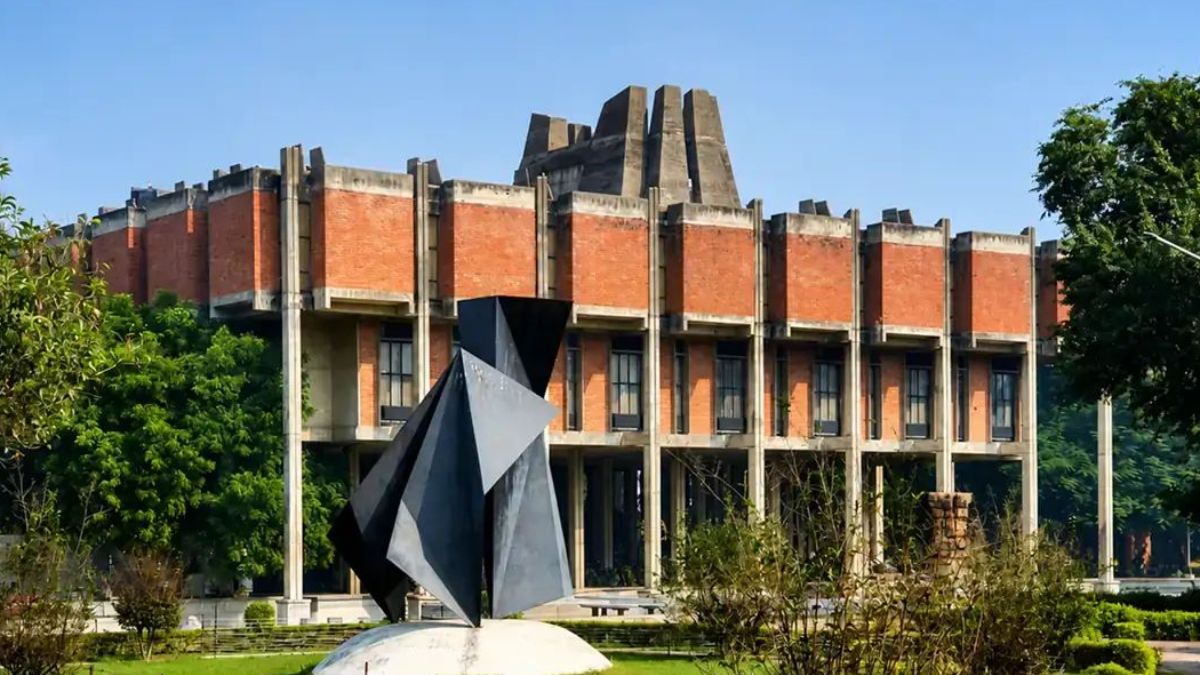
IIT Kanpur intends to start its medical education journey with postgraduate and advanced medical programmes instead of MBBS course delivery as a pre-embracing option rather than a medical course. This would help the institute build up academic infrastructure and clinical partnerships and research skills before students graduate to a higher level of undergraduate medical education. These programs are expected to complement IIT Kanpur's current strengths in science, engineering, artificial intelligence, biotechnology and advanced research.
The 500-bed campus hospital will also be integral to the institute’s medical effort. The hospital is expected to be completed by March 2027 and with that the clinical infrastructure for medical education and research will be in place as well as healthcare for Kanpur and its surrounding area. A hospital of this scale would provide opportunities for clinical research, technology development and collaboration of medical professionals and researchers from engineering and science.
The decision to start with higher medical degrees is particularly significant as postgraduate medical education needs strong clinical infrastructure and specialised faculty. Such capabilities could also be used to inform the institute’s longer-term healthcare education objectives. An eventual MBBS programme would require regulatory approvals, qualified faculty, teaching facilities and sufficient clinical exposure for students.
IIT Kanpur has a good reputation for research and technological innovation and entry into medical education could create opportunities for interdisciplinary work. Today’s healthcare is increasingly dependent on technologies such as artificial intelligence, medical imaging, robotics, biomedical devices, data science and computational modelling. An institution with knowledge in these areas could help to bridge engineering research and clinical applications through structured collaborations.
The proposed hospital could also serve as a place for testing and developing healthcare technologies. Researchers would collaborate with doctors and other medical personnel to find practical problems in diagnosis, treatment, patient monitoring and hospital management in areas in which technology is now being increasingly integrated within the healthcare system.
The expansion may also aid the development of medical research in India. Engineers, scientists and medical professionals can be involved in the study of personalised medicine, digital health, medical devices, healthcare analytics and disease detection. The availability of a dedicated hospital would provide researchers access to clinical settings and will link laboratory research with real-world healthcare needs.
For Kanpur, it could add to the city’s healthcare infrastructure. A 500-bed hospital would be able to provide for a lot of patients and also provide employment opportunities to doctors, nurses, technicians, researchers and other healthcare professionals. Service and access to patients will depend on the hospital structure and operationalisation.
The proposed sequence of medical education also indicates that IIT Kanpur is taking a phased approach. Rather than entering undergraduate medical education early on, it plans to develop advanced programmes first. This could enable it to develop specialised expertise and build institutional experience in healthcare before considering an MBBS programme.
Any medical degree programme would also have to comply with regulatory and accreditation requirements. Medical education in India has specific standards for curriculum, faculty, infrastructure, training and student intake for medical education. The proposed expansion will therefore require multiple academic and regulatory steps to be completed through the preparation of the programme before the programmes can be initiated.
The March 2027 target of the 500-bed hospital will therefore be an important milestone for the project. The completion of its construction will lay the basis for IIT Kanpur’s larger medical education and healthcare research goals. The institute’s current technological capability could then be connected with clinical knowledge to develop new healthcare education and innovation models.
🚨 IIT Kanpur is launching higher medical degrees before an MBBS and opening a 500-bed hospital by March 2027. pic.twitter.com/EFVHV6Ot59
— Indian Tech & Infra (@IndianTechGuide) September 17, 2026
The IIT Kanpur move into medical education is part of a general trend of leading technical institutions pursuing healthcare and biomedical research. As technology is increasingly important in medicine, engineering and medical disciplines are becoming more relevant. This interdisciplinary model can be developed in the hospital and medical degree at IIT Kanpur.
The next stage will be infrastructure development, programme planning, faculty recruitment, regulatory processes and eventually operationalisation of the hospital. If the plans proceed as planned the 500-bed facility could be ready by March 2027, marking a new phase in IIT Kanpur’s academic and research activities and potentially establishing the groundwork for future medical education, including an MBBS programme.