India and Spain have agreed to speed up discussions on linking India's Unified Payments Interface (UPI) in the digital payment ecosystem to Spain's Bizum digital payment platform, in another step towards the expansion of India's global digital payment network. The linkage should make cross-border payments easier, more secure, and cheaper for tourists, businesses, students, and expatriates.
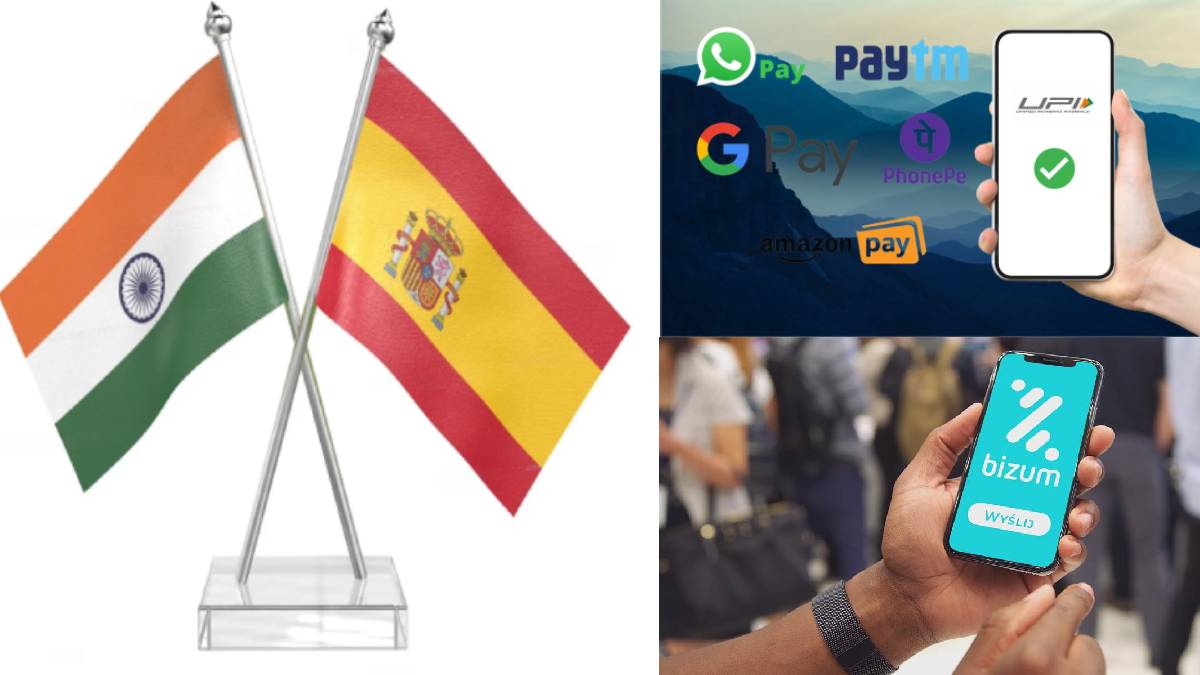
The agreement shows growing cooperation between India and Spain in financial technology (fintech) and digital innovation. Both countries want to simplify international money transfers and increase economic activity by integrating two of the world’s most successful instant payment systems.
The National Payments Corporation of India (NPCI) developed UPI has revolutionized the digital payments ecosystem of India for real-time bank-to-bank transfers through smartphones by making money transfer in real time at any time across India in real time from one bank to another through smartphones. With an investment of $70M a year, UPI has become one of the world’s largest digital payment platforms, processing billions of transactions per month. Since its launch in 2016, UPI has been one of the world’s largest digital payment platforms, enabling millions of transactions every month, and it is easy to use and interoperable, with low transaction costs.
Bizum in Spain has also revolutionized digital payments. It is widely used by Spanish banks and consumers to transfer money instantly, pay merchants, and make online payments from their mobile phones. With many million registered users, it is now one of Spain’s preferred mobile payment options.
The integrated payment systems would allow users of both payment systems to make seamless transactions across borders without the need for traditional banking tools. Indian travelers to Spain could consider using UPI-supported applications to pay at participating merchants in Spain, and Spanish visitors to India could use the same service for Bizum-based payments once the two payment systems are interoperable.
The linkage could also benefit companies engaged in bilateral trade. Quick payments and more efficient payment systems can reduce transaction delays, boost cash flow, and simplify financial transactions for companies that move across borders. Small and medium-sized enterprises (SMEs) can benefit from lower transaction costs and cheaper international payments.
Tourism is another sector that is expected to benefit from the move. Spain is a popular destination for Indian tourists, and both countries are also attractive for Spanish people with interests in culture and business opportunities, as well as a developing tech ecosystem. A unified payment process would eliminate the friction of currency exchange and international card use to make travel easier for tourists from both countries.
Students and professionals living abroad could also benefit from faster and more affordable payment options. Cross-border retail payments, day-to-day purchases, and other eligible transactions could become more efficient through interoperability between the two systems.
This initiative is part of India’s larger strategy of internationalizing UPI. In the past few years, India has aggressively expanded the acceptance of UPI in various countries and established relationships in which Indian consumers are able to make digital payments from abroad, strengthening the international fintech partnership. Such partnerships show India’s leadership in digital public infrastructure and illustrate the increasing global interest in interoperable, real-time payment networks.
For Spain, the digital payment ecosystem of India is one of the world’s fastest-growing fintech markets. A partnership can drive innovation, financial inclusion, and enable new digital financial services to be developed for consumers and businesses.
Before the integration becomes operational, both countries will work on technical interoperability, regulatory compliance, cybersecurity standards, settlement mechanisms and consumer protection measures. Financial institutions, payment service providers, and regulators will work together to meet the international security and operational requirements.
The deal also shows that India and Spain are moving to the next level of strategic partnership, with the two sides’ cooperation extending not only beyond trade and diplomacy but also into new areas like digital technology, innovation and financial services. Digital payments are changing the face of international commerce, and partnerships like this will play a central role in the development of linked financial ecosystems.
If the UPI-Bizum link is implemented successfully, it will set the stage for future collaboration between instant payment systems around the world. It will strengthen India’s position as a global leader in digital public infrastructure and give a faster and safer way to make cross-border payments for consumers and businesses in both countries.