Artificial intelligence is an ever-growing factor and we see it also in the workplace which is a concern for employees and job security. Recent workplace research has been highlighting the pressure employees are under as more companies are making use of AI and automation in their businesses. AI tools are increasing productivity and speed of work but burnout, workforce reduction and the future of jobs are not going away any time soon.
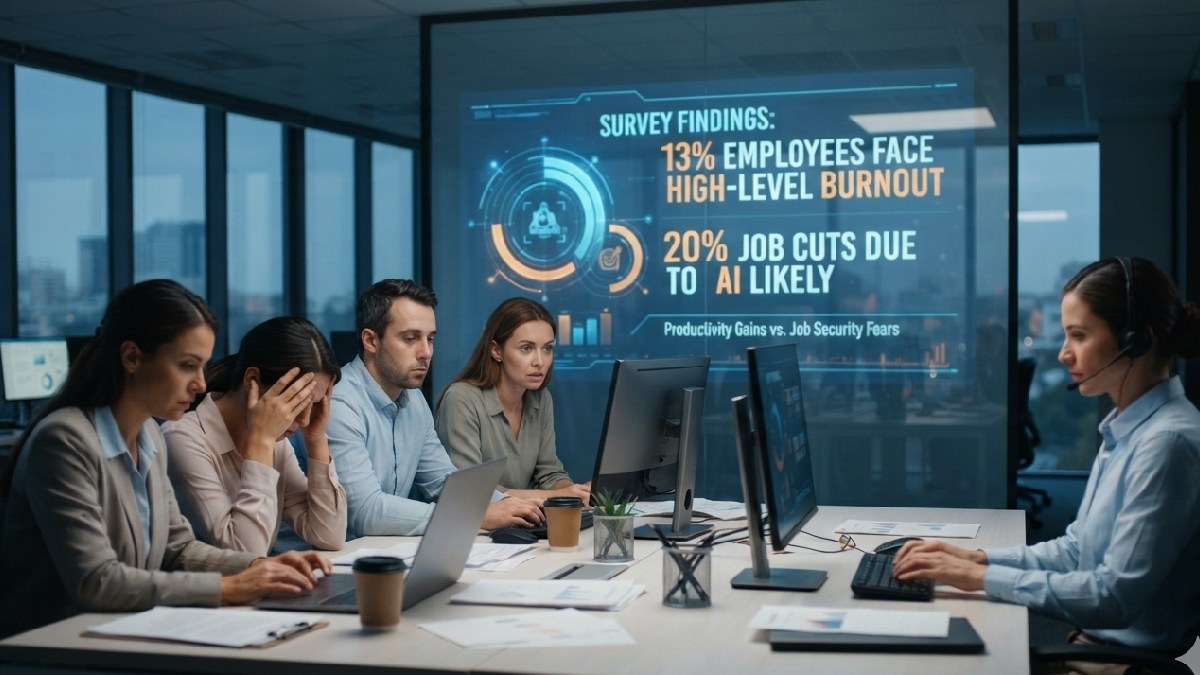
These findings reflect a larger change of how businesses organize work. AI is no longer restricted to experimental projects or technology departments. Industry sectors are integrating AI into customer service, content creation, software development, finance, marketing, data analysis and administrative functions. The employees are being asked to adapt to new tools and to negotiate uncertainty about how their roles might change as organizations look to improve efficiency.
The concern is especially serious as burnout remains a major workplace problem. Numerous workers experience high levels of burnout, the analysis shows us work-related burnout and the fear of job security adds to the pressure. Employees who feel the workload is increasing while their job security is less secure have more stress, disengagement and care about their future and work cannot be mitigated in their job security, the survey also indicates.
The picture of AI adoption is more complicated. On the one hand, employees who use AI regularly report productivity gains. In Gallup’s 2026 workplace survey, 65% of employees in organizations that used AI said it was a benefit to productivity and efficiency. But 18% of American employees said it was very or somewhat likely that their jobs would be lost within five years because of AI or automation. And 23% of those working for companies that had already implemented AI increased to 23%.
These numbers illustrate the growing divide in productivity benefits between employees’ fears about job security and the increased efficiency of AI and how important it is to them in terms of job safety. Workers are likely to appreciate technology that can make the daily routine go quicker by the time they are done, but then they are anxious that the same technology could eventually be used to remove certain roles from their job.

And so employers must find a way of balancing efficiency gains with the employees’ sense of confidence and job stability.
The impact of AI on job reductions has also shown up in corporate planning. A Mercer Global Talent Trends survey in 2026 revealed that almost all surveyed executives expected AI to lead to at least some workforce reductions over the next two years. And organizations were preparing to redesign their structures as they integrate AI and automation into their operations.
But experts and research can’t view AI as an easy replacement for human workers. The impact on workers’ lives, and the kinds of jobs, will be different by industry, position and tasks involved. AI's impact on most job satisfaction and health among many workers is likely to be far more likely to be mediated by the changes in the tasks they perform than by the elimination of their jobs, the Organisation for Economic Co-operation and Development (OECD) reported.
AI can also produce job satisfaction and health benefits for some workers, it also found, and for others it can result in more work intensity and poorer human engagement.
That distinction is crucial when discussing job cuts. A company adopting AI may not eliminate an entire occupation. But instead it may automate repetitive tasks, reduce the number of employees for certain jobs or reorganize the team to work with new job roles. And some jobs may disappear, while others may be AI-related.
Workers with heavy workloads in mind can experience burnout even more if they are expected to learn new technologies in addition to performance goals. If AI adoption is not well-communicated or the company is not communicating with employees, employees might feel that technology is only adding pressure to an already stressful situation.
However, recent research also indicates that more communication from management is crucial. Gallup found in a study that less than one-third of U.S. employees involved in a company that had started using AI strongly agreed that their managers actively supported their teams' use of the technology. That suggests that AI tools may not be enough. And employees need guidance about how those tools should be used and how to work with them and in what roles they will be put to work.
Companies’ challenges go beyond just buying AI software. Businesses need to invest in employee training, reskilling and transparent communication. It is essential for workers to know what jobs they’re going to be automated in the future and what new job requirements will arise and what skills and job skills need to be developed to keep up. A plan for transition may be useful and work as a way to help employees think about AI as more than just a threat to their job.
The problem is particularly pressing in technology-driven economies such as India, where millions of professionals are employed in IT and services. A survey of 1,552 AI and technology professionals from India conducted by workplace community platform Blind in July 2026 found that 66% of AI and machine learning workers were expecting layoffs or significant headcount reductions in their teams over the next 3 to 6 months.
The survey was done based on expectations of layoffs not confirmed layoffs, but the results show the level of uncertainty of technology workers.
The future of employment in an AI-driven economy is not going to be all about mass replacement. More likely, workplaces will undergo radical changes in job descriptions, skills and organization. Employees who can work alongside AI might find themselves better positioned in a company’s transformation.
At the same time, businesses cannot ignore the human toll of rapid transformations. Productivity gains mean nothing if people are overwhelmed, disengaged or always worried about losing their jobs. Burnout management and providing meaningful support will therefore be as important as the implementation of new AI systems.
The survey results reinforce that the AI revolution is not just about technology but also about working and employee health and welfare. Automation and efficiency is an ongoing trend in the world of work, so how AI adoption will work with organizations won’t just depend on how good the technology is but on how well organizations can help people adapt to it.