New Delhi witnessed a major development in advanced cardiac surgery with the successful completion of India's first Asia Pacific Robotic Cardiac Workshop at VMMC and Safdarjung Hospital. The workshop brought together cardiac surgeons from all over India for specialized training in robotic-assisted cardiac surgery, with live surgical demonstrations and extensive hands-on simulation sessions.
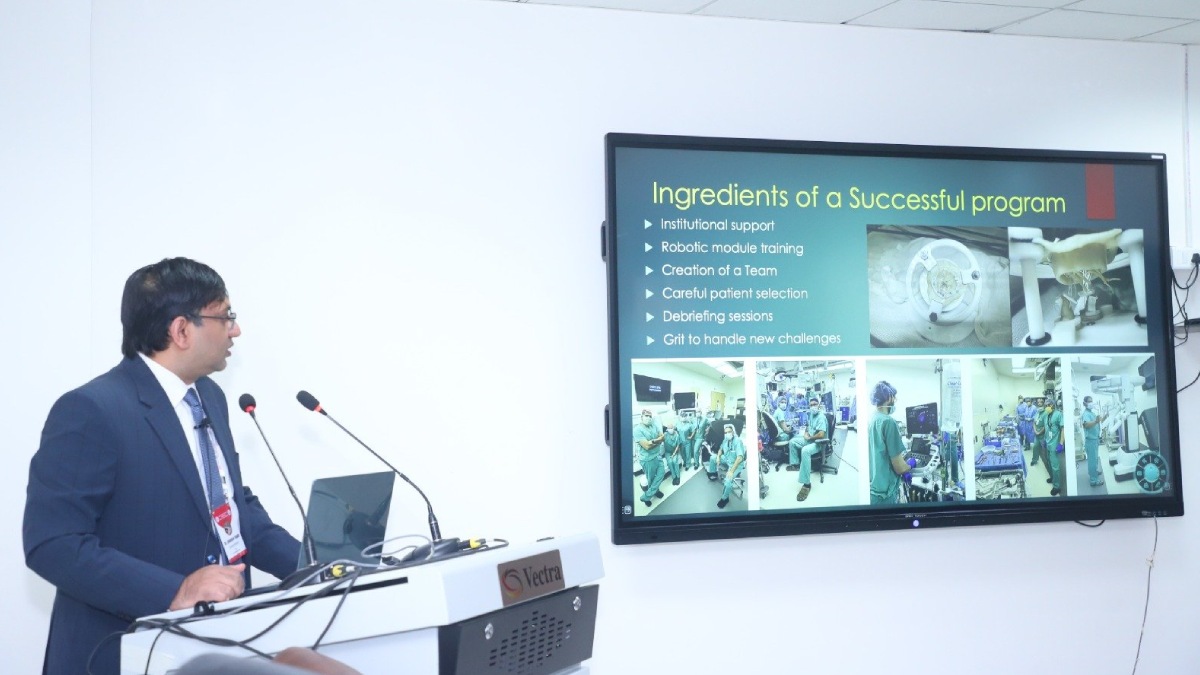
The workshop was conducted by Prof. Anubhav Gupta, Head of Cardiothoracic and Vascular Surgery (CTVS) at VMMC and Safdarjung Hospital. It brought in two live robotic cardiac surgeries with the goal of training cardiac surgeons to perform advanced procedures in real clinical settings. It also had more than seven hours of hands-on simulation training to help them understand robotic surgical strategies and technology.
Dealing with robotic technology is a new area of research and development in modern medicine and we are seeing new surgical training to improve the quality of surgical care through robotics.
Organized workshops such as the one in Safdarjung Hospital will give surgeons a means to learn these techniques in a structured environment. Instead of being driven solely by theoretical instruction, they were able to combine live procedures with simulation-based practice. This can also inform medical professionals in the field of robotic cardiac surgery about how to apply them in clinical settings in a timely way.
The participation of cardiac surgeons from different parts of India gives the programme a broader significance as well. Limited training opportunities at specific institutions can make it more difficult for specialists at large to experience emerging technology worldwide. At a major public health institution, the workshop provided a platform for knowledge exchange and technical learning.
VMMC and Safdarjung Hospital’s involvement is particularly important as the institution is part of India’s public healthcare network. The development of advanced robotic surgical training in a government hospital shows the potential for advanced medical technology and specialised education to be extended beyond the private healthcare sector.
The two live robotic cardiac surgeries served as the focus of the workshop. Live surgical demonstrations can provide participants with insight into operating-room workflows, robotic system handling, surgical decision-making and inter-clinical collaboration. Such programs and simulation training may provide more of a deep learning experience for surgeons who want to learn robotic-assisted procedures.
The more than seven hours of hands-on simulation training enhanced the practical aspect of the programme. Simulation-based medical education allows healthcare professionals to practise technical skills in a controlled environment. It can even provide opportunities to relook procedures, understand equipment and gain an understanding of the movements and workflows of robotic systems.
The workshop comes at a time when healthcare facilities in India are increasingly exploring advanced technologies to improve surgical capabilities and specialist training. Robotic surgery is just one of several technology-driven areas that modern medicine is transforming; artificial intelligence, advanced imaging, minimally invasive procedures and digital health systems.
Robotic systems can offer technological advantages but the success of their application will depend heavily on the training of medical professionals, institutional infrastructure and patient selection. Training initiatives are therefore a crucial part of sustainable robotic surgery programmes.
The Asia Pacific Robotic Cardiac Workshop at VMMC and Safdarjung Hospital is a step towards the development of expertise in this specialised field. Live surgical sessions and extensive simulation training provided the surgeons with both observation and application of robotic cardiac techniques.
India’s first Asia Pacific Robotic Cardiac Workshop was successfully held at VMMC & Safdarjung Hospital, New Delhi Led by Prof. Anubhav Gupta, Head, CTVS, the workshop featured two live robotic cardiac surgeries and over 7 hours of hands-on simulation training for cardiac… pic.twitter.com/Qt2anTPi0I
— DD News (@DDNewslive) September 22, 2026
The project also illustrates the increasing visibility of public healthcare institutions in the adoption of advanced medical technologies and specialist education. As robotic cardiac surgery is being developed in India, such training programmes may help to bridge knowledge gaps and provide the country with a gradual increase in expertise.