India’s rapidly expanding data centre industry could consume as much as 558 billion litres of water annually by 2030 for cooling operations, according to a report that has raised fresh alarms about the environmental impact of the country’s growing digital infrastructure.
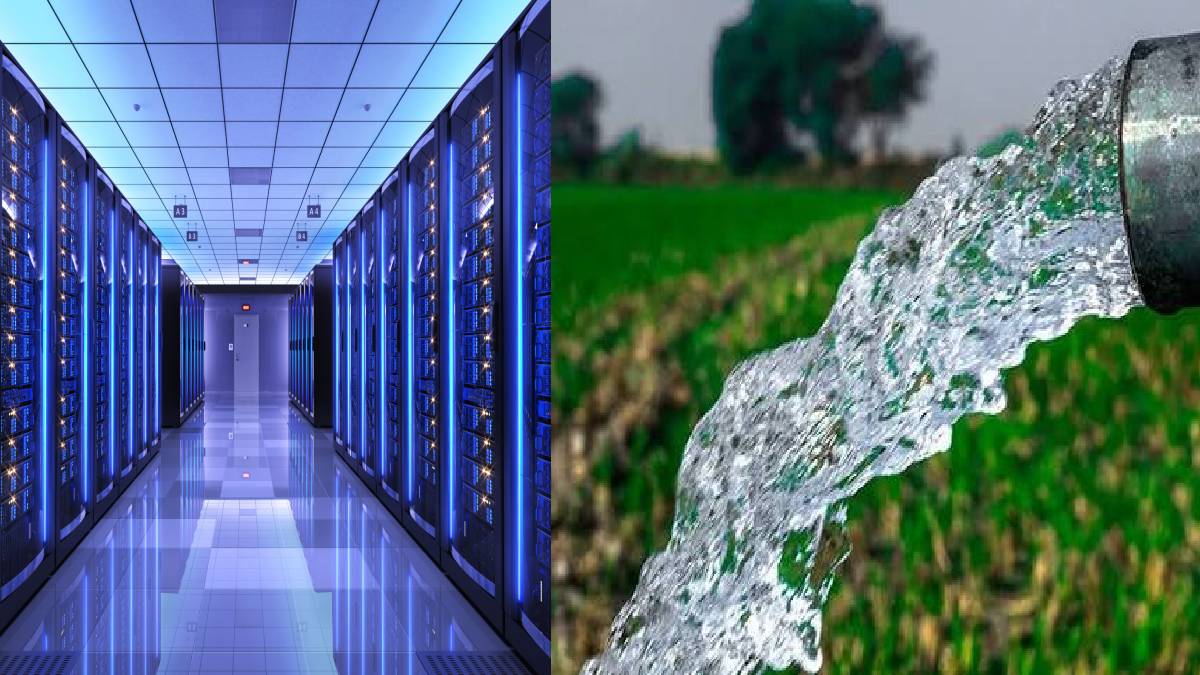
The estimate clearly shows the growing need in India for cloud computing, artificial intelligence, digital services and data storage. Data centres are essential in the modern digital economy, but they need to operate in a world of huge amounts of electricity and water to help them.
As India is experiencing exponential growth in internet use, digital payments, online entertainment, e-commerce and AI-based services, technology companies and infrastructure providers invest heavily in new data centres. It will further strengthen India’s position as a global centre for digital infrastructure.
So the growth would put more pressure on local water resources, especially in areas with seasonal water shortages or long-term water stress.
Data centres contain thousands of servers that process, store and transmit enormous volumes of digital information. Such servers generate substantial heat in operation. If the heat is not controlled, equipment can become less efficient, suffer technical problems or damage.
Cooling systems are so important for data centre operation. Water-based cooling is used in many facilities for the removal of heat and temperature stability. The amount of water required can vary depending on the size of the facility, local climate, cooling technology and the efficiency of the equipment.
The projected figure of 558 billion litres demonstrates the scale of the challenge if data centre capacity continues to grow rapidly over the next few years.
The estimate does not necessarily mean that all litres will be removed from the water system permanently. Some water may be treated, recycled or returned in different ways. But water consumption is still an important environmental problem because cooling systems may lose water through evaporation and other processes.
India’s data centre market has grown significantly as businesses move more services online and adopt cloud-based technologies. Generative AI has also added to the demand for high-performance computing infrastructure.
AI systems often require large clusters of advanced processors. Such processors consume huge amounts of electricity and generate additional heat, increasing the need for effective cooling.
Therefore, the growth of AI may accelerate the establishment of large data centres and increase pressure on electricity grids and water resources.
The projected water demand has led to questions of where new facilities should be located and how they should be designed.
Some areas may have sufficient water availability, while others already have recurring shortages. Water-intensive infrastructure in the most stressed areas could set up competition between industrial operations, agriculture and local communities.
Experts have called on data centre owners to use water-efficient technology and make transparency about their environmental impact and water-efficient technologies more widely known.
Recycled or treated wastewater, closed-loop cooling systems, air-based cooling, and advanced technologies that reduce freshwater need are some of the possible solutions.
Some facilities are also exploring how to use heat generated from servers. The captured heat can be used for industrial processes, heating systems, or other applications, and that can add to energy efficiency.
The location of data centres can also affect water consumption. In cooler areas, data centres that are based in cooler climates are likely to be less cooling-intensive than those in extremely hot ones. But location decisions are also influenced by the availability of electricity, internet connection, land and other infrastructure at the site.
India’s government and technology sector are struggling to balance digital growth with environmental sustainability.
The expansion of data centres can lead to investment, employment and technological capacity. And it can also feed into India’s ambitions in artificial intelligence, cloud computing and digital public services.
At the same time, the environmental footprint of the sector has to be managed carefully. Water-efficient design, renewable energy, transparent reporting and responsible site selection could play an important role in reducing long-term impacts.
The estimate of 558 billion litres by 2030 serves as a reminder that digital services have physical resource requirements. Everything from online search, cloud transactions, AI requests, and streaming activity depends on infrastructure that consumes electricity, land, and, in many cases, water.
Therefore, with the expansion in India’s digital economy, the future of the data centre industry may be much more dependent on not only its compute capacity but also how efficiently it uses natural resources.
To support the technological development of the digital infrastructure, the challenge will be to ensure that digital infrastructure does not place pressure on communities and regions already facing water scarcity.