The growth of the online gaming industry in India has never been seen before so fast; it is rapidly becoming one of the fastest growing segments of the Indian digital economy. By reaching around 488 million gamers, and projected at 517 million in the next year, the space has evolved from a niche novelty into a powerhouse of mainstream entertainment and business. Indicating value and growth in the market in 2025 for the same, according to the industry and expected growth in the coming ten years to be double-digit. The growth has been driven largely by cheap smartphones, inexpensive data and a population that readily adopts digital platforms. India is one of the youngest gaming markets in the world, and tens of millions of players aged 15-24 are found there. Whether you’re playing casual mobile apps or competing in esports tournaments, gaming has grown into more than just a hobby. Even now it’s recognized as an occupation and mode of establishing the digital economy. Understanding its economic import, the industry’s participation in innovation, job creation, and skills development is well acknowledged by lawmakers.
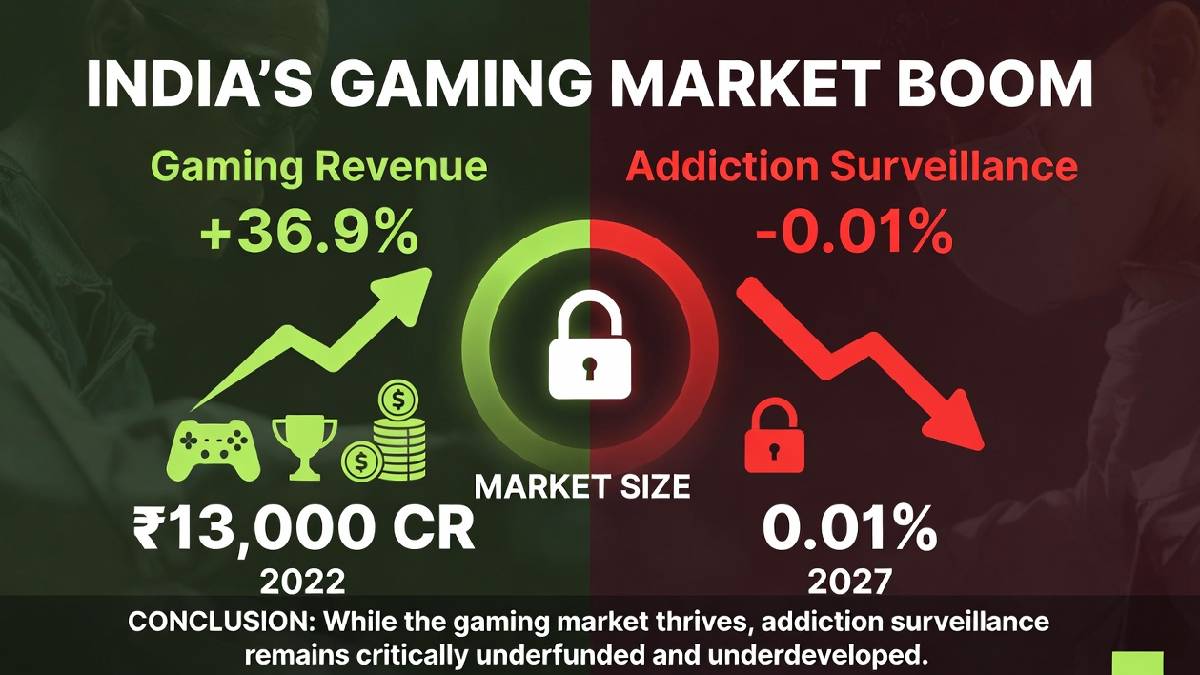
But at such a rapid rate this kind of progress surpasses the system that would control and reduce its social and psychological impact. Gaming addiction is a new phenomenon and the problem has developed significantly lately more among adolescents and young adults. The number of cases of gaming disorder skyrocketed for mental health professionals, particularly after the COVID-19 pandemic accelerated the rise in screen time use. Common red flags include: declining academic performance, social disengagement, issues on the part of sleep — including insomnia, irritability and economic woes during real-money games. Of course, only a small percentage of gamers meet the clinical profile of addiction, but early intervention systems and awareness programs remain insufficient.
There has been a slew of announcements from the government outlining regulatory frameworks in place to limit the risk associated with real-money gaming and online betting venues. The Promotion and Regulation of Online Gaming Act, 2025 will seek to prohibit a number (particularly of high-risk) games in relation to online gaming and promote skill and non-cash games in the country. Even with these laws but enforcement is difficult, enforcement challenges are a daunting challenge because many states vary, and the multi layer system in place between the regulations of both states, and the multi-layered nature of so-called digital platforms between jurisdictions. Supporters say state regulations are more conducive to taxation and classification issues, as far more than to behavior controls, such as screen time restrictions, age verification and responsible gaming features.
Experts advocate for a more encompassing approach that would revolve around expanding the sector and monitoring addiction and improving data-use and monitoring regular visits on issues like addiction, digital literacy and educating parents, along with other potential risks with an ongoing investment on addiction and more education in both. The debate reflects a bigger question that India wrestles with: How to grow a flourishing digital industry without compromising its public health. And like other digital innovations, gaming can boost creativity, entrepreneurship, and global competitiveness. Yet without strong regulatory oversight the social-economic costs will reduce long-term benefits. To expand as a global gaming hub, India needs close cooperative partnership engagement between regulators, developers, parents and healthcare providers. Whether this national gaming boom spurs sustainable development, or festers in the shadow of global outcry, relies on finding the right blend of innovation and checks and balances.