India's space industry is in the midst of an epochal era as private startups seek to develop reusable rockets, a technology that can dramatically lower launch costs and cement the country’s place in the world space economy.
Inspired by SpaceX’s successful reusable Falcon rockets, Indian companies are pushing for similar technology but the road ahead is technical and financial.
Reusable rockets are meant to return to Earth safely after launching satellites or cargo into space. Reusable systems can be refurbished and flown several times, unlike traditional launch vehicles that are discarded after a single mission. This greatly reduces the cost of space missions and increases the number of launches to access space.
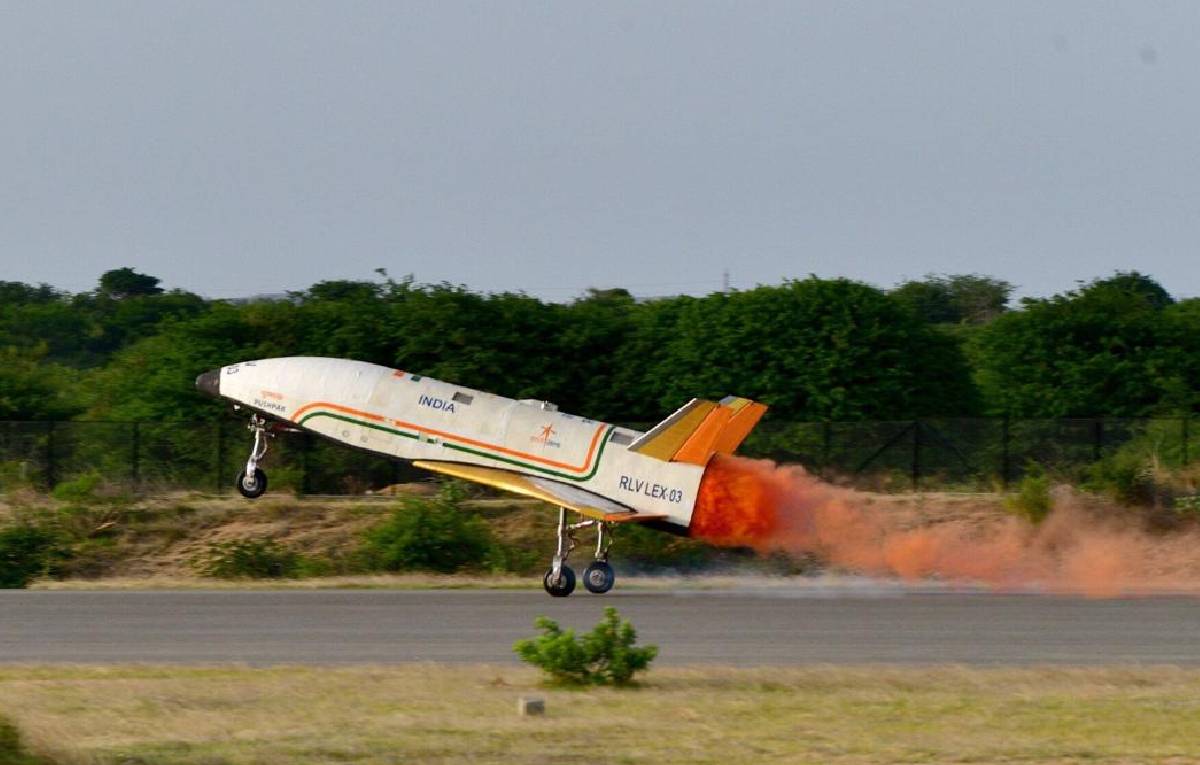
India has already shown its ambitions for reusable launch technology through the Indian Space Research Organisation (ISRO). ISRO successfully conducted the Reusable Launch Vehicle Landing Experiment (RLVLEX) in recent years, which proved key technologies needed for future reusable spacecraft. Commercializing reusable rockets would require sustained investment, fast innovation, and strong participation from private companies.
Several Indian startups Skyroot Aerospace, Agnikul Cosmos, Bellatrix Aerospace, and Pixxel are expanding the country’s private space sector. While some of the most recent startups focus on small satellite launch vehicles and propulsion systems, reusable launch technology is emerging as the next big step forward.
It takes a huge amount of engineering, precision navigation, lightweight materials, and extensive testing to create rockets that can land on the ground or can be brought back with a controlled recovery.
The space sector reforms in the Indian government have created many new opportunities for private companies that are being introduced to the space sector.
The establishment of the Indian National Space Promotion and Authorization Center (IN-SPACe) has enabled startups to access ISRO facilities, technical know how, and launch infrastructure to establish themselves in ISRO space and launch facilities. With these changes in policy, new investor interest from both domestic and international companies has been attracted to help build up the space industry in India and finance a space sector in which India is rapidly expanding.
Reusable rocket development remains one of the most expensive and technically challenging ventures in aerospace. Building engines that can withstand repeated launches, reliable recovery systems, and strict safety requirements must be developed and are reliable, taking years of research and significant capital to produce and test.
Many startups must strike a balance between innovation and commercial sustainability in order to compete with the fast-growing global launch market.
The demand for affordable satellite launches is growing with the rise of satellites, telecommunications, navigation, and broadband internet. With Indian companies able to build reusable launch vehicles, they will capture more and more of the global small satellite launch market with less reliance on foreign launch providers.
India's ambitions go beyond commercial launches. Reusable rockets would serve future lunar or deep-space missions and human spaceflight missions in the long run too.
As the space economy enters a period of global competition, the ability to develop reusable launch technologies is of paramount importance to any country aspiring to be at the forefront of the space business.
While India's private space industry is still in its embryonic stage compared to the world leaders, it is a well-resourced sector with engineering talent, supportive government policies, and growing investor confidence.
A successful Indian version of the "SpaceX moment" will not happen overnight, but if reusable rocket technology is proven successful, then it could change the landscape of space exploration and commercial space missions forever.