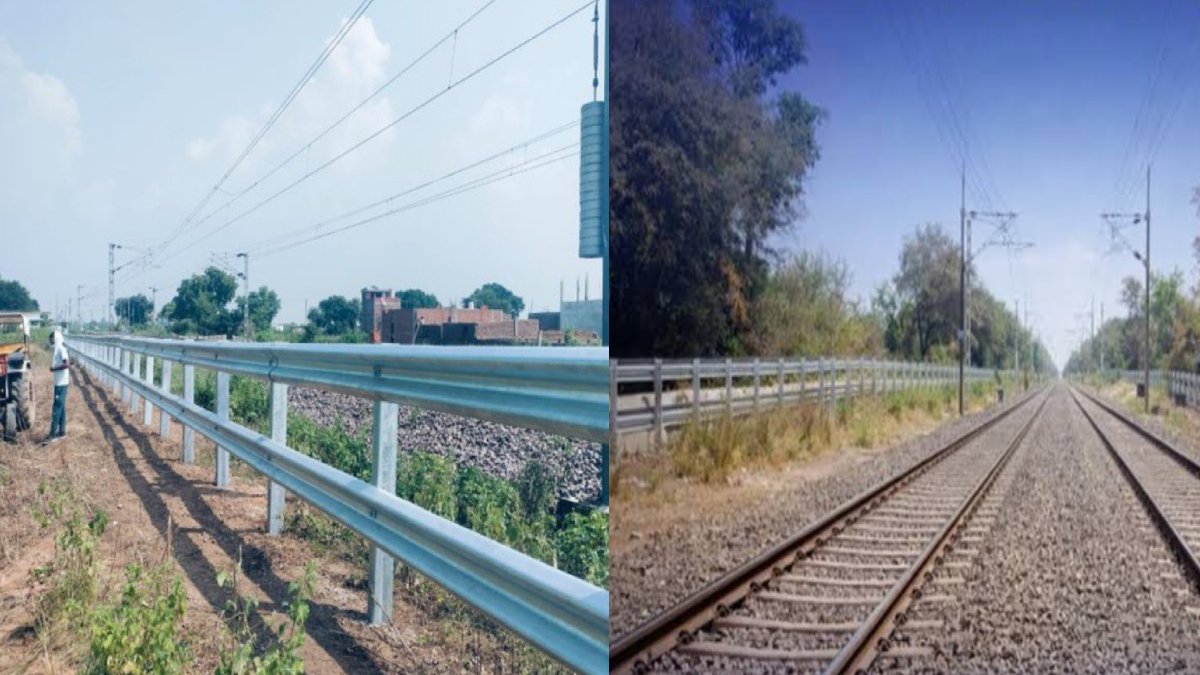
In India, Indian Railways has built over 19,700 kilometres of safety fencing along railway tracks across the country, which is a major infrastructure investment to prevent trespassing in the railways and to make trains safer. This is an attempt to strengthen railway infrastructure, prevent unauthorised access to railway tracks, and improve train safety in general for the safety of passengers and railway workers.
Railways are among the most sensitive areas of the railway network. Trains travel very fast, and even a brief obstruction or unauthorised presence on the tracks can pose a major hazard.
Trespassing has long been a problem in areas where railway lines pass through densely populated neighbourhoods, villages, industrial zones, and other places where people may try to cross tracks instead of using designated bridges, underpasses, or level crossings.
So the fencing that is being installed (around 19,700 kilometres) is meant to act as a physical barrier between railway tracks and the surrounding areas. Fencing can make for safer crossing points and a safer crossroads by restricting access for unauthorised people and keeping the railway authorities in control of the railway line.
The scope of the project is so large because the Indian Railways network spans a huge geographical area and millions of passengers are drawn upon it every day. Railway lines pass through cities, towns, rural areas, agricultural regions, and difficult terrain. Fencing over such a large network of railways needs a lot of planning, engineering, and coordination between different railway zones and divisions.
So safety is the most important thing in railway operations. Indian Railways has introduced many technological and infrastructure-based measures to improve safety. These include modern signalling systems, track renewal, automated systems, better inspection processes, removal of some level crossings, and other measures to reduce accidents.
Track fencing adds an additional layer to this safety system. Although fencing cannot eliminate all possible risks, it can reduce the risk of people entering railway corridors at unauthorised locations. And that is especially critical in populated areas where railway tracks may run near residential homes, markets, schools, or other public spaces.
Trespassing can take place for various reasons. In some places, residents use tracks as shortcuts between neighbourhoods. In rural areas, people may cross railway lines to reach farms or nearby settlements. Children and pedestrians may also enter railway property without understanding the danger associated with approaching trains. Physical barriers might make such unauthorised access harder.
Fencing is one piece of the whole safety package; public awareness is just as important. People living near railway tracks should know that railway corridors are restricted areas and crossing tracks outside designated points can be extremely dangerous. Awareness campaigns can complement physical infrastructure by explaining why railway safety rules exist.
Fencing with concrete prevents unauthorised movement of people across tracks, which can lead to operational problems and safety challenges for train drivers and train staff. A clearly protected railway corridor can give trains the space to run without being distracted by people or other unauthorised users crossing the railway line.
The project shows the need to integrate infrastructure with safety management. Railways are complex systems in which track condition, signalling, rolling stock, human behaviour, and surrounding land use all affect operational safety. A physical barrier can address one of these challenges by restricting access to areas where the public should not be present.
Fencing is especially required in urban and suburban areas as cities grow, and residential and commercial development occurs too close to railway tracks. In this way, railway infrastructure and the surrounding community can be closer. Fencing can help to define an area of railway property and neighbouring areas.
In some places, railway tracks have been used as informal walking routes. Residents may choose these routes because they are shorter or more convenient than going to an official crossing. Such behaviour may sound routine, but the risk is high as trains come in so fast and may not always be audible from a distance because of the background noise.
The availability of safe alternatives is therefore an important element of the solution. Where railway tracks act as barriers between communities, properly designed foot overbridges, road overbridges, underpasses, and other authorised crossings can provide safer ways for people to travel. Fencing is best combined with convenient alternatives that allow pedestrians to cross railway corridors legally.
The installation of nearly 19,700 kilometres of fencing is also part of a much larger infrastructure transformation of Indian Railways. Large-scale projects are being undertaken to enhance speed, capacity, passenger experience, and safety. Infrastructure upgrades are increasingly being designed with safety considerations in mind, as well as to make sure that safety is not considered a separate issue.
Fencing will also need maintenance once it is done. Barriers can become damaged due to weather, construction activities, accidents, or unauthorised attempts to create openings. Regular inspections and repairs will be necessary to ensure that the fencing continues to serve its intended purpose.
Local communities can also contribute to the safety of railway infrastructure. Reporting damages to fencing or unauthorised openings to railway authorities in advance may stop vulnerable points from developing along the network. Public cooperation is especially important in densely populated areas where railway boundaries may be exposed to frequent human activity.
The initiative also has implications for railway employees. Train track workers, maintenance staff, and inspection personnel operate in areas where trains are moving at high speed. Boundaries that are clearly defined will help to separate public movement from railway activities and may even stop people from accidentally entering restricted areas.
At the same time, railway fencing should be considered as part of a wider approach rather than a standalone solution. Safety is based on a number of factors: infrastructure quality, signalling, operational discipline, maintenance, staff training, passenger awareness, and responsible public behaviour.
The fencing project may not always be visible to passengers when it is located along tracks away from the railway station. But even so, it is an essential part of the railway safety environment. Passengers ultimately benefit when railway operations are conducted in more controlled and secure corridors.
The installation of almost 19,700 kilometres of safety fencing is a major step in the right direction to address one of the perennial problems in train networks: unauthorised access to tracks. As India's railway system expands and modernises, protecting railway corridors will remain an important component of ensuring safe and reliable train operations.
The initiative also sends a clear message that railway tracks are not public places and should only be crossed at authorised locations. Even if a shortcut appears practical, the consequences of walking along an active railway line can be very serious.
🚨Indian Railways has installed approximately 19,700 kilometres of safety fencing along railway tracks across the country.
— Radio India 🇮🇳 (@Radio_India_) August 14, 2026
This has been done to prevent trespassing and facilitate safer train operations. pic.twitter.com/P1XNQAlKGx
In the future the fencing program will be maintained, and enforcement will be undertaken to make it better. So authorities will need to look at where some barriers or safer crossing facilities are required and communities should follow railway safety measures.
India’s rail network is the backbone of people, business and regions across the country. And with millions of passengers depending on trains every day, having safe trains is vital. Track fencing and other infrastructure measures are a step in that direction by preventing unauthorised activities and better delineating the boundaries between railway property.
So, installing around 19,700 kilometres of safety fencing is a crucial step to enhance railway safety. And with the technology improvements and better infrastructure, awareness campaigns and responsible behaviour of the people in India to take forward the way Indian Railways should operate rail services in the country.