Indra Nooyi has sparked debate on social media by discussing India, China and America in an interview that she had in detail compared leadership, governance and opportunity. Her comments on India's “chaos” in particular and the meritocratic culture of America and the rapid growth of China in the context of the global fast track have received both praise and criticism.
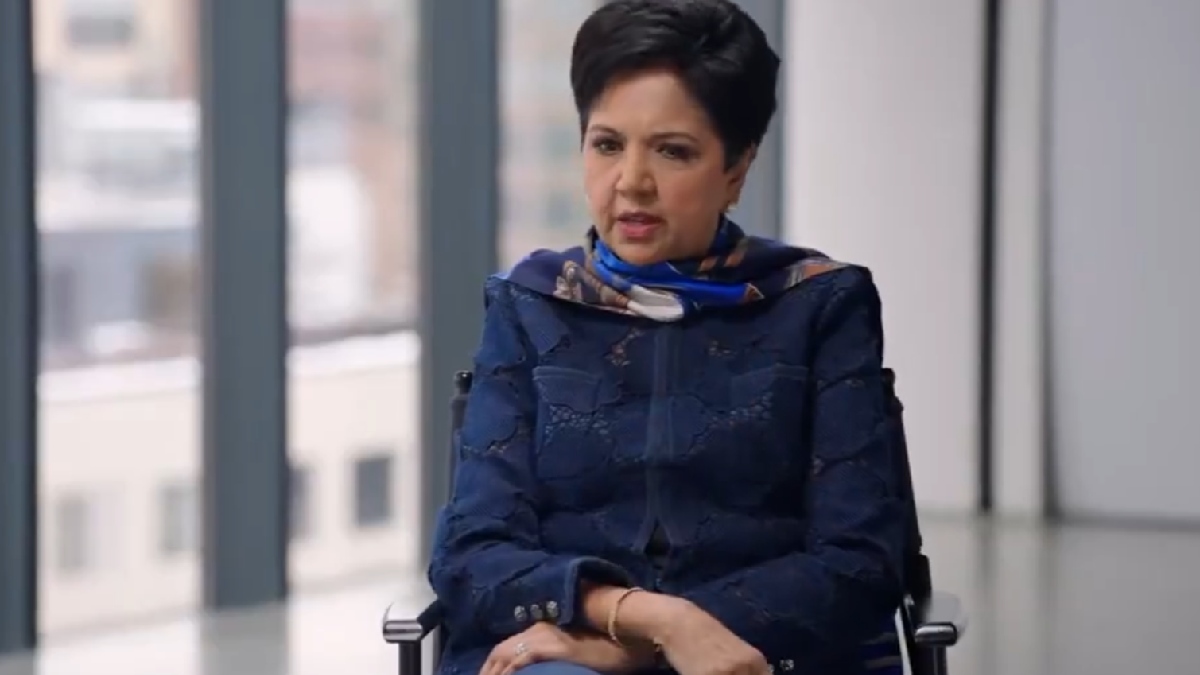
Nooyi, speaking in a discussion on leadership and innovation, said what separates the three countries is that each has a unique experience.
As she described India, she suggested that a country’s appeal is not in orderliness but in its vibrant unpredictability.
"India is going to be impossible if you like clean, orderly life. The beauty of India is in its chaos. If you like chaos, you go back. Then India is a drug."
Her comments were quickly picked up on the web, with some viewing the statement as an acknowledgment of India’s diversity, energy and complexity but others as a criticism of the country’s infrastructure and civic condition.
Nooyi's assessment of the opportunities in the United States was another aspect of the interview that generated widespread discussion. Looking back on her own journey from Chennai to becoming the chief executive of one of the world's largest food and beverage companies, she hailed the American system for allowing talent to rise regardless of background.
"I could never have become CEO in any other country in the world, including in India. It's because the system here in America is a meritocratic system. It’s because the mentors here don’t care if you’re male or female... they just want the best brains to rise to the top."
"I could never have become CEO in any other country in the world, including in India..It's because the system here in America is a meritocratic system," says ex-Pepsi CEO Indira Nooyi pic.twitter.com/nOVN71lMry
— Shashank Mattoo (@MattooShashank) July 2, 2026
Nooyi also spoke about China’s transformation over the past few decades, saying she admired how the country emerged as a global economic powerhouse through a centrally driven model of governance.
"I respect the Chinese system for pulling China out of the dark ages. It became a world power because they did it centrally. India is still struggling to be a world power because democracy rules and progress is slow. But I am happy it is a democracy."
Ex-Pepsi CEO on India vs China:
— Shashank Mattoo (@MattooShashank) July 2, 2026
"I respect the Chinese system for pulling China out of the dark ages. It became a world power because they did it centrally. India is still struggling to be a world power because democracy rules & progress is slow. But I am glad it is a democracy" pic.twitter.com/em2zAbk1g9
The comments quickly polarized opinion on social media.
Some users supported Nooyi’s observation that her comments were uncomfortable truths, not criticism, and many users agreed with Nooyi’s observations and argued that her comments expressed uncomfortable truths as opposed to criticism. Some said Indians need to be able to listen to more constructive feedback in the right way and should not react negatively but rather be more open to it.
One user wrote, “Very first thing we Indians should start doing is taking constructive criticism. What she said is all true.”
Others agreed with her view about the United States and said the country’s innovation ecosystem continues to draw global talent because it rewards hard work, entrepreneurship and merit. One user said America is still a place where people with good work ethics and innovative ideas have a real chance to succeed, and another referred to Nooyi’s remarks as “a big eye opener.”
However, others disagreed with her.
Critics questioned if the United States could truly be seen as a more meritocratic society for women, pointing out that the country has never elected a woman as president. Others argued that India’s problems went beyond what Nooyi called “chaos.”
One social media user wrote, “As somebody who loves the chaos and diversity of India, I refuse to believe that is what makes it unliveable. It is the pollution, cruelty on the streets and trash everywhere that makes it hard.”
The divergent responses illustrate that Nooyi’s words touched on the broader issues of governance, economic development, opportunity and national identity. So a few saw her comments as an honest reflection from decades of corporate experience, but others felt her comparisons ignored the social, political and cultural complexities that drive each country.
The conversation is still ongoing online, but Nooyi’s interview has once again illustrated how comments from world-class business leaders can influence conversations far beyond the boardroom and make it much easier to wonder what is progress, opportunity and quality of life for people from all over the world.