With fears of global supply disruption leading to long lines, panic buying and panic at fuel stations across India, many citizens are trying to stockpile petrol and diesel in large tanks and drums this March. But beyond the mere immediate danger of a fire, this habit has serious legal ramifications under Indian law. If you are considering filling a private tank with thousands of litres of fuel, you must understand the strict regulations about how you can store your petrol.
The Legal Limits: How Much Can You Store?
The Petroleum Act, 1934 and the Petroleum Rules, 2002 define strict rules for fuel storage in India. The laws categorize fuel on the basis of its “flash point,” and clearly define the limits of how much a person can possess without a specialized license from the Petroleum and Explosives Safety Organization (PESO).
In the case of Petrol (Class A), which is highly flammable, the license-free limit can be only 30 liters, which even must be kept in approved, tightly stoppered containers of not more than 1 liter each (or 25 liters in metal). Diesel (Class B) The limit is 2,500 liters (excluding bulk containers of over 1,000 liters; this type of container is not allowed to be stored without a license). Any storage above those limits for even 1 liter without a permit is unlawful.
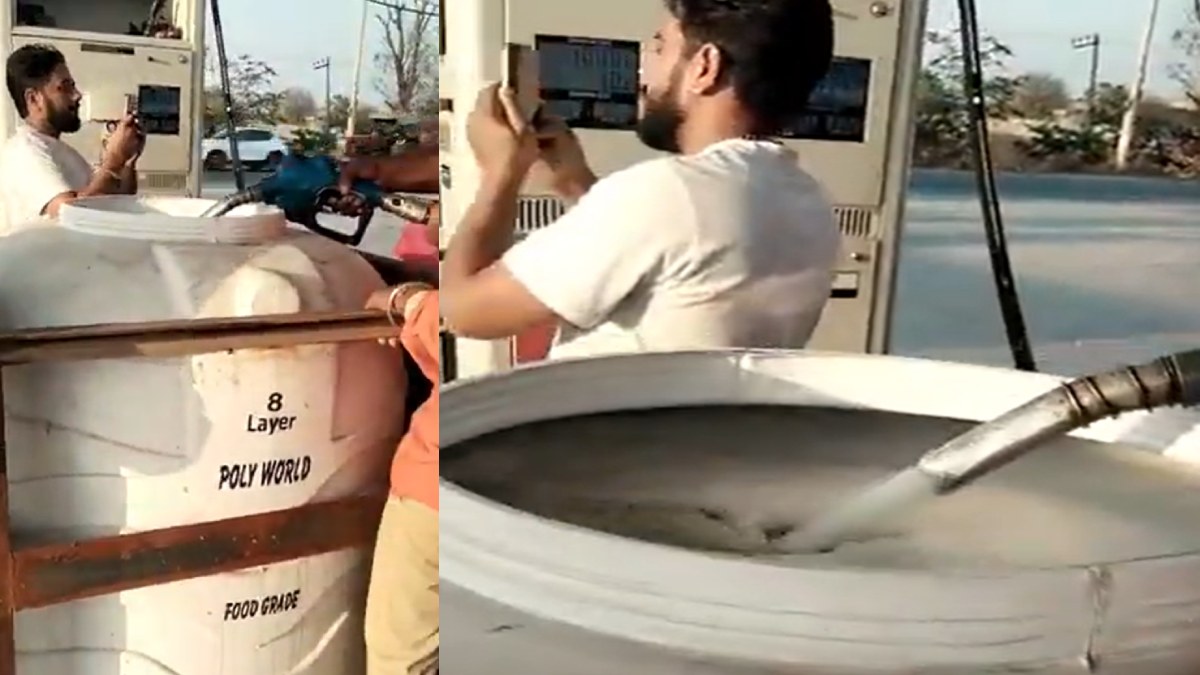
People are doing panic buying of petrol diesel
— Woke Eminent (@WokePandemic) March 5, 2026
Is this legal to fill thousands of liters in a tank by a petrol pump?
Because storage of such huge quantities by citizens can lead to major fire accident. pic.twitter.com/CGKoeYKkij
Can Petrol Pumps Fill Bulk Tanks?
Well in a word--Under the Petroleum Rules, petrol pump dealers are prohibited from dispensing fuel into any container or tank that is not a motor vehicle without a valid fuel storage license on the purchaser’s behalf. Dealers are required to dispense fuel to the vehicle's fuel tank directly as a safety precaution.
Now, in the states where panic buying occurs, the administration specifically prohibited selling “loose” fuel in bottles, in plastic cans or in unapproved drums. Pumps discovered selling thousands of liters of fuel to people in private external tanks will find their license extinguished immediately, and are charged under the Essential Commodities Act, 1955.
The “Silent Killer”: Why Bulk Storage Is a Fire Hazard
These strict laws are in part a result of the extreme volatility of the gas fumes of fuel. It evaporates at low temperatures, and at relatively low temperatures these invisible vapors, even in a non-industrial environment, such as a garage or basement, can build-up quickly. That one spark from a light switch, a cell phone or static electricity stored in a plastic container could set off a giant explosion.
Home storage also does not have the vapor recovery and "hazardous zone" electrical fittings of professional stations. Also, fuel which is being poured into unauthorized plastic drums is also hazardous since petrol can degrade some of them and will have a leak in some place, and then static charges can build up and lead to a fire igniting the fuel when it’s poured.
Legal Consequences of Hoarding
Federal officials have warned against any breach of fuel storage orders receiving stern punitive action. Persons convicted of unauthorized bulk storage can have their full stock confiscated and the containers confiscated. Petroleum Act breaches can result in imprisonment and the Essential Commodities Act (punishments from 3 months to 7 years) will apply if you hoard essential materials because of an emergency. Most domestic insurance policy and rental agreements are also completely void upon storage of flammable liquid materials at home, making the owner responsible for the loss following an accident.