India’s external affairs minister S Jaishankar has identified terrorism and trade as two major issues that are at the heart of India-US friction. In a speech at the Asia Society in New York after the United Nations General Assembly's High-Level Week, Jaishankar said, “India's concerns about cross-border terrorism need to be taken into account by its international partners and we need to understand the national security issues in relation to cross-border terrorism should be better understood by the rest of the world." He also cited problems with the proposed India-US trade agreement and his views about India's relationship with China.
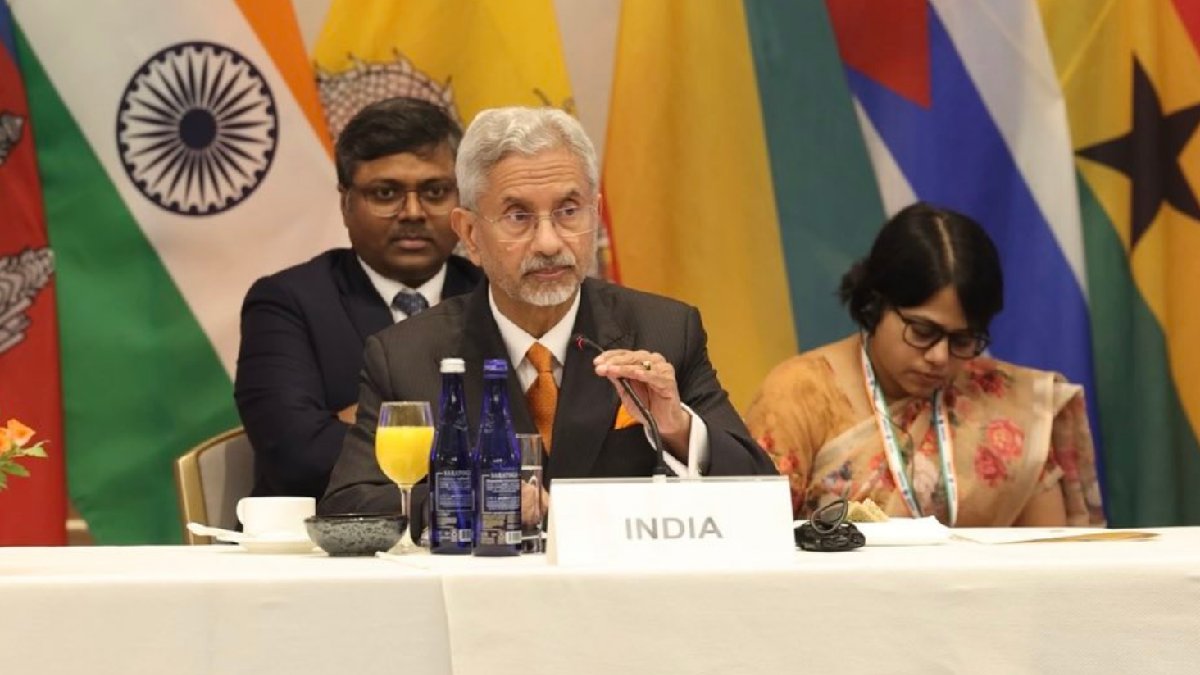
For Jaishankar, it comes as Delhi and Washington are involved in trade talks while India confronts security issues in the region. India’s years of terrorism emanating from a neighbouring country over the last decades has made it a national security concern, he said. A lack of understanding or empathy in this experience will cause a lot of damage to bilateral relationships.
Jaishankar Flags Terrorism As A Major Concern
Jaishankar said terrorism remains one of India’s top concerns in the wake of the long history of attacks that originate in India. India’s partners need to understand the security context in which New Delhi sees such threats, he said.
The remarks followed Jaishankar’s UNGA speech in which he warned against attempts to normalise terrorism and said countries should not expect immunity from the consequences of supporting or tolerating it. He did not name Pakistan directly in that UNGA address, but his comments were widely understood in the context of India’s longstanding concerns about cross-border terrorism.
Jaishankar’s comments also come at a time of increased US engagement with Pakistan, which has raised New Delhi’s concerns. The External Affairs Minister said how security concerns are perceived would shape the longer-term strategy of bilateral relations.
India-US Trade Deal Faces Tariff Complications
Trade was the second major issue highlighted by Jaishankar. India and the US were in advanced stages of talks and the two sides had agreed on many aspects of the proposed agreement, he said. Nonetheless, shifts in the US tariff framework have complicated the final phase of negotiations.
Jaishankar pointed out the changing tariff environment and the ongoing Section 301 process as factors that have made it more difficult to determine the final shape and timing of an agreement. He said the trade pact is still a long way away but the change in US tariff structure is adding more complexity.
The negotiations are especially sensitive for India because the country’s economy is made up of a lot of small farmers, manufacturers and businesses. Jaishankar said concessions to tariffs will have consequences outside of big industrial companies, impacting the interests of the rest of the country as well.
A trade agreement, if finalised, could also contribute to improving the overall relationship, Jaishankar said. But talks are still in progress and no final agreement has yet been made, as of September 29.
Piyush Goyal Heads To US For Further Talks
India's Commerce and Industry Minister Piyush Goyal will visit the U.S. from September 29 to October 5 to discuss further the bilateral trade agreement. He will attend the G20 Trade Ministers' meeting and meet with US officials.
All parties will have to discuss some of the issues of tariffs and other aspects of a bilateral trade deal, the visit would also be a significant step in the negotiations which are at an important stage with both countries looking at an interim trade agreement.
Jaishankar’s comments underline that trade is not being viewed separately from the wider strategic relationship. Economic negotiations, security concerns and public perceptions are increasingly interconnected in the way countries manage major bilateral partnerships.
Social Media And Public Opinion Influence Diplomacy
Jaishankar also highlighted the growing influence of public opinion on foreign policy. Social media has changed the ways governments operate, he said, especially in democratic countries.
He stressed the tension between economics of mobility and politics around mobility, and that public sentiment can increasingly affect decisions related to the movement of people, migration and international economic relationships.
The observation is also indicative of a broader change in diplomacy in which government-to-government talks are increasingly accompanied by public debate online. Political leaders and policymakers have to account for domestic reactions while managing international relationships.
India-China Relations Show Signs Of Improvement
Jaishankar also discussed India’s relationship with China, saying the bilateral relationship is in a better position than it has ever been in the last few years. He linked the improvement to developments along the India-China border following the long-drawn-out conflict that started with the 2020 military crisis.
The External Affairs Minister stressed that the border remains central to the whole of the relationship. His point was that the border condition determines India-China relations. His recent report has also noted that relations have recovered from their lowest point and are still well-connected to the situation along the border.
It is that despite a general improvement in diplomatic engagement, the border is still at the heart of how far relations can now be normalized.
#WATCH | New York, USA: At the Asia Society event, External Affairs Minister Dr. S. Jaishankar expressed concerns over the lack of empathy from the US side regarding India's cross-border terrorism concerns, ultimately impacting bilateral ties.
— ANI (@ANI) September 29, 2026
He adds, "...What for us in India… pic.twitter.com/0IcLrT86ap
Global Conflicts Add Pressure On Developing Economies
And beyond India’s bilateral ties, Jaishankar also discussed the wider world and the economic impact of ongoing conflicts. Wars in Ukraine and the Iran-Gulf region, he said, are the sources of additional strains on energy, food and fertiliser markets.
At the Asia Society, he also referred to a wider “4F” challenge that includes food, fuel, fertiliser and finance. These pressures can have a disproportionate impact on developing economies because disruption of energy and commodity markets can affect inflation, growth and access to essential resources.
Jaishankar also pointed out that the international system is moving towards more multipolarity. These countries should therefore try to go for diversified relationships rather than depend on only one strategic or economic partner.
Thus, his comments place India-US relations in a much broader geopolitical context. Terrorism concerns, trade negotiations, tariff policy, mobility and changing global alliances are all affecting the relationship at the same time, while India's ties with China and other major powers continue to evolve alongside them.