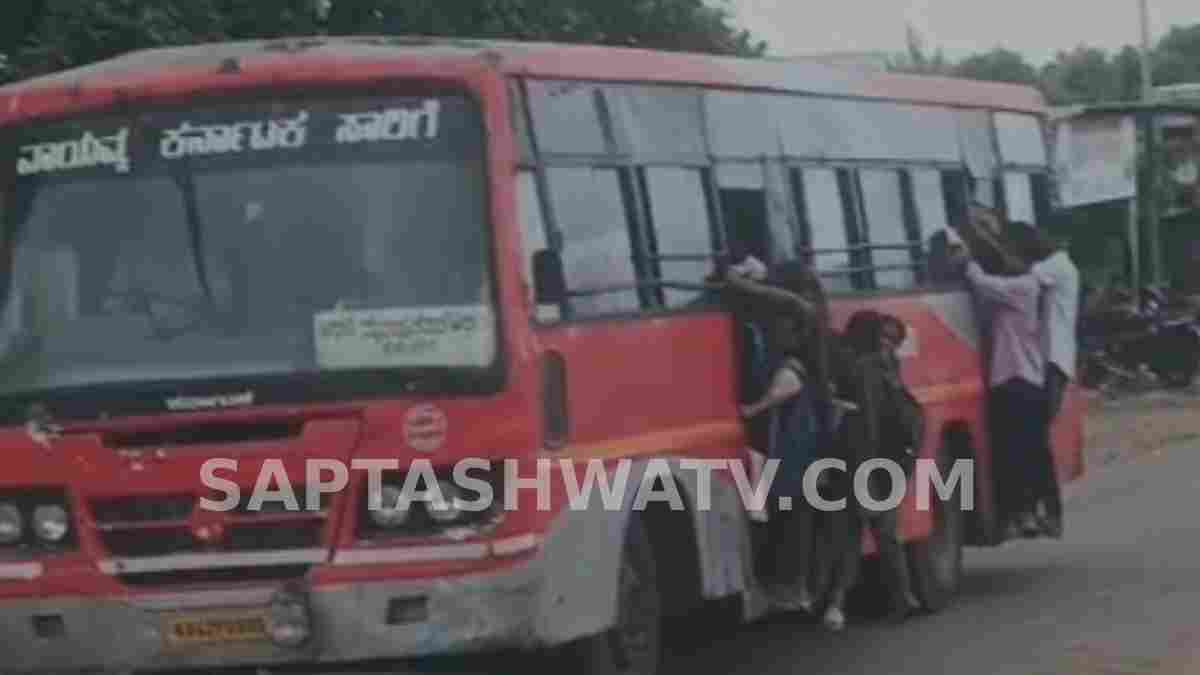
Hundreds of school and college students from Jhunjharwad village in Belagavi district, Karnataka, are also said to be risking their lives every day because of a lack of public transport. With only limited bus services and overloaded vehicles, many students have to cling to bus footboards and door handles to travel to the educational institutions in Athani, raising serious concerns about commuter safety.
The news has caused alarm among parents and villagers who say that despite repeated appeals, the public transport services on the route have not improved much. Public interest in these issues was also high because Raju Kage of the constituency is also the chairman of the North Western Karnataka Road Transport Corporation (NWKRTC).
Daily struggle for students
Every morning, hundreds of students from Jhunjharwad travel to Athani to attend schools and colleges. But buses either do not arrive on time or are already overcrowded by the time they reach the village, having picked up passengers from neighboring areas.
Students are so scared of missing class or exams or some other important academic activities that they board buses even if there is no room to do so. They are seen on the footboards or hanging onto the entrance of moving buses, exposing themselves to significant danger throughout the journey.
Residents say this has become an everyday reality rather than an isolated incident.
Parents fear for their children’s safety
The dangerous mode of travel has left parents deeply worried. Children go to school in the hope that they will get a good education, but the rest of the day is a nervous one until they return home safely.
And for residents in the area, even a sudden brake, a sharp turn, or a small collision might send students falling from the moving bus and could cause them to get hurt or even die, they say. They argue that the lack of transport services has turned a routine journey to school into a daily safety hazard.
The danger is even worse during monsoon season when wet roads and slippery terrain increase the chances of accidents.
Demand for better transport services
The bus shortage in the village has persisted for a long time, they claim. They say government welfare schemes have made travel cheaper, but with little to no buses available to students, they are still struggling to reach their destinations safely.
Among the primary concerns voiced by residents are:
- Unavailability of buses during peak school and college hours.
- Frequent delays and poor timetable adherence.
- Limited rural bus services and overcrowding on rural routes.
- Lack of dedicated student-special buses.
- Less emphasis on transport connectivity for villages compared to urban areas.
Calls for immediate action
Residents have asked NWKRTC authorities to introduce at least two or three additional buses during the morning and evening peak hours between Jhunjharwad and Athani. They have also requested dedicated student-special services to ensure safe and timely transportation for school and college students.
Villagers believe that strict monitoring of bus schedules and better coordination by the local transport depot may significantly improve the situation.
Need for safer rural transport
Road safety experts have repeatedly warned that travelling on bus footboards is extremely dangerous and can result in fatal accidents. Overcrowded buses also make emergency evacuations difficult and pose risks for both passengers and drivers.
Reliable and accessible public transport is essential for ensuring uninterrupted education for students in rural areas. Adequate transport infrastructure not only improves attendance but also protects young commuters from avoidable risks.
The residents of Jhunjharwad are now hoping that transport authorities will address the issue before a serious accident occurs. They insist that ensuring safe travel for students should be treated as an urgent priority rather than waiting for a tragedy to prompt action.