Karnataka is one of the worst-performing major states in terms of girls dropping out of secondary school, according to the latest UDISE+ (Unified District Information System for Education Plus) Report 2025-26 of the Lok Sabha. The report has raised serious concerns on girls' education, as Karnataka has a much higher dropout rate among secondary school girls than the national level.
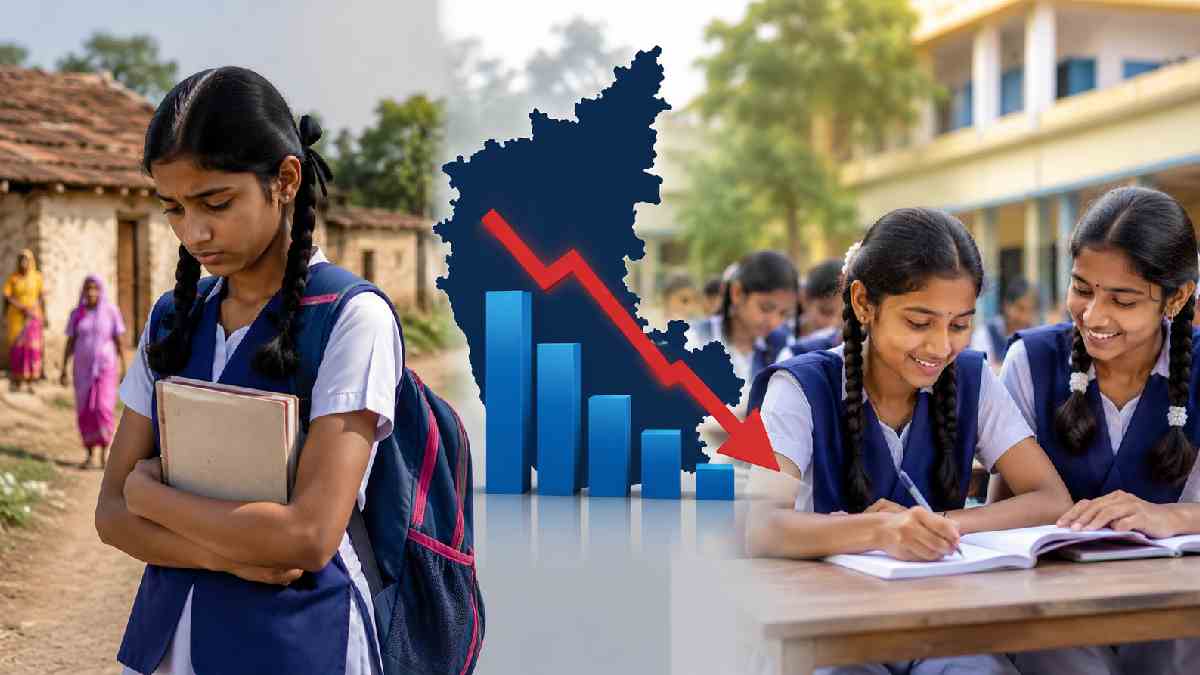
The report shows that 13.9% of girls studying in Classes 9 and 10 in Karnataka stop their education before they complete their secondary school. The dropout rate for girls in Karnataka is one of the highest in the country at the secondary level.
Above the National Average
The national average dropout rate for girls at the secondary level is 8%, so Karnataka's figure is much higher at 13.9%.
The state has made some progress in the last three academic years, but progress is slower than in other states.
According to the report:
2023-24: 19.6%
2024-25: 14.6%
2025-26: 13.9%
While these numbers show a dropout rate is decreasing over time, Karnataka is still among the poorest states among the bigger ones in India.
Higher than Bihar and Uttar Pradesh
One of the most striking findings in the report is that Karnataka's dropout rate among girls is higher than that of Bihar and Uttar Pradesh, states that have historically faced more educational challenges.
The data indicate that these states have made relatively better progress in retaining girls in secondary education, while Karnataka still faces significant barriers in preventing students from leaving school before completing Class 10.
National Comparison
The report also notes that Ladakh has the highest girls’ secondary school dropout rate in the country at 15.6%.
Among the larger states, Karnataka and Assam had the highest dropout rate at 13.9%, highlighting the need for more intensive intervention to increase educational retention among adolescent girls.
Why the Data Matters
At a lower school age, dropping out of school at the secondary level has long-term effects on girls’ education, employment opportunities, financial independence, as well as community status and social development.
Education experts say that many reasons do not only have to do with school dropouts, but also:
- Financial difficulties for families.
- Early marriage. Household responsibilities.
- Safety and transportation concerns.
- Low access to higher secondary schools.
- Social and cultural barriers.
However, the UDISE+ report includes statistical data and does not attribute Karnataka's higher dropout rate to any specific cause. Detailed studies would need to be carried out to identify the main reasons behind the trend.
Need for Stronger Intervention
The results underscore the need for additional education initiatives to be strengthened that help keep girls in school, education experts say. The recommendations include increasing scholarship programmes, improving transport facilities, counselling support, building up school infrastructure and educating the community about the importance of girls’ education.
Government welfare programs and targeted interventions have made dropout rates in some states lower. Karnataka could be strengthened further to develop these systems and bring dropout rates closer to the national average, experts say.
The UDISE+ report is an important indicator to policymakers and education authorities, and Karnataka has improved in the last few years; however, the data shows that there is still much more that needs to be done to make sure that every girl finishes her secondary education without interruption.