Karnataka Health and Family Welfare Minister U.T. Khader has also recommended that the production and sale of counterfeit medicines be punished more harshly with criminal penalties for individuals involved, not simply by giving them a licence-cleaning decision, but because there are people who will pay fines and licences and because they make things with fake drugs and counterfeit medicines and if people make a lot of money will get hurt, he said.
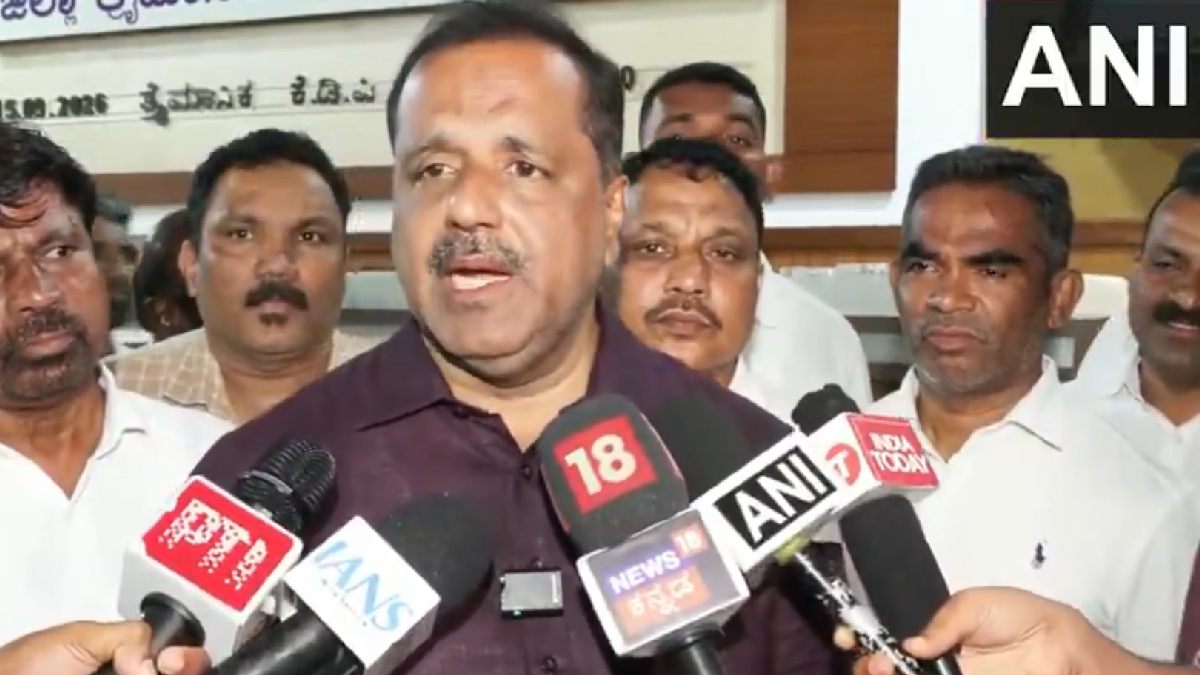
And the minister said that the state government would ask the Centre to change laws so that criminals involved in this type of business will be brought to justice, such as attempted murder or murder, in cases of public health threat.
Khader said preliminary investigations have shown that fake medicines were produced in different states and brought into Karnataka before being distributed to parts of the country. The results showed the scale of the operation and the dangers for patients who are unknowingly taking counterfeit drugs.
Health officials believe that the network may have operated in multiple states and that the investigation could be complicated and needed to be coordinated between different agencies. Public safety was the government’s top priority, and those responsible would be held liable, he said.
Based on the conversation with the Chief Minister and Home Minister, the Karnataka government has decided to form a Special Investigation Team (SIT) to investigate the matter. The team will have police officials, the Drug Control Department and the Commercial Taxes Department for investigation of the case.

Khader said the fake medicines source will be the team will also look at invoices, vouchers and other financial documents in the operation. Such records would help to trace the entire supply chain and identify all the people and entities involved in the racket, he said.
The investigation comes after counterfeit medicines worth more than ₹5 crore have been seized in Bidadi, about 50 km from Bengaluru. The government has already ordered the withdrawal of the seized medicines from hospitals, pharmacies and other distribution points to prevent them from reaching consumers.
Now the government is trying to determine how widespread the distribution system is and whether there are other batches of counterfeit drugs in circulation and how far from home they are. The government will take all measures to protect public health and to ensure that those involved do not escape any legal action, he said. “We think that the apparent interstate relations make the case very serious and a comprehensive investigation is required.”
To boost quality control and prevent such incidents in the future, the Karnataka government is also considering a state-of-the-art laboratory for random testing of medicines from factories, hospitals and retail pharmacies. Or the government can partner with a state-of-the-art laboratory to improve surveillance and quality assurance.
This would also assist in identifying substandard or counterfeit medicines early on in the process and improving the overall monitoring of pharmaceutical products in the market. Better testing infrastructure will help to restore public confidence and improve regulatory oversight, officials say.
Khader also said he wrote to the Union Health Minister to ask for a central drug surveillance officer to assist in the investigation. With the value of the seized drugs exceeding ₹5 crore, he said CBI may also be asked to investigate the case. As authorities are investigating the network’s operations, the Karnataka government is taking action against counterfeit medicine manufacturers and distributors in a bid to protect public health.