In another step towards regional water management, Karnataka and Tamil Nadu will hold the first bilateral talks on the Cauvery in over a decade next week, perhaps inching closer to resolving one of the long-standing disputes over river water in India.
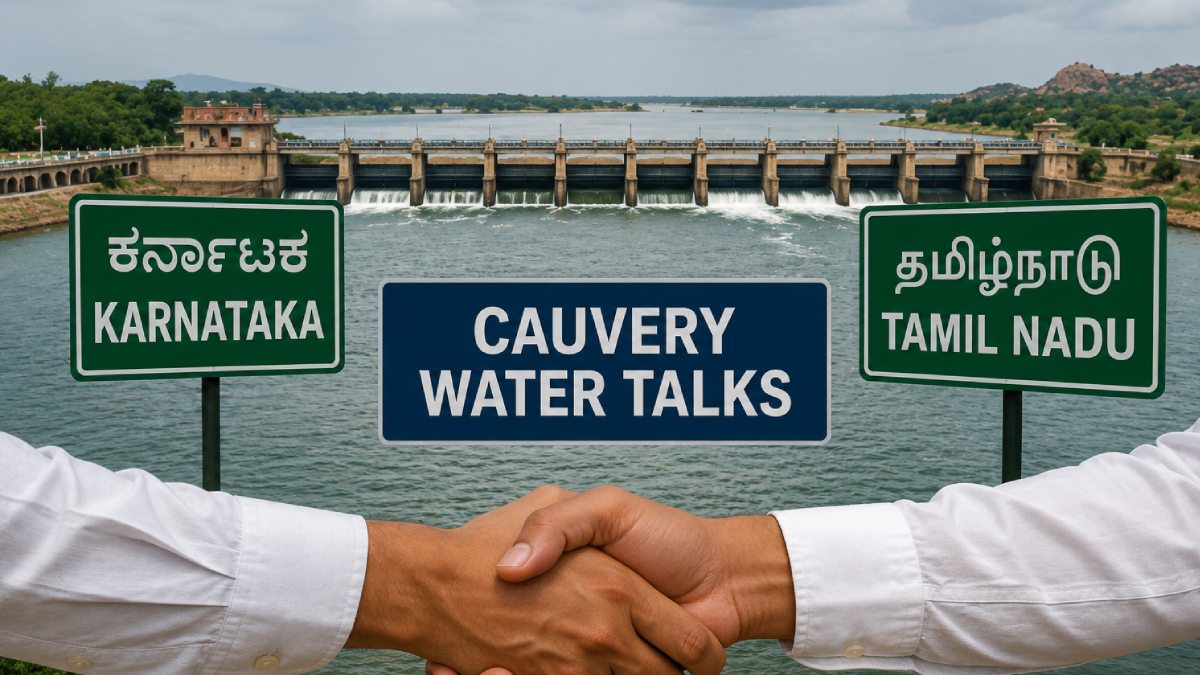
And the meeting will come at a time when water releases, reservoir levels, agricultural demands and drinking water requirements are still at loggerheads between both states. The officials from both states will discuss water sharing of the Cauvery as well as how the Cauvery water sharing process can be made a reality and how they can get involved with each other in the river management.
The Cauvery is one of the most important river systems in south India, and a lifeline for millions of people in Karnataka, Tamil Nadu, Kerala and Union Territory of Puducherry. Every year, especially in these deficient rains, disputes over water allocation are more heated and often erupt as farmers in Karnataka and Tamil Nadu protest the water allocation.
People say this dialogue will also help improve communication between the two states after many years of relying exclusively on legal mechanisms and decisions made by statutory bodies. State governments are expected to have direct dialogue with each other and to develop trust and data sharing and coordination of their water sharing arrangements during monsoon rainfall, and this way it will help develop cooperation and common ground through sharing of information and data, when the monsoon is particularly volatile.
The Cauvery dispute has been long in the making for over a century. Those agreements from the colonial era in the early days were later not so long-lasting legal and administrative disputes after independence as water demand increased in both states. The matter has been studied by tribunals, courts and central authorities in many instances and the basin states have established a mechanism for dividing up the river water.
One of the key steps in the resolution of the dispute was through the Cauvery Water Disputes Tribunal that resolved the allocation of river water between Karnataka, Tamil Nadu, Kerala and Puducherry in the wake of the long-drawn out hearings. In the end the Supreme Court of India changed some allocations but directed the establishment of permanent institutional mechanisms to oversee implementation. Today, the Cauvery Water Management Authority (CWMA) and the Cauvery Water Regulation Committee (CWRC) are responsible for monitoring reservoir levels, inflows and compliance with water-sharing decisions.
Even with these institutional arrangements in place, however, disagreements are common in years of below-normal rainfall. Karnataka often stresses the necessity for drinking water to be prioritized for Bengaluru and irrigation for the farmers in the state before releasing water far downstream, as well as irrigation for farmers.
But Tamil Nadu, on the other hand, prefers to release water at the right time, so that crops in the Cauvery delta still standing in the delta which is still a river delta where agriculture depends on water flows to be able to grow. These divergent priorities have led to some friction between the two neighboring states in recent years.
The proposed talks will be on many important topics such as reservoir management, water release schedules, rainfall monitoring, storage levels, irrigation needs, and coordination during times of water scarcity. Also, technical cooperation can be supported with better hydrological data sharing and joint monitoring of river conditions, officials will need to talk about.
Water resource experts have welcomed the move, and say that regular dialogue can complement existing legal frameworks. They say that collaborative discussions can help in addressing the operational problems, where litigation can be difficult and never solve them. Better communication among states will reduce misunderstandings, be quicker to respond and to what we know and do with those water resources, and promote scientific management of water resources.
Farmers' organisations in both Karnataka and Tamil Nadu are closely following the developments. Karnataka farmers are worried about the lack of sufficient reservoir storage for local irrigation and drinking water, especially if monsoon rainfall is not in line with the anticipated monsoon rainfall. Similarly Tamil Nadu farmers are looking for timely water releases for paddy and other crops in the delta.
Environmental experts also have pointed out the need to manage the Cauvery basin sustainably. Beyond agriculture and the needs of the city, ecological flows are essential for the health of the river and wetlands, fisheries, biodiversity and so much more. The current climate change, changing rainfall patterns and water demand are making integrated river basin management more urgent than ever.
The scheduled meeting is also indicative of a growing understanding that long-term water security will be done through cooperation and not to just comply with the law. Interstate rivers often require continuous dialogue, scientific planning, open data sharing and a well-coordinated approach to the solution to the competing needs for water supply and equitable distribution of resources.
Some of the discussions are still tentative and many people see the talks as a step in the right direction in the revival of institutional dialogue between Karnataka and Tamil Nadu. Even if no immediate solution is found, long term engagement could help to ease tension, coordinate during water years and ensure confidence between the two states.
As both governments work towards their first bilateral Cauvery talks in over a decade, the outcome will be closely watched by farmers, policymakers, environmentalists and millions of citizens who depend on the river. The meeting offers a chance to strengthen cooperative federalism and approach one of India’s most sensitive and major interstate water-sharing issues in the present state, which can be resolved.