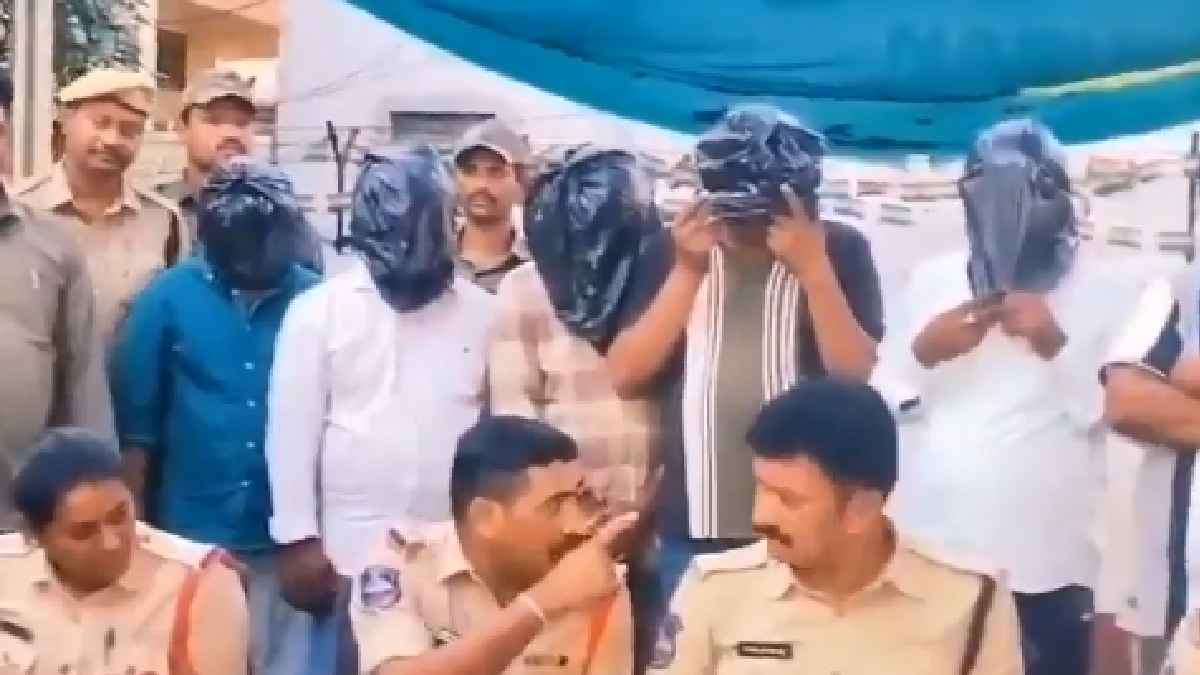
The sensational incidents in a government hospital that caused the stir in Karnataka witnessed a young doctor of Karnataka, a very young doctor, being attacked by a gang of youths at Bidar Institute of Medical Sciences (BRIMS) District Hospital (Bidar) of Bidar, who was saying he was attacked at the hospital late at night.

The attack in the dark has once again put the protection and safety of doctors working in government-administered institutions under fierce scrutiny. Preliminary reports had reported that it might be Dr Tukaram, a young doctor at the district hospital of Bidar, who was the victim.
Four to five kids reportedly assaulted the doctor in an altercation involving treatment. The youths presented to the hospital late Thursday night to receive medical treatment, according to reports. It is reported that the doctor was verbally approached by the group at the time of the consultation.
What began as a civil dispute escalated into physical violence, which saw the defendant assault Dr Tukaram, who was beaten up in the hospital itself. The attack seriously wounded the doctor, according to the accounts.
Hospital staff and colleagues on the scene at the time of the attack reportedly ran to prevent the attack by intervening to save him from the attackers. The doctor in question received a treat at the hospital. The brazenness of the attack, conducted inside a government medical facility, has unleashed anger among healthcare workers and medical personnel.
Doctors and staff have questioned why these incidents persist, particularly in a climate of persistent calls for enhanced security in hospitals, especially during the night.
Medical professionals often work extremely stressful hours, responding to emergencies, caring for critical patients and working in extremely difficult emotional situations. But attacks on doctors and health care workers have grown across some states in the past few years, as a growing concern.
Doctors’ associations have campaigned for governments to pass stricter laws and protect health care workers from violence for decades. BRIMS Hospital also revived acrimonious debates about labour relations for government doctors. Overcrowded hospitals, tight staffing levels, long waiting times, and few security guards, particularly for some part-time workers, are potential factors that could make those tensions more likely to continue.
But when the assault did occur, the police were supposed to begin an investigation and catch the criminal who committed the assault. Investigators could review CCTV footage at the facility and interview hospital staff members and witnesses in the hospital, and video tape footage should be uploaded soon.
Preliminary information by officials detailing arrests or prosecution of the attackers has not been released. The attack has been widely decried on social media. Many people are worried that safety conditions inside hospitals are deteriorating.
And some even asked whether doctors who had to wait around so they could save the lives of thousands of patients, devoted their whole lives to protecting themselves enough at their jobs.
Hospital healthcare workers, too, have been described differently, but in general as calling for the administration to take quick action to protect the health professionals who are generally supposed to make them safer doctors, nurses and support staff. The repeated violence could dent the morale of the young doctors who work in either a government hospital or health facility, and others employed as part of the staff, some said.
The attack is yet another wake-up call for a clearer system of safety in hospitals, for a stronger enforcement of existing laws protecting medical personnel, and for more people to be educated about how to interact and treat healthcare workers thoughtfully. And investigations are putting the finger on the law as things go forward.