Kerala has officially reestablished the Kumbh Mela community in a bid to bridge the spiritual divide between the two hemispheres of Indian civilization, the north and south, which has been a distance between humanity in South. Celebrating the Kumbh Mela, the grand festival began on January 18, 2026; and starts at the historic Mamankam Ground which is situated on the banks of the Bharathapuzha River, also known as the "Dakshina Ganga" (Ganges of the South).
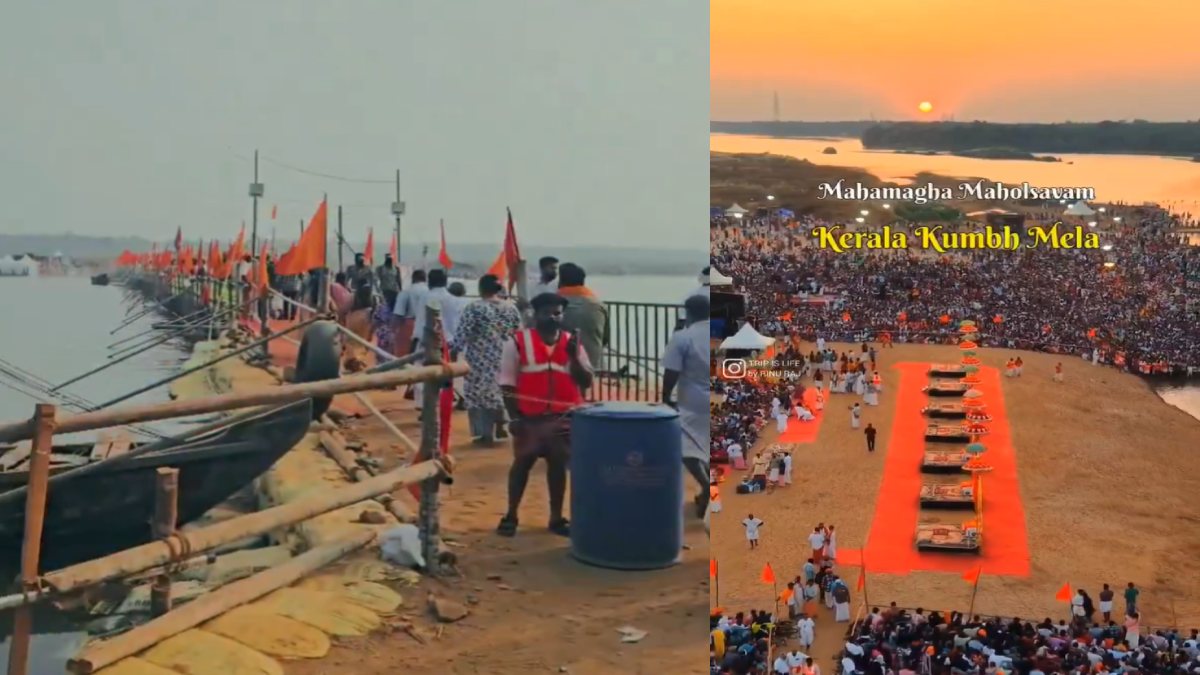
The 18-day religious celebration was kicked off by the reigning Gov. of Kerala Rajendra Vishwanath Arlekar, who called it a "reawakening of the civilizational consciousness". The Historical Eclipse. But on a global scale, the Kumbh Mela is mostly connected with the four holy places of Prayagraj, Haridwar, Ujjain and Nashik, yet it is believed that South India used to have grand cycles of this congregation as well.
The festival was only held once every 12 years in Kerala. It used to be that there were huge mass religious gatherings, but in British colonial times these gatherings were frowned upon and severely restricted. The practice was eventually suppressed and sunk into dormancy nearly 250 years ago due to a mix of colonial policies, changing political landscapes and social shifts.
Though different spiritual sects tried at least once since Independence to revive the mela, no logistical support and consensus had meant that the plan was largely on paper up until now.
The Spiritual Magnet of the 2026 Revival
The revival of Kumbh Mela has created the Mamankam Ground as a bright township of tents and ashrams. Thousands of devotees, sadhus, prayerers from across India have descended on the site to take part in rituals that have not been practiced on the scale they have done for generations.
Key Highlights of the Mela
- Shahi Snan (Sacred Bath): Devotees are taking dips in the Bharathapuzha to cleanse their sins, following ancient calculations of planetary alignments.
- Homas and Yagyas: Continuous fire rituals are being performed for global peace and environmental prosperity.
- Mamankam Legacy: The choice of venue is significant; the Mamankam Ground was historically the site where the Zamorin rulers celebrated their sovereignty and spiritual prowess.
- Cultural Confluence: Beyond the rites and ceremonies, the mela includes Kathakali and Kalaripayattu, traditional Kerala art forms, which fused spirituality with regional heritage.
Security and Infrastructure
Due to the huge number of pilgrims, the authorities have introduced a security-system that is multi-tiered in nature. Special medical camps, sustainable sanitary facilities and Bhandaras (community kitchens) have been established to cater for those who have come out to worship.
The state government insists that this revival is not only a religious religious scene, but a great advancement of cultural tourism in Kerala. And when it reaches end of the 18-day festival, the thriving revival of the Kerala Kumbh Mela is a testament to a tradition's power of revival with the belief that a 250-year flame can come roaring anew with the collective effort of several people.