A dramatic leopard rescue operation in Karnataka’s Davangere district took an unexpected turn when the injured animal attacked a Forest Department official before it could be fully sedated.
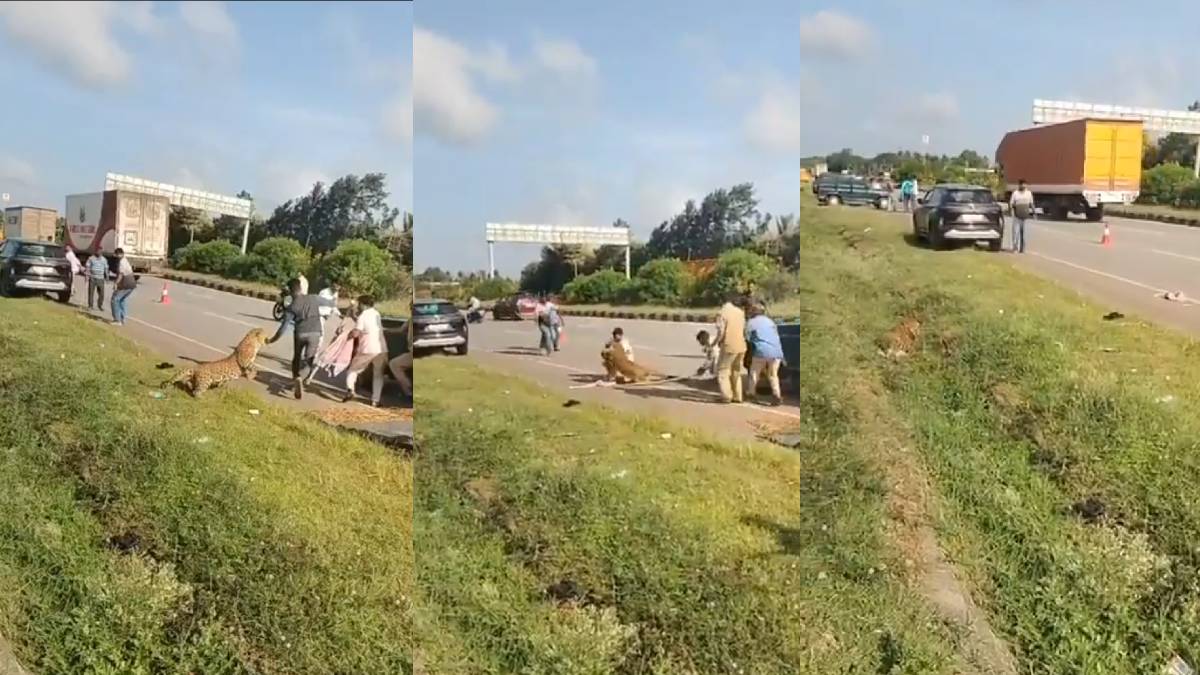
The leopard had been struck by a car on a highway in Davangere, and it was injured and urgent for the Forest Department. The officials reached the location following information about the injured leopard and began to safely rescue and secure it.
The Forest Department team administered a tranquilliser to the animal during the operation. The leopard had not yet entered deep sedation when it suddenly reacted and attacked one of the rescue officials.
The incident shows how unpredictable wildlife rescue operations can be for injured wild animals. A leopard that has suffered trauma from a road accident can be very stressed, scared, and defensive. Even after being tranquillised there can be a period before the sedative has taken effect, and that is very challenging for rescuers.
The injured official was said to have been attacked when he was in the middle of the operation. But the rescue team survived the shock and was able to secure the leopard safely.
LEOPARD ATTACKS FOREST OFFICIAL DURING RESCUE OPERATION IN KARNATAKA
— Nagarjun Dwarakanath (@nagarjund) September 8, 2026
A leopard that was hit by a car on a highway in Davangere attacked a Forest Department official during a rescue operation.
Forest officials had reached the spot and tranquillised the animal. However, before… pic.twitter.com/fqqfC3uPVm
The injured leopard has been transferred to a hospital for treatment for injuries that were caused by the highway accident, animal sources said. Veterinary experts are due to check on the animal and monitor its health.
A successful rescue comes as a relief amid growing concerns about wildlife encounters on roads and highways. Leopards are very adaptable animals and are known to move through areas close to human settlements and transport corridors, increasing the possibility of accidental encounters with vehicles.
For those that are not injured, road accidents involving wild animals can be particularly dangerous because the animals may remain close to the accident site after the accident. A driver who approaches a leopard in pain or stress may not realize the danger. The animal, already in pain and stress, will respond aggressively if they approach too close.
In general, wildlife officials need specialist equipment, trained personnel, and veterinary support to respond to these situations. When an injured or distressed animal is captured and transported safely for medical treatment, tranquillisation is often used.
The Davangere incident once again underscores the danger Forest Department workers face in dealing with wildlife emergencies. So rescue teams need to balance the safety of the public, the animal and their own personnel, in unpredictable conditions.
The fact that the leopard was eventually rescued and secured is a big part of the operation. Instead of leaving the injured animal at the roadside, officials were able to transport it for veterinary care.
A reminder for anyone heading to places where wildlife movement is known to occur, and for drivers to keep driving through or near forested areas at night and at road junctions and around forested areas. People should not approach a wounded wild animal or try to handle it themselves, and rather call the Forest Department or local authorities if they see it.
For the leopard, the immediate priority will be medical treatment for the injuries suffered in the collision. The condition of the leopard will determine the next stage of rehabilitation and whether or not it can ever be released to the wild.
As for the Forest Department official who was attacked, it illustrates the dangers of even carefully planned wildlife rescue operations. The leopard’s sudden reaction occurred before the sedative had fully taken effect; such interventions can change quickly.
The Davangere rescue ended up with the leopard safely secured and transferred to treatment, but the attack on the official highlights the need for extreme caution whenever injured wildlife is being rescued.