Maharashtra government has taken action against 114 publications described by authorities as radical or extremist material, after investigations by the Anti-Terrorism Squad (ATS) and intelligence inputs about their alleged use in promoting violent extremism and radicalisation.
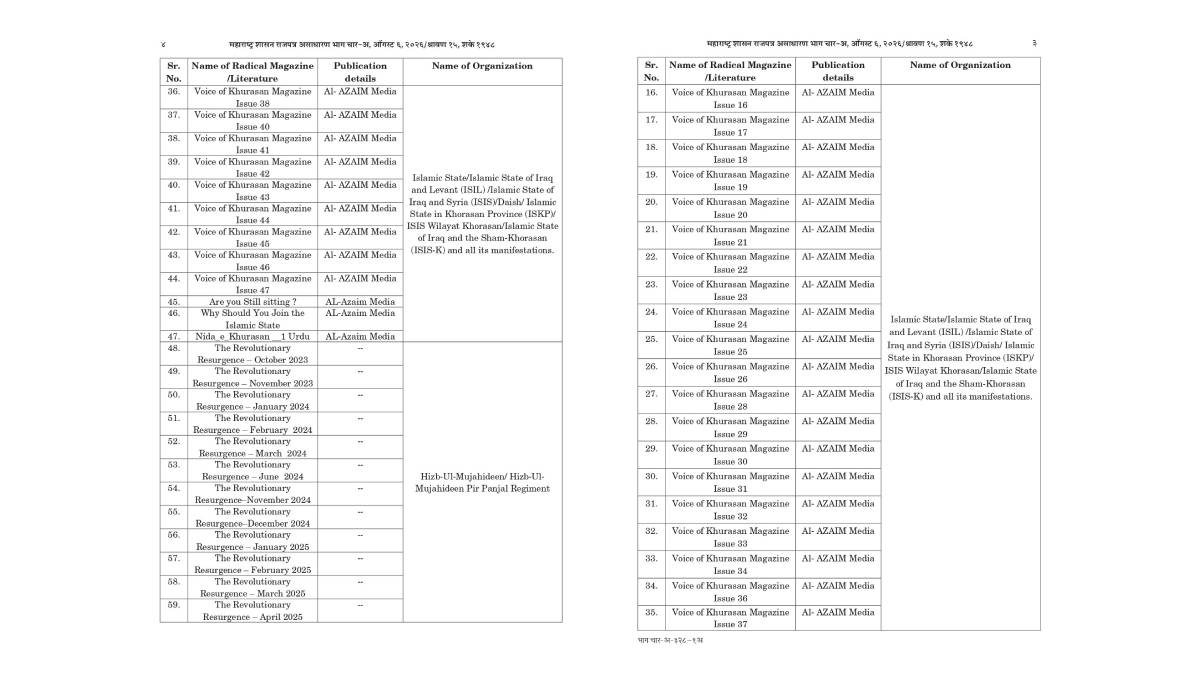
According to the Home Department’s assessment, the material includes Ghazwa-e-Hind, ISIS, Hizbul Mujahideen and Al Qaeda publications. This material could affect vulnerable people, breed radicalism and support recruitment and present a danger to public order and national security, authorities say.
The action is a significant step in Maharashtra’s effort to control the circulation of material law-enforcement agencies believe may contribute to violent extremism.
ATS and intelligence inputs trigger scrutiny.
The action followed investigations and intelligence input that led security agencies to the circulation and use of the publications. From a security perspective, the material was examined in particular for spreading extremist narratives and promoting those on terrorist organisations or violent activity.
The Home Department said some of the publications were being used as tools for radicalisation and terror recruitment. Such content is also an issue that is worrying the people of the world and creates an extremist environment, according to officials.
The list includes material associated with some internationally designated or proscribed terrorist organisations. ISIS and Al Qaeda have been involved in major global terrorist activities while Hizbul Mujahideen is under counter-terror investigation in India.
Focus on extremist propaganda
More and more security agencies have looked at propaganda and ideological material as part of wider counter-terrorism investigations. Traditional counter-terrorism operations are focused on weapons, financing and physical networks, but investigators also look at material that may have been used to influence or recruit people.
Experts believe that extremist publications can spread stories that glorify violence, incite hostility and support terrorist groups. Maharashtra’s action is a symbol for such a broader security strategy.
The Home Department’s stated concerns are violent extremism, youth radicalisation, terrorist recruitment and threats to national security and the public order.
However, the legal status and execution of such a ban would depend on the specific government order or notification issued by the competent authority. This list of all 114 publications, the legal provisions invoked and the scope of the reported ban will therefore be important for how the action is to be implemented.
National security concerns
The move is the latest manifestation of Indian security agencies’ efforts to disrupt extremist networks and prevent terrorist organisations from recruiting and using propaganda channels.
Maharashtra, with large cities like Mumbai and Pune, has long been the centre of counter-terrorism investigation in terms of radicalisation and recruitment networks. Security agencies have repeatedly stressed the need to understand extremist activities at an early stage.
They were to find out if the publications were gathered, circulated or actively used for recruitment and propaganda. And such differentiating factors become important as investigations and subsequent legal actions proceed.
The ban also underscores the increasing need for intelligence-led action against extremist content. As propaganda is now being spread to people more and more on digital platforms— via messaging apps and social media— security agencies have to monitor both physical publications and digital ones.
Legal action could follow
I think people or organisations who distribute prohibited material may face legal scrutiny in a given situation, depending on the circumstances in which the government has issued the order and whether it’s the case. Enforcement agencies will look at the source, the distribution network and the intended recipients of the material.
Investigators may also investigate if the publications were linked to wider extremist networks or if their circulation was an organized recruitment effort.
As such, the reported action against 114 publications is seen as part of a larger counter-radicalisation and national security effort. The notification details, the entire list of publications and the enforcement measures will provide more clarity as to the government's decision.
Maharashtra government and security agencies will also monitor the circulation of material they believe promotes terrorist ideology or violent extremism. It also underscores the continuing focus of Indian law enforcement agencies on preventing radicalisation and terrorist recruitment before such activities can translate into violence.
As the case develops, legal notification and official documentation on the reported ban will be crucial in establishing the exact scope of the government's action and the measures that will be taken against the circulation of the listed publications.