Maharashtra’s innovative solar-powered irrigation model is gaining international recognition and a senior state official said this may be a model that can be used as a blueprint for developing countries seeking sustainable agriculture solutions.
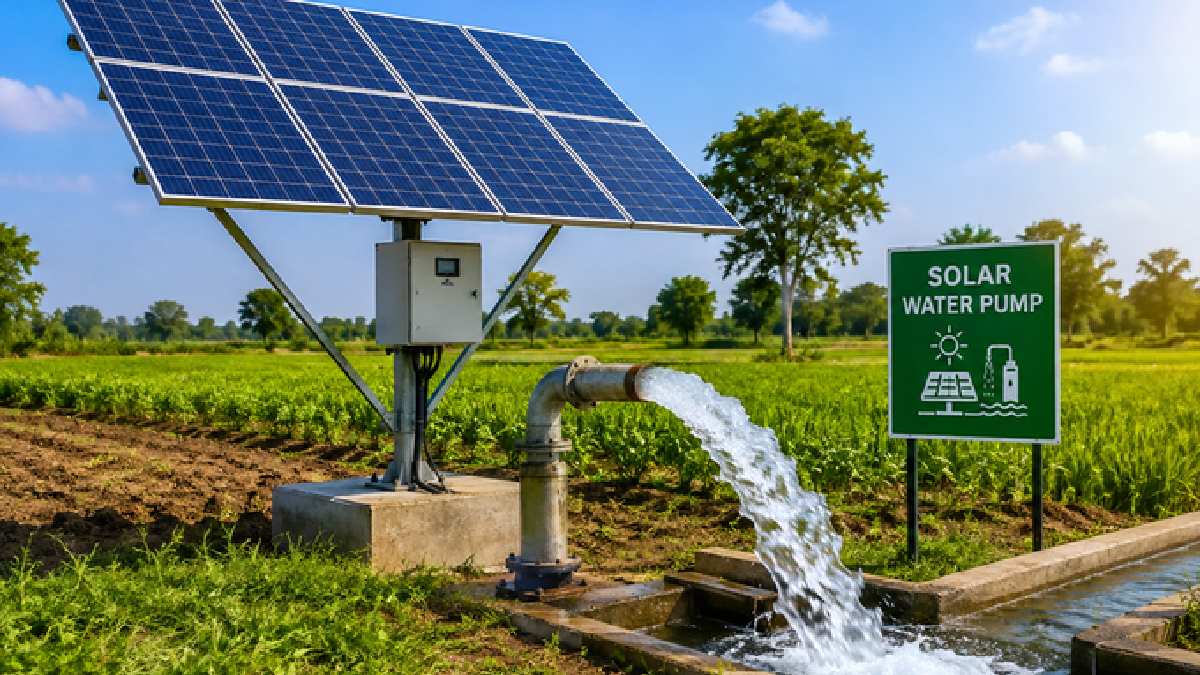
The state has also reduced the reliance on conventional electricity by integrating renewable energy in farming to alleviate farmers’ reliance on electricity sources and create more sustainable irrigation practices.
The state’s solar irrigation strategy is to provide reliable daytime power for farmers using solar-powered agricultural pumps and decentralized solar feeder systems, so that irrigation operations and the grid are uninterrupted, with no reliance on fossil fuels. The initiative also helped in increasing agricultural power generation efficiency and moved the energy generation into cleaner energy and the move towards a better world.
Government programmes such as the Mukhyamantri Saur Krushi Vahini Yojana (MSKVY) and PM-KUSUM scheme were instrumental in the expansion of solar energy in agriculture.
These projects enable farmers to receive electricity from nearby solar power plants and not from grid-based electricity systems which often require irrigation in the middle of the night.
The decentralized model not only reduces transmission losses but also gives farmers a reliable source of electricity during the day that is cheap to use and reliable, officials say. It has made irrigation more convenient, has increased productivity on the farm and decreased electricity costs. The switch away from diesel pumps to solar-powered pumps has also helped to reduce greenhouse gas emissions by replacing diesel pumps and that is an additional benefit from the decrease in emissions.
Maharashtra has already achieved significant milestones in renewable energy adoption. The state had already made headlines for the rapid installation of thousands of solar-powered agricultural pumps, demonstrating its ability to efficiently implement large-scale clean energy projects.
This accomplishment demonstrated Maharashtra's dedication to modernizing agriculture and addressing environmental issues.
Experts point out that solar irrigation has more than just energy savings it also benefits farmers when they plan irrigation at the same time and the electricity is used for the whole power distribution system. Renewable energy also helps India’s climate goals to be less dependent on conventional power sources.
The state government continues to expand renewable energy infrastructure, with new solar projects to meet the growing demand for clean electricity in rural areas.
Maharashtra is also exploring other renewable energy opportunities to further strengthen its position as a leader in sustainable development.
As climate change continues to impact agriculture and water resources, solar-powered irrigation is increasingly recognized as a good long-term solution for agriculture and water resources.
Maharashtra’s experiences show us that there is room for government policies, modern technology and farmer involvement in making agriculture a resilient and sustainable agricultural ecosystem to develop, a good system of support for all the farmers and society.
Food security and carbon emissions have come under a lot of pressure throughout the world and Maharashtra’s solar irrigation model is seen as a good example of how renewable energy can change agriculture and support rural development.