India is ready to enter a new era in space exploration with Hyderabad-based Skyroot Aerospace headed to launch Mission Aagaman, the country's first privately developed orbital rocket mission. There will be a launch of the Vikram-1 launch vehicle on the first test flight between July 12, 2026, and August 4, 2026, at Satish Dhawan Space Centre (SDSC-SHAR) on Sriharikota. If successful, it will be a historic first step by India to develop the commercial space industry and develop the country's first privately built rocket to put satellites into space.
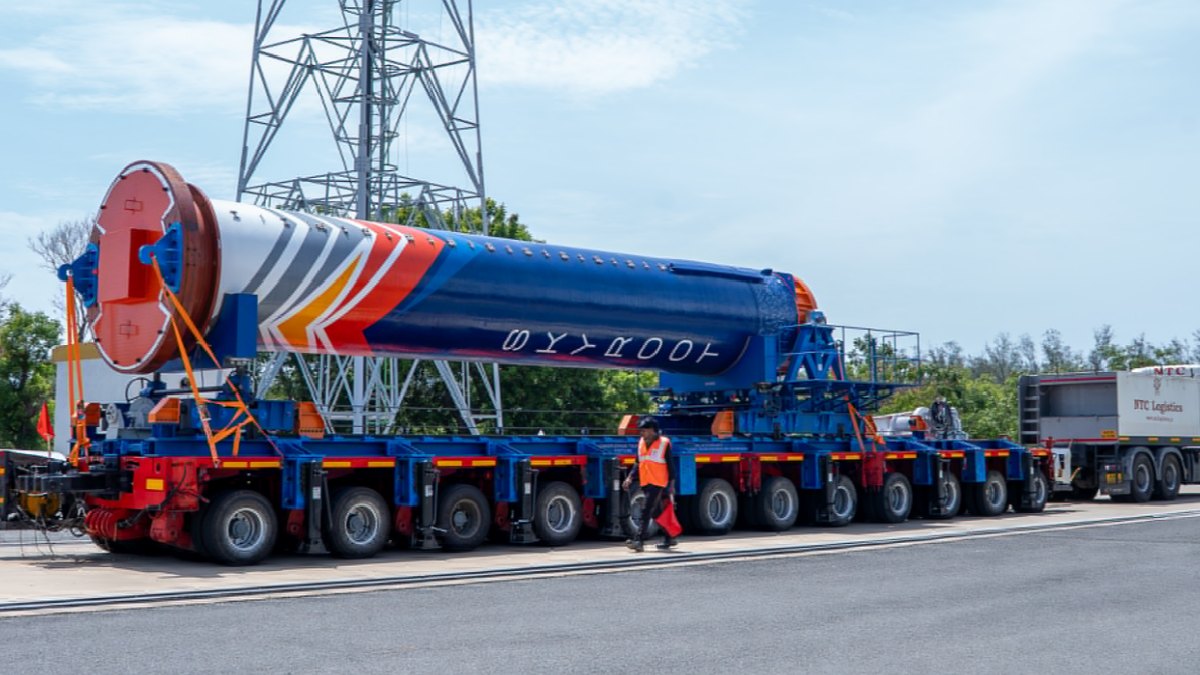
Skyroot Aerospace said that Vikram-1 rocket is already fully assembled and stacked on the historic First Launch Pad (FLP), indicating that the mission is in the final stages. The company has named the mission "Aagaman" from Sanskrit word meaning 'arrival', which means the Indian private sector is coming to orbit. The rocket can launch payloads to a 450 km LEO at an inclination of 60 degrees and is suitable to launch Earth observation satellites, communication payloads, technology demonstrations and scientific missions.
As a private space startup, Skyroot Aerospace is one of the best companies in the Indian space sector for the first time in 2018 when the government opened the public sector to private sector. The company became the first to make it in November 2022 with the launch of Vikram-S, the first privately built suborbital rocket launched by India. Mission Aagaman is the next step. Launch of satellites from the ISS is difficult from a very different point of view as the vehicle needs to reach a speed of over 28,000 km/h to get to orbit the Earth.
Vikram-1 is a three-stage vessel based on lightweight carbon-composite structures that can be mass-reduced and have a very low weight to high efficiency. The rocket can carry up to 350 kg into Low Earth Orbit and is targeting the growing global market for small satellite launch. As the demand for Earth observation, climate monitoring, navigation, defence and internet constellations grows, it is expected that dedicated launch vehicles like Vikram-1 will play a major role in the commercial space economy.
Unlike a fully commercial mission, the first flight is purely a technology demonstration to demonstrate the rocket's performance under real flight conditions. Engineers will be monitoring every stage (ignition, propulsion, stage separation, guidance, navigation, control systems, structural integrity and orbital insertion) of the launch at every stage. The data collected during Mission Aagaman will help Skyroot to shape future versions of the Vikram launch vehicle and set a reliable, high-frequency commercial launch program. The launch will also carry domestic and international customer payloads and demonstrate confidence in the technology of the company even on its first orbital flight.
The mission is also proof that India’s space ecosystem has changed since the last few years of policy reforms. The establishment of the Indian National Space Promotion and Authorisation Centre (IN-SPACe) has enabled private companies to access ISRO’s launch capabilities, testing infrastructure and technical expertise while working independently. Skyroot acknowledges the support of ISRO and IN-SPACe, and describes Mission Aagaman as a collaboration in space exploration under India's public-private partnership model.
Vikram-1's Stage 1 is stacked at the First Launch Pad, Satish Dhawan Space Center, Sriharikota. 🚀
— Skyroot Aerospace (@SkyrootA) June 29, 2026
For India, this is the first time a privately designed, developed, and manufactured orbital rocket has been stacked on this pad.#Vikram1 #SkyrootAerospace pic.twitter.com/E0mf9lDfY6
Industry experts say Mission Aagaman would significantly boost investor confidence among those in India's private space industry. Skyroot recently became a unicorn company as it received fresh funding from investors in the space sector and is now a unicorn company with new funding to become more and more popular with investors who are interested in space companies worldwide and that is raising global interest in Indian commercial space ambitions. The Indian government has committed to growing the country's space economy to nearly $44 billion by 2033 to support private companies in India’s space industry and contribute significantly through satellite manufacturing, launch services, deep space technologies, and downstream applications.
Private companies such as SpaceX, Rocket Lab, and Firefly Aerospace have revolutionized the commercial launch market worldwide. India hopes to build a similar ecosystem by promoting innovation among local companies and by tapping the years of experience of ISRO. A successful Vikram-1 launch will show that Indian private companies are capable of developing orbital-class launch vehicles to compete globally in terms of reliability, affordability, and launch frequency.
As the countdown begins, Mission Aagaman is more than just another rocket launch—it is also a step forward in India’s journey towards becoming a top global space power. Whether it’s technology (both commercially and politically, and even economically) or national ambition, Vikram-1 will change India’s place in the international space industry in the next ten years. If it succeeds, it will not only launch satellites into space but will also take India’s private space sector to a new level of innovation and global competitiveness.