Former Congress MP Sajjan Kumar, who served as a member of the anti-Sikh riots in 1984 and was on death row for life, died on Thursday at the age of 80 in Delhi. Kumar, who had been in Tihar Jail, was taken to Safdarjung Hospital for treatment as his health deteriorated. Doctors declared him brought dead. The hospital had not yet disclosed the cause of his death.
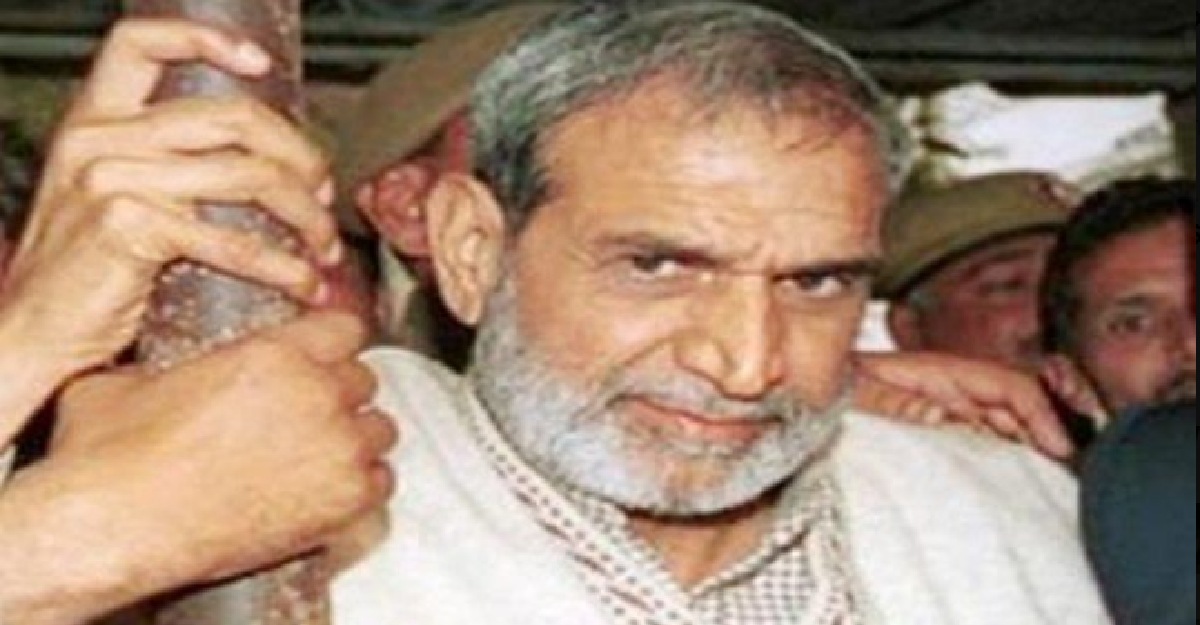
A Congress leader, Kumar was a three-term member of the Lok Sabha from Outer Delhi. But his political career was shadowed by allegations and criminal cases surrounding the violence against Sikhs after the assassination of former Prime Minister Indira Gandhi in 1984. He left the Congress after his conviction in 2018.
The anti-Sikh riots erupted following Indira Gandhi’s assassination by her Sikh bodyguards Satwant Singh and Beant Singh on October 31, 1984. Armed mobs attacked Sikh families, homes, shops, and places of worship in Delhi and other parts of the country. More than 3,000 Sikhs were killed across India, most of them in the national capital.
Kumar faced several criminal cases over more than three decades for the violence. There were different outcomes, including convictions and acquittals, in different cases, in trial courts, appellate courts, and higher courts.
A major turning point came on December 17, 2018, when the Delhi High Court overturned a 2013 trial court verdict that had acquitted Kumar in a case relating to the killing of five Sikh men in Raj Nagar Part-I, Palam Colony. The case also concerned the burning of a gurdwara during the 1984 violence.
Kumar was found guilty of criminal conspiracy and abetment and sentenced to life imprisonment for the rest of his natural life. The court described the anti-Sikh violence in 1984 as “crimes against humanity” in its decision, and it was seen as a substantial step in the long-standing fight by families of the victims.
Kumar challenged his conviction and sentence before the Supreme Court, and that legal challenge was still pending at the time of his death. His death thus comes while proceedings related to his conviction were still before the country’s highest court.
Kumar was also involved in other cases related to the 1984 riots. In January this year, a Delhi court acquitted him in two separate cases of charges that he had incited violence in the Janakpuri and Vikaspuri areas during the riots. The acquittals did not lead to his release because he already served life sentences in other cases related to the violence.
In February 2025, the Rouse Avenue Court handed Kumar another life sentence in the Saraswati Vihar case. He had been convicted in connection with a mob attack in which a father and son, Jaswant Singh and Tarundeep Singh, were allegedly burned alive during the riots.
The prosecution had sought the death penalty for Kumar in the Saraswati Vihar case. But the court awarded life imprisonment considering his advanced age and health condition.
Kumar's death marks the end of a political figure whose name was woven into the legal and political history of the 1984 anti-Sikh riots. The violence is still an emotive issue in India, and survivors and victims’ families have sought accountability for years.
Kumar’s cases also showed how lengthy the judicial process for the riots was. Several investigations and trials continued for years, and verdicts on different cases produced both acquittals and convictions.
With Kumar’s death, it seems likely that the legal status of his pending proceedings and the overall legacy of the 1984 violence will continue to be the focus of inquiry. For the families of those who were killed and for the survivors of the attacks, accountability has been one of the central issues of decades of struggle for justice.