The Supreme Court of India’s recent observation that the right to walk safely on a properly maintained footpath is part of fundamental rights has put pedestrian safety at the centre of public discussion.
In Article 21 and Article 19(1)(d) the Court connected the right to walk with constitutional protections under which a safe and accessible public space, and there are safe and accessible public spaces.
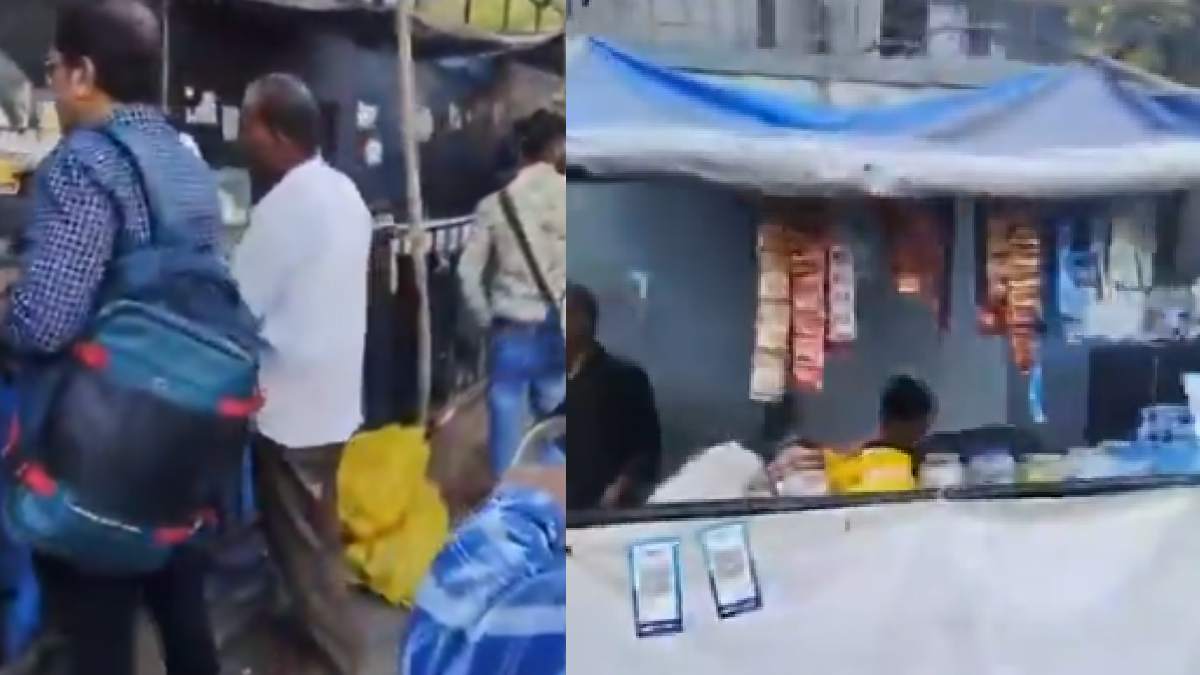
But for Mumbai’s pedestrians, the problem isn’t new. In different parts of the city, footpaths that are supposed to provide a safe walking route are often occupied by small shops, roadside stalls, food carts, parked vehicles and merchandise displays. In some places, pedestrians are left with only a narrow passage, while in others there is virtually no space to walk.
When Footpaths Are Shopping Spaces
Mumbai has one of the country’s highest levels of pedestrian movement. Every day thousands of people walk to railway stations, bus stops, offices, markets, roads and residential zones. Walking is a part of a commuter’s daily routine, for many of them.
But the condition of several footpaths makes that difficult.
Small temporary shops and street stalls are on pavements and therefore less space is available for pedestrians. Shopkeepers can also display goods outside their businesses to narrow the walkway.
At times people have to step onto busy roads to get out of the obstructions.
This can get dangerous in crowded Mumbai roads, when buses, taxis, cars, motorcycles and delivery vehicles are all competing for limited road space.
The Supreme Court of India declared the right to walk safely on footpaths a fundamental right under Article 21 and Article 19(1)(d) of the Constitution.@mybmc @MumbaiPolice Are you guys going to take any action? pic.twitter.com/lHrsksGEfF
— Full Boyle (@full_boyle_) August 7, 2026
A More Serious Problem for Vulnerable Pedestrians
For senior citizens, children, wheelchair users and people with mobility problems, moving through a busy and damaged pavement can be incredibly challenging. A short stretch of blocked footpath can lead to traffic even if they’re not alone.
The concern for pedestrians is simple: if a footpath is provided for walking, it should remain available for that purpose.
The Supreme Court’s observations give this concern greater constitutional significance by recognising pedestrian movement as an important part of the right to life and freedom of movement.
Mumbai needs more than enforcement drives
So clearing a footpath is not just about removing vendors or roadside businesses. Mumbai’s street vendors and small traders depend on public spaces for their livelihoods too.
But authorities need to find areas where vending can legally take place and enough space remains available for pedestrians. Frequent monitoring is also necessary, because we know that the paths can be back filled again after an enforcement campaign.
Therefore, the focus should be on building continuous, accessible and obstruction-free pedestrian routes rather than temporary clearance operations.
A Footpath Should Serve Its Purpose
Mumbai’s roads already have a lot of traffic. If pedestrians cannot use footpaths, they are pushed into the same space occupied by vehicles, increasing the possibility of accidents.
The Supreme Court’s recognition of the right to walk therefore raises an important question for Mumbai: What good is a footpath if people cannot actually walk on it
The answer is not only that in court orders but also that we do this at the street level.A constitutional right becomes meaningful when citizens can experience it in their everyday lives.
And for Mumbai’s pedestrians, that means a clear, safe and accessible path to walk on without having to squeeze between shops, stalls and parked vehicles and moving traffic.For pedestrians, footpaths should be there for them to walk on and keeping them usable is a priority.