A tragic incident in Karnataka's Mysuru district has raised questions about child safety after a five-year-old boy died of choking on a plastic toy ball found inside a snack packet that was found in Gauripura village, a village where children grow up and young people can eat.
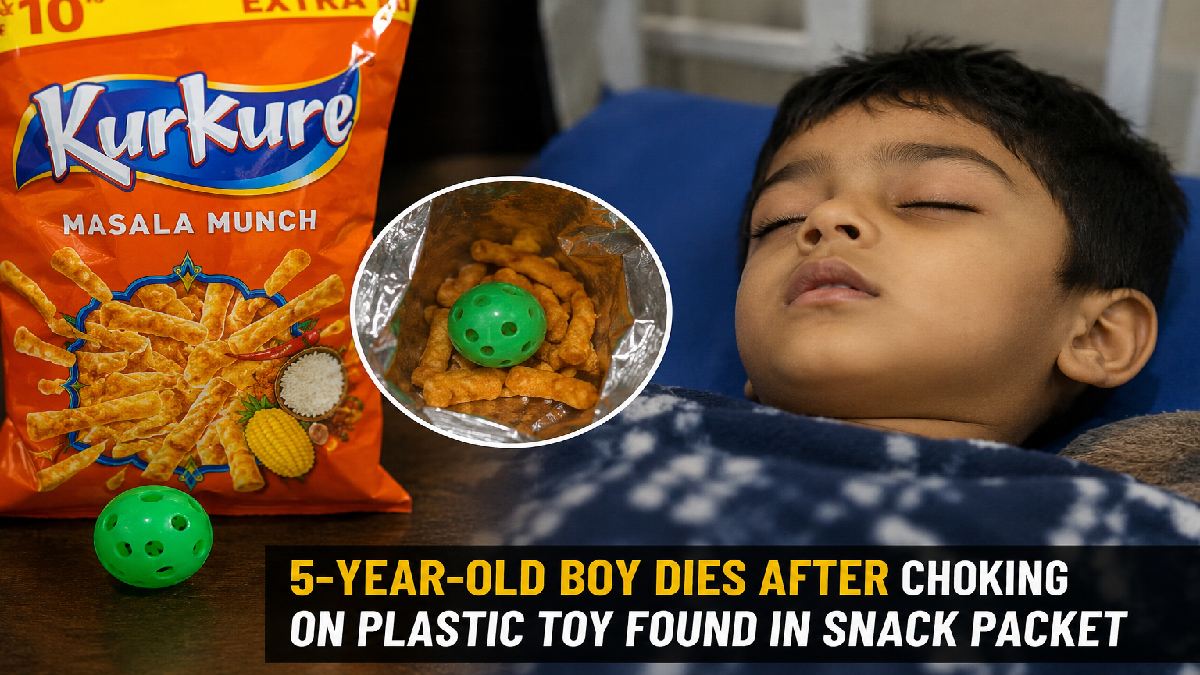
According to police and local reports, the child had taken a small plastic ball as a free item in a Kurkure snack packet. The child accidentally swallowed it while playing with the toy. The object was stuck in his throat and blocked his airway, causing him to have trouble breathing. Family members immediately realised something was wrong and rushed him to the hospital. Doctors tried to save him, but he was dead.
The sudden loss has devastated the family and heavily affected Gauripura village residents. He was the only son of his parents, and the family was well known and respected in the neighbourhood, residents said. Neighbours and relatives came together to console the family, and the tragic nature of the death opened up a discussion about the danger of small toys and objects that are easily accessible to kids.
Police said the family did not file a formal complaint about the incident. No Unnatural Death Report (UDR) has been filed, and no criminal case has been initiated at present. The family is in contact with the authorities, and any further legal or investigative action would depend on whether a complaint is made. They are still looking into the facts of the incident.
The tragedy has once again brought home to us the dangers of choking for children. Children under the age of five are especially prone to choking accidents, and children often place things in their mouths when playing, medical experts have been warning for a long time. Little plastic objects, toy parts, marbles, coins, buttons, batteries, and other tiny things can easily end up in a child’s airway and cause life-threatening emergencies in minutes.
Parents and caregivers also need to watch children closely when playing with small objects, paediatricians say. They also recommend that toys be age-appropriate and that potentially hazardous objects be kept out of reach of young children. “It’s not just the fact that they can get hurt if they get swallowed or inhaled,” says one expert.
The Mysuru incident is not the first one in India. In Karnataka, an 8-year-old girl died after accidentally swallowing a plastic Ludo game piece while playing with her siblings. Doctors discovered the piece had made its way into her airway, leading to fatal complications. And in Odisha, another case reported in the media happened last year, when a 4-year-old boy died after swallowing a tiny toy that supposedly came inside a packet of chips.
These incidents have galvanised child safety advocates and consumer rights groups in the past few years to demand tighter rules for promotional toys that are packaged with food products. For these items, experts say, manufacturers should ensure that they are safe and that they are clearly labelled with warning signs about choking hazards.
And the grieving community in Mysuru is mourning the loss of a young life, serving as a painful reminder of how quickly a little accident with small objects can be fatal. Parents, caregivers, manufacturers, and regulators need to work with child safety experts to reduce the risks and prevent such tragedies in the future, child safety experts say.