Noida is set to become a major hub in India's expanding high-speed rail network, with the proposed Delhi–Varanasi Bullet Train Corridor expected to include three stations across the Noida and Greater Noida region. The project is aimed at dramatically improving connectivity between Delhi, Noida International Airport, and eastern Uttar Pradesh while boosting economic growth along the corridor.
The most significant development is the confirmation of an underground bullet train station at Noida International Airport in Jewar. The station will be directly integrated with the airport terminal, allowing passengers to transfer seamlessly between air and high-speed rail services. It will also be connected through a 9.4-kilometre tunnel, making it one of the most technically challenging sections of the project.
1. Jewar Airport Station (Confirmed)
The Jewar station has been officially confirmed as part of the Delhi–Varanasi High-Speed Rail project. Located beneath the upcoming Noida International Airport, it will become India's first underground bullet train station integrated with an airport.
Once operational, passengers are expected to travel between Delhi and Jewar Airport in around 21 minutes, significantly reducing travel time and improving airport accessibility.
2. Noida Sector 148
The second proposed station is planned at Noida Sector 148, an important transport hub already served by the Noida Metro's Aqua Line. The location has been selected to facilitate easy interchange between metro services and the future bullet train network, enhancing connectivity for commuters across the NCR.
3. Greater Noida (Proposed)
Reports indicate that a third station is planned in the Greater Noida region, providing another access point to the high-speed corridor before the line continues towards Jewar. The proposed station is expected to improve connectivity for residents, businesses, and educational institutions in Greater Noida, although the exact location and final design remain subject to approval.
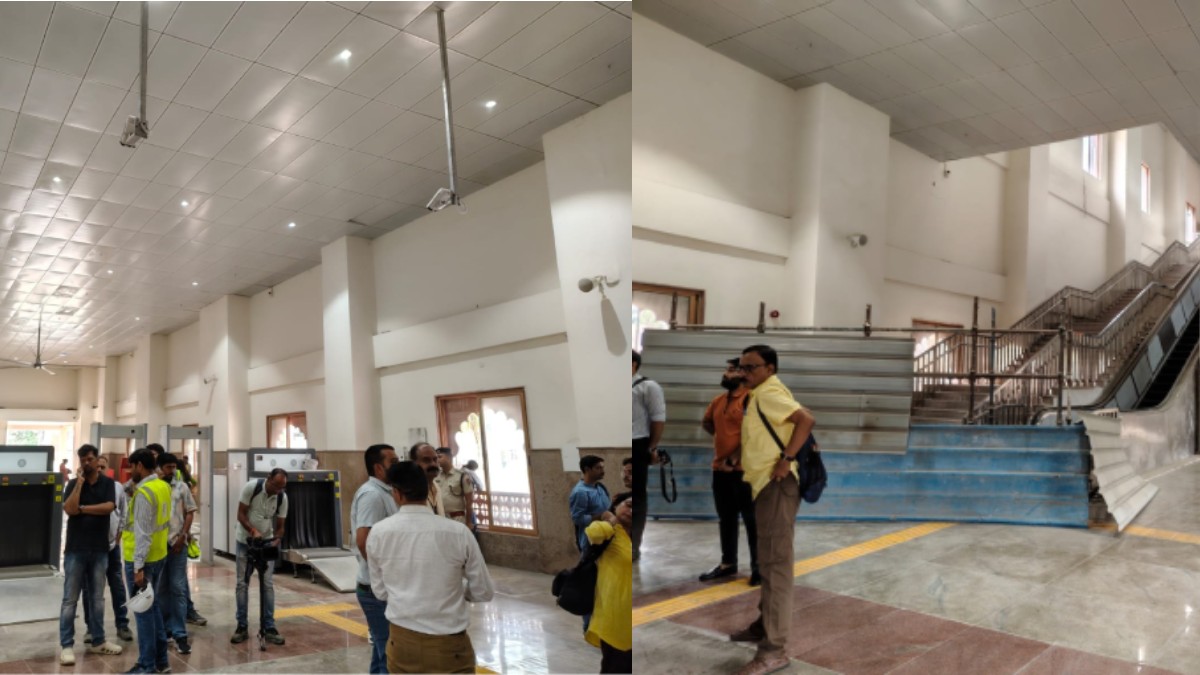
Gandhi Nagar Railway Station in Jaipur is undergoing a major redevelopment to become a world-class transit hub under #AmritBharatStation scheme.
— All India Radio News (@airnewsalerts) July 2, 2026
▪️The project features separate arrival and departure facilities, an expansive 2700 square metre air concourse and a double-level… pic.twitter.com/M53BzwNPIl
Part of India's Expanding High-Speed Rail Network
The Delhi–Varanasi Bullet Train corridor is among the seven proposed high-speed rail routes planned across India. According to recent updates, Detailed Project Reports (DPRs) for several corridors have already been approved, while surveys and technical investigations continue on the remaining routes.
The corridor is expected to operate at speeds of up to 350 km/h, significantly reducing travel times between major cities. Besides improving passenger mobility, the project is also expected to boost real estate development, commercial activity, and employment opportunities around the planned stations.
Infrastructure Boost for Noida
With the upcoming Noida International Airport, expanding metro connectivity, Regional Rapid Transit System (RRTS) projects, and now the proposed bullet train stations, Noida is rapidly emerging as one of North India's largest multimodal transport hubs. These infrastructure projects are expected to transform the region into a key gateway for business, logistics, and international travel over the coming years.