Prime Minister Narendra Modi on Tuesday said India’s manufacturing capacity is increasing and the country is writing a new chapter of industrial development “from chips to ships”. Addressing ‘NaMo for Viksit Bharat’ event in Vadodara, Gujarat, the Prime Minister said that now India is increasingly looking at building a complete domestic ecosystem (manufacturing of critical components as well as production of finished goods).
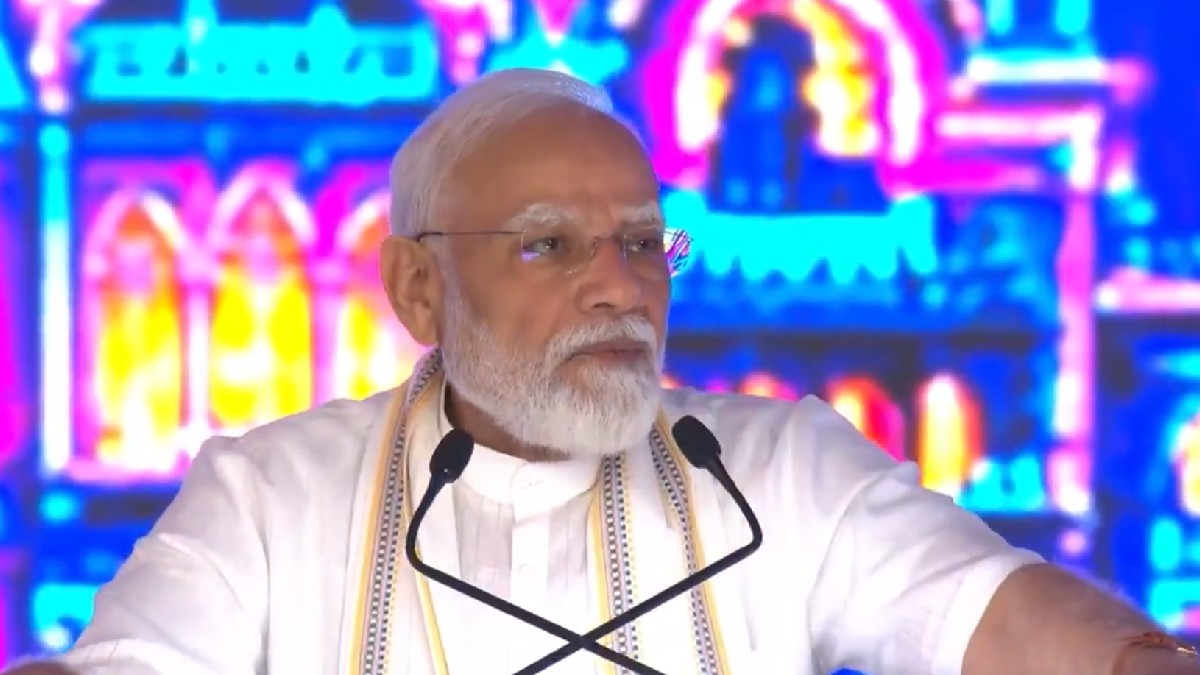
PM Modi said the country’s push for self-reliance is no longer about manufacturing individual products. Now India wants to build complete supply chains in India itself; “We want all stages of manufacturing — from components and technology to finished product — to increasingly become part of our domestic industrial ecosystem”.
“India is now writing a new saga of manufacturing — ‘chips to ships’ everything,” PM Modi said in his address. He added that transformation shows the country’s increased focus on strengthening domestic capabilities across multiple strategic and industrial sectors.
India is building:
— Narendra Modi (@narendramodi) September 8, 2026
Chips to ships… complete value chains at home.
Solar to nuclear… the energy ecosystem for AI, data centres and industries of the future. pic.twitter.com/0WJjjdYtI8
The Prime Minister said the idea behind manufacturing push is to build a stronger foundation for self-reliance. “Components and final products are ours. The entire supply chain for self-reliance is being established in India,” he said.
The comments come as India looks to expand its manufacturing base and reduce dependence on overseas supply chains in key sectors. For the past few years the government has been pushing for domestic production in electronics and semiconductors, defence, renewable energy and transportation industries among others.
PM Modi also spoke about India’s progress in renewable energy sector (photovoltaic or PV modules). He said India has started manufacturing solar PV modules domestically only in the last few years and capabilities have been substantially increased.
“India has now capacity over 200 gigawatts in this area,” said the Prime Minister. Expanding domestic solar manufacturing capabilities was part of a wider government aim to promote clean energy and increase access to affordable electricity, he added.
The growth of domestic manufacturing, PM Modi added has also laid the foundation for major schemes like ‘PM Surya Ghar: Muft Bijli Yojana’. The scheme aims to encourage people to use solar energy and expand rooftop solar systems in households.
“It is this self-reliance which has paved the way for PM Surya Ghar: Muft Bijli Yojana”, the Prime Minister said.
The government’s focus on solar energy is part of India’s broader strategy to increase the share of renewable sources in its energy mix. Domestic manufacturing of solar equipment is also viewed as part of efforts to strengthen India’s clean-energy supply chain.
PM Modi’s reference to “chips to ships” showed how many sectors were covered by India’s manufacturing ambitions. Semiconductors are a strategically important sector because of their role in electronics, automobiles, communication systems and several other advanced technologies. Shipbuilding is another major area where domestic capabilities can add industrial growth and strategic strength.
In Vadodara, the Prime Minister spoke of a larger vision — a ‘Viksit Bharat’ (developed India). Manufacturing, technology, infrastructure and energy security will all be important to this end.
By strengthening domestic supply chains, India wants to enhance industrial resilience while generating employment, investment and technological development opportunities. It is also about moving beyond assembly of finished products and developing capabilities throughout the production process.
PM Modi’s comments showed that the government is still on Atmanirbhar Bharat and Make in India. From semiconductors to solar modules to ships and other industrial products — the goal is to make India a major manufacturing hub.
As India increases its industrial and renewable energy capacity, the focus on complete domestic supply chains will remain central to the country’s long-term economic strategy. The Prime Minister’s message at Vadodara was about this ambition: building an India which can manufacture components; produce finished goods; develop infrastructure needed for a self-reliant and globally competitive economy.