Heavy rain caused flooding in Nagoya, Japan, as the Ueda River overflowed after heavy rains. Water ran onto nearby roads, making conditions dangerous for residents and motorists.
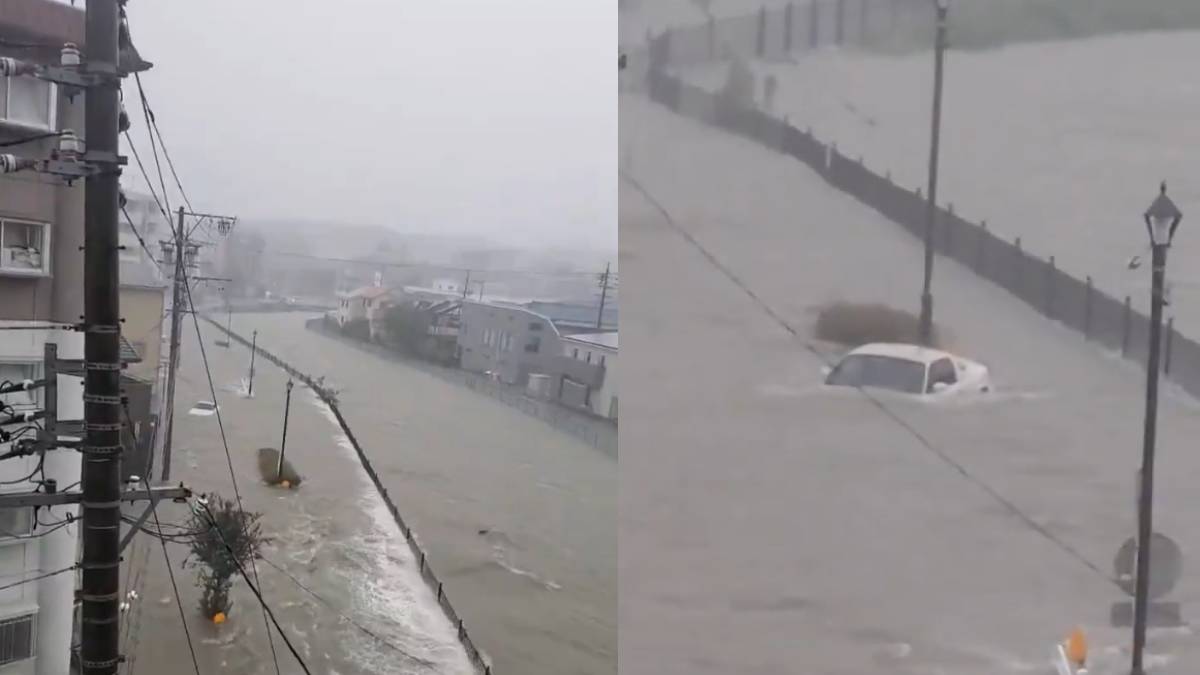
The torrential rain raised the water levels in the river very quickly — until it spilled over the riverbanks and flooded surrounding areas. Roads near the affected sections were also flooded; floodwaters ran across streets, and normal traffic movement was disrupted.
The pictures from the area show just how strong the floodwaters are: cars being swept away by the force of moving water; vehicles which would normally be parked or travelling along the roads were reportedly caught in the flooding as the water rose.
The incident demonstrates the dangers of sudden urban flooding (rivers and drainage systems overwhelmed by heavy rainfall in a short time).
Roads Submerged as Floodwaters Rise
As the Ueda River overflowed, water moved onto surrounding roads and sections of the area were underwater. Anyone trying to drive on those streets was in danger.
Floodwater can be strong enough to move vehicles even if the water is shallow. Once a car loses traction or starts floating downstream, it will be carried downstream — occupants and pedestrians nearby are at risk.
🚨Ueda River in Japan's Nagoya city overflows after heavy rain, submerging roads and sweeping away cars pic.twitter.com/eNuSyfXzNi
— The Tatva (@thetatvaindia) September 8, 2026
The images coming out of Nagoya are a stark reminder not to drive on flooded roads when it rains heavily — officials tell drivers all the time not to try and cross a road covered with rapidly moving water because it’s hard to tell how deep or strong the current is.
Heavy Rain Raises Flood Risk
The flooding comes as heavy rain batters parts of Japan. Cities like Nagoya can get hit hard when a lot of rain falls in a short space of time (drainage systems can be overwhelmed and waterways rise quickly).
Rivers can flood very quickly if rainfall continues to accumulate upstream. Places that aren’t immediately getting the heaviest rain can see water levels rise as runoff moves downstream.
The overflow of the Ueda River shows how quickly weather conditions can change in an extreme rainfall event. Heavy rain turns into road flooding, transport disruption and risks to vehicles and property.
Authorities Urge Caution
Flooding is still hitting roads around the river, so residents and motorists need to be careful and follow local authorities' instructions.
People living in flood-prone areas are usually told to watch official weather and emergency alerts, not travel unnecessarily, and move to safer locations if evacuation orders or warnings are given.
Drivers shouldn’t try to drive through moving floodwater because another vehicle has crossed it safely (depth of water can change very quickly over short distances; currents undermine roads and carry vehicles away).
The scenes reported from Nagoya show how difficult extreme rainfall can be to deal with. With the Ueda River overflowing and roads flooded, emergency services may also struggle to reach affected areas.
This is still a developing weather situation and more rain could make flooding worse if river levels stay high.
For now, it is residents and emergency responders who are in focus as authorities assess what the flooding has done (and how to manage it).
The Ueda River overflow in Nagoya is just one more example of how quickly heavy rain can turn ordinary roads into dangerous rivers and vehicles into victims of strong currents.
People are being told to be alert, stay out of flood waters, and rely on official sources as things develop.