Narendra Modi is scheduled to publish the autobiography of former President Ram Nath Kovind on August 12, and it’s a time for us to remember how he lived, and then after that what he did in his public life.
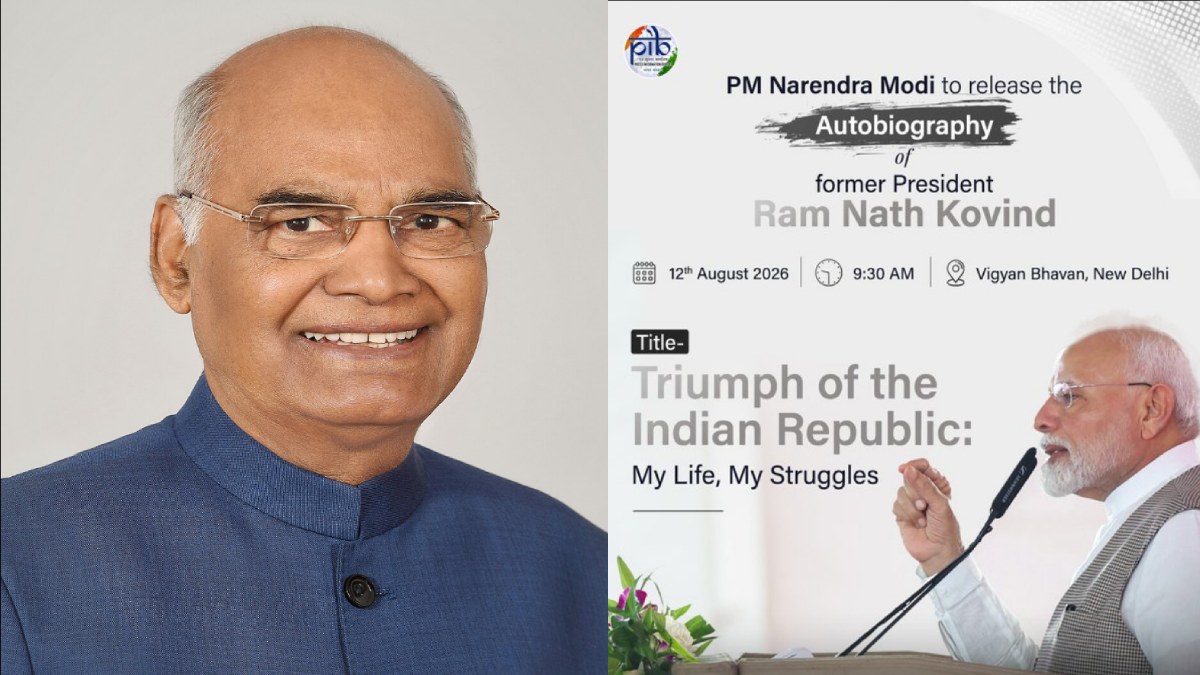
The book is called Triumph of the Indian Republic: My Life, My Struggles, and it tells the story of his life and public life and his career from his childhood in Uttar Pradesh and career as a lawyer till his time in parliament, governorship and presidency in India.
Ram Nath Kovind was the 14th President of India from 2017 to 2022. Before reaching the country’s highest constitutional office, he served as a member of the Rajya Sabha representing Uttar Pradesh and later as Governor of Bihar. He enjoyed a long association with the legal profession and had also served in the Delhi High Court and Supreme Court. The autobiography allows him to reflect on the various stages in his life and the experiences that ultimately brought him to Rashtrapati Bhavan.
The book covers Kovind’s early days in Paraunkh village in Uttar Pradesh and his educational and career journey. Going from a relatively modest background to the highest constitutional position in the country is central. The book itself is described as an inspiring account of his life, both public and private, in the published version.
Kovind's legal career was a key factor in his entry into public life. After completing his commerce and law education he moved to Delhi where he practiced law and later became a Central Government advocate and appeared before the Supreme Court. His legal background also shaped his understanding of constitutional institutions and public administration, issues that became increasingly important as his political career progressed.
His political journey took him into the Rajya Sabha and later, he became a member of the Rajya Sabha for two terms. Kovind was on a number of committees in Parliament, on social justice, law and justice, home affairs and the welfare of Scheduled Castes and Scheduled Tribes. His public work in this particular period was another step in his career that would take him to the presidency when he got elected.
Kovind later became Governor of Bihar, serving from 2015 to 2017. His term as Governor preceded his nomination as the National Democratic Alliance’s candidate for President of India. He was elected President in 2017 and served for five years before Droupadi Murmu succeeded him in 2022.
The autobiography is expected to provide a personal perspective on these big-picture events, as opposed to simply a political biography. The publisher’s description says Kovind describes his childhood, political aspirations, parliamentary career, governorship and experience in Rashtrapati Bhavan. It also reflects on important national events and the presidency.
One of the main features of the book is the focus of Kovind’s presidency. His five-year tenure has witnessed many great developments in Indian public life and the COVID-19 pandemic and major constitutional and political events. The memoir, according to the book description, describes the themes and crises that shaped his presidency and provides a perspective about the responsibilities of the country’s highest constitutional office.
Kovind had already spoken publicly about writing his autobiography. He said in October 2025 that he had been working on the book for several years and had completed it. At the time he said that the title Triumph of the Indian Republic: My Journey, My Struggles and that the ideals that fueled him throughout his life were rooted in the Constitution of India and national values. The book is called Triumph of the Indian Republic: My Life, My Struggles.
The difference between the earlier announced title and the published title is notable since we now have the book as a memoir of Kovind’s life and public service. The volume is published by Rupa Publications and is listed as a 400-page English-language hardbound book.
And the autobiography also comes at a time when memoirs by former constitutional office-holders continue to attract interest among readers seeking first-hand accounts of India’s political and institutional history. A former President’s memoir is different from conventional political reporting in that it combines personal experience with observations from significant constitutional institutions.
The book will certainly be of interest to readers, because Kovind was in a lot of public roles before he became President. His journey is a whole spectrum of Indian state and public life: legal profession, parliament and state administration and presidency, and the judicial system. Each stage had its own concerns and challenges and the memoir would be able to show how his personal philosophy of governance and constitutional values was developed as he developed.
Another potentially important element of the book is Rashtrapati Bhavan’s account. The memoir, the publisher says, “portrays an up-close look behind the scenes of the theme and crises that defined Kovind’s five years as President.” It also mentions the book is a look into Indian politics and international diplomacy and the scope and responsibilities of presidential power.
But the autobiography is much more than a personal account of one political career. It is also a reflection on the Indian Republic and the institutions through which it works. The title itself puts the emphasis on the republic, so Kovind’s personal story is being presented alongside broader reflections on constitutional governance and national life.
Kovind’s post-presidential public position has also involved being in charge of the Union government’s committee to study the possibility of simultaneous elections, commonly referred to as “One Nation, One Election.” The committee submitted its report in 2024 after extensive investigation into the matter. That he continued to engage in constitutional and electoral questions at the end of his public career highlights his continuing interest in it.
Narendra Modi’s planned release of the autobiography on August 12 is consequently expected to bring the book into wider public focus. The occasion will highlight Kovind’s transition from lawyer and parliamentarian to governor and president, while also introducing readers to his personal reflections on the journey.
PM @narendramodi to release the Autobiography of Former President @ramnathkovind on 12 August.
— DD News (@DDNewslive) August 11, 2026
Title of the Autobiography: “Triumph of the Indian Republic: My Life, My Struggles”@PMOIndia pic.twitter.com/exHhe1KUqJ
As the autobiography reaches a wider audience, its appeal is likely to extend beyond readers interested in politics. Students, researchers and general readers interested in Indian constitutional history may find value in a first-person account of experiences inside some of the country’s most important institutions.
In the end, Triumph of the Indian Republic: My Life, My Struggles portrays Ram Nath Kovind’s life as a life that was shaped by education, law, public service, constitutional responsibilities and personal struggles.
With Prime Minister Narendra Modi going to publish his autobiography on August 12, the former President’s own account of the experiences that took him from a village in Uttar Pradesh to the Rashtrapati Bhavan and the highest constitutional office in India will now be the focus.