The Central Government has introduced the Public Examinations Prevention of Unfair Means Amendment Bill, 2026 in Lok Sabha.
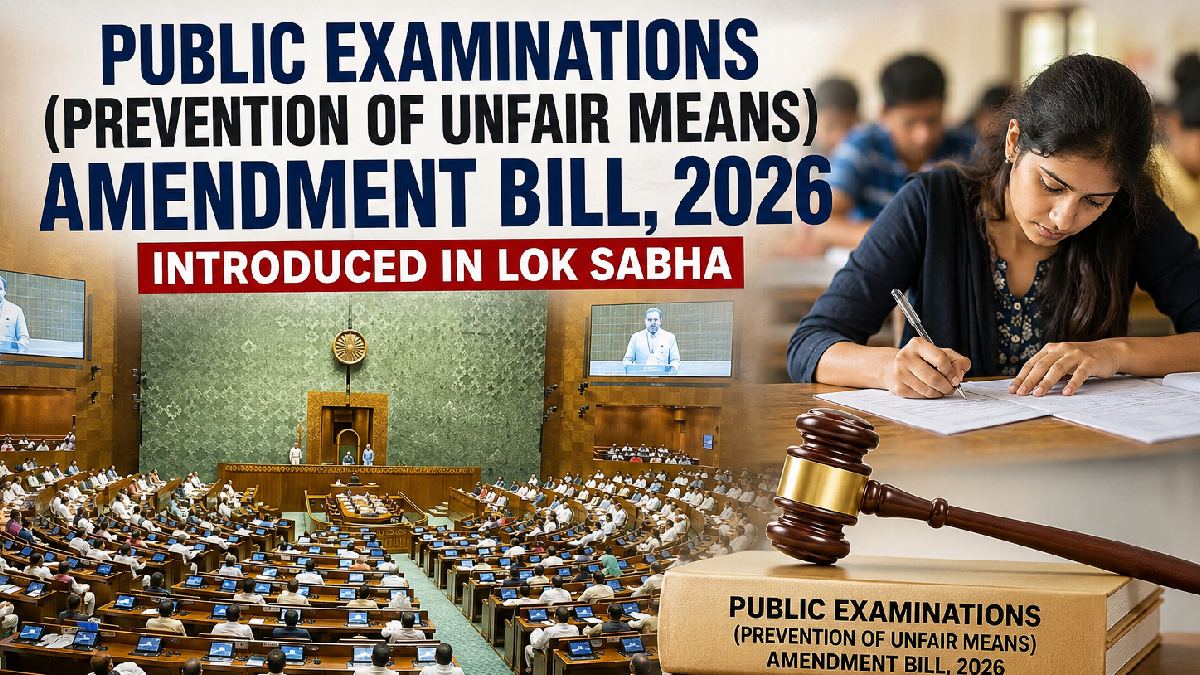
The proposed amendment is in line with the current legal framework to prevent the abuse of examination processes paper leaks, impersonation, organized cheating, etc. in recruitment and entrance examinations.
The amendment bill comes amid growing concerns over irregularities in several competitive and recruitment examinations in recent years.
Such incidents have affected millions of candidates and raised serious questions about the credibility of examination systems. By putting in place tighter regulations, the government looks to ensure that deserving candidates can be selected in a fair and transparent manner.
The amendment is to plug loopholes that were identified in the original law, officials said. It will also place greater emphasis on enforcement, better coordination between examination authorities, and the law will be more clear on how to prosecute exam fraudsters.
Central agencies, recruitment boards, and national testing agencies conduct public examinations for admissions and government jobs. The government believes that maintaining the integrity of such examinations is essential to public confidence in recruitment and education systems.
The proposed amendment will enhance the digital security provisions. With increasingly sophisticated systems online systems and digital infrastructure in place for examinations, the government is looking to prevent cyber attacks, unauthorized access to question papers, and electronic manipulation of examination processes.
The bill will likely motivate the use of advanced security technologies and better monitoring systems to detect suspicious activities.
Experts say that the amendment would be a strong deterrent to organized examination rackets operating across states. Such more severe penalties and enhanced investigative powers may deter people and criminal networks from using them to manipulate examination outcomes.
The bill will now be discussed in parliament before it gets passed.
Members of Parliament will discuss the language on the bill, suggest amendments if necessary, and discuss the impact that it will have on students, recruitment agencies, and schools, but also the students themselves.
Education experts have generally welcomed the move and said transparent examinations are critical for equal opportunities for all candidates. But some have said the implementation is a matter of implementation and technological advancement, regular audits, and coordination between central and state authorities.
If passed, the amendment will further strengthen the government’s efforts to curb examination fraud and restore public trust in India’s competitive examination system.
The legislation is expected to benefit millions of students and job aspirants by creating a more secure, transparent, and accountable examination environment.
Public exams become more and more important for university admission and government recruiting, and so the amendment is in line with the government’s policy of protecting merit-based selection and fairness for every candidate.