India’s healthcare system is taking another important step toward digital transformation as 25 crore outpatient department (OPD) registrations have been completed digitally, reducing the need for patients to stand in long queues at hospital registration counters.
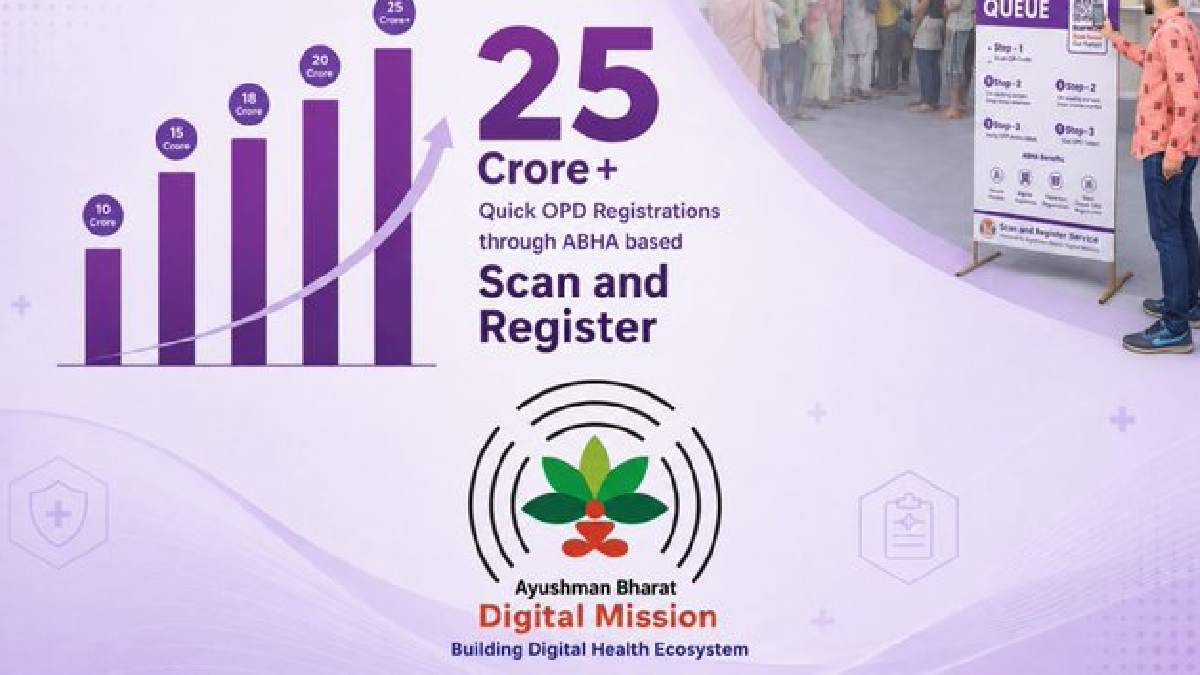
The initiative uses QR codes and digital registration facilities to facilitate outpatient services faster and more convenient to access.
Patients can register online and scan a QR code at the hospital or scan a QR code at participating healthcare facilities to complete the registration before arriving there.
The move is particularly needed at busy government hospitals, where many patients tend to arrive early in the morning for consultations. Traditional registration counters can be slow and overrun with people and their families and have long waiting lists, overcrowding and inconvenience for patients and their families.
QR codes can help with registration
In QR-based registration, patients can scan a code using their phones and enter the required details digitally. Once the registration is complete, they can then walk to the relevant department instead of waiting for long periods of time at the registration desk.
The system is part of India’s larger strategy to integrate technology into public health. Digital registration can also help hospitals manage patient information more efficiently and reduce dependence on paperwork.
For people who also go to hospitals for follow-up consultations, a digital system could make things much easier. And healthcare facilities can handle large patient volumes more effectively.
A Way Toward Paperless Healthcare
The achievement of 25 crore digital OPD registrations points to an increasing adoption of technology in India’s healthcare systems. Digital systems are used to make appointments, record health records, prescriptions and other services.
A shift to digital registration would also generate useful data for healthcare administrators. Knowing the number of patient visits and hospital demand can help staff, facilities and resources be better planned.
But digital healthcare systems also need to be accessible to people who do not have smartphones or reliable internet access. Hospitals need to maintain alternative registration options so that the technology is not a barrier for elderly patients or people from digitally underserved communities.
What it means for patients
The biggest benefit for patients is convenience. Less time spent in registration queues means more doctors and hospital services can be made available. The system can also reduce crowding around registration counters, and the system can also make the physical experience in the hospital more comfortable for patients.
As India's healthcare system continues to adopt digital tools, QR-based OPD registration could become an increasingly familiar part of hospital visits.
The 25 crore digital OPD registration shows how technology is changing everyday interaction between patients and healthcare providers.
From standing in queues to scanning a QR code, the registration experience is becoming more digital, quicker and more streamlined.