PMK MP Ramadoss has called on Tamil Nadu Chief Minister Vijay to meet Prime Minister Narendra Modi and the state’s MLAs immediately on the Cauvery River water dispute.
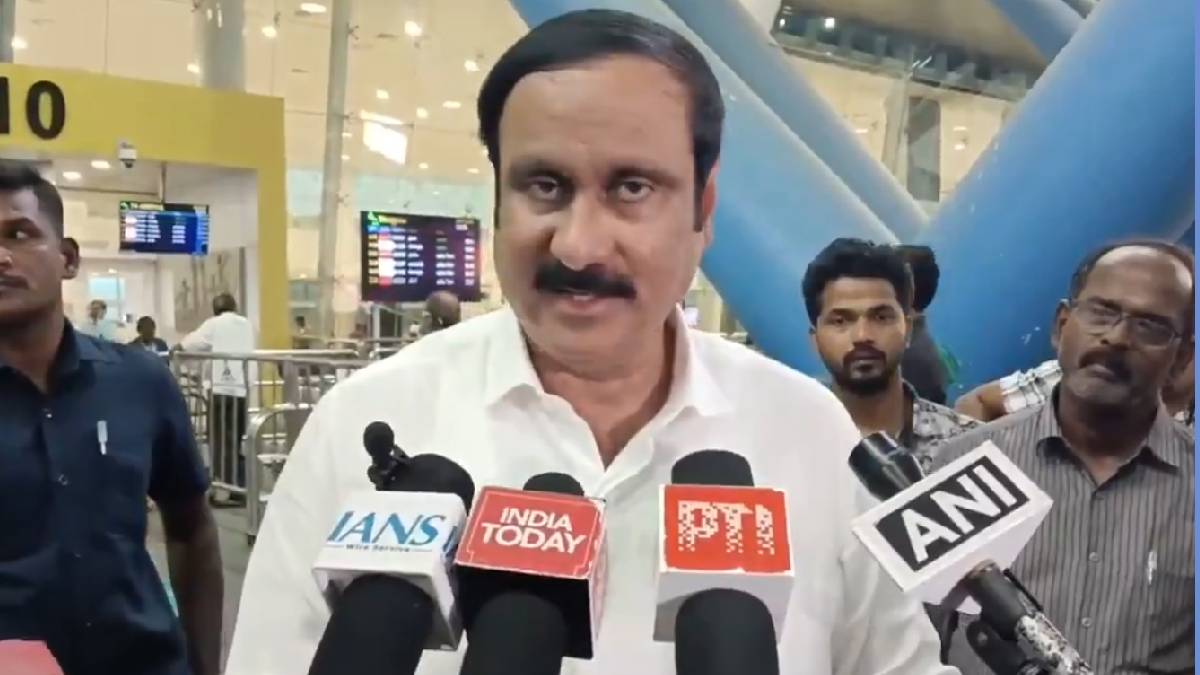
The PMK leader also referred to Karnataka Chief Minister DK Shivakumar’s request that Vijay postpone his planned visit to Karnataka, saying the Karnataka Chief Minister had indicated that the situation was not favourable for the visit.
🚨 PMK MP Ramadoss : "Karnataka CM DK Shivakumar said Vijay should not visit Karnataka for next few days as situation is not good"
— News Algebra (@NewsAlgebraIND) August 1, 2026
"Vijay should immediately meet PM Modi with all his MLAs"
"Karnataka Govt is not respecting Supreme Court’s verdict"
"They are going against all… pic.twitter.com/Vp0vF3xzWR
Ramadoss further claimed that the Karnataka government was not respecting the Supreme Court’s verdict and was acting against court directions concerning the Cauvery River water-sharing issue.
“Karnataka CM DK Shivakumar said Vijay should not visit Karnataka for the next few days as the situation is not good,” Ramadoss said.
He added that Vijay should meet Prime Minister Modi with all the MLAs and raise Tamil Nadu’s concerns directly with the Union government.
“Karnataka is not respecting the Supreme Court’s verdict. They are going against all Supreme Court orders on the Cauvery River water issue,” said the PMK MP.
The remarks come at a time of increasing political tension over the Cauvery dispute and increasing water supply problems in Karnataka. Vijay was scheduled to visit Bengaluru for discussions with Shivakumar, but the Karnataka Chief Minister asked for a postponement of the trip because of the sensitive situation and protests on the water dispute.
The proposed meeting had attracted political attention as direct talks between the chief ministers of Tamil Nadu and Karnataka on the Cauvery issue have been relatively uncommon in recent years.
The Cauvery River dispute has remained one of the most politically sensitive inter-state water-sharing issues in India. Since Tamil Nadu is lower-riparian, it has been a priority to receive its legal share of water for irrigation and agriculture in the Cauvery delta.
Karnataka, on the other hand, has had problems with deficient rainfall, drought and availability of water in reservoirs. The state has said that water availability should be evaluated in the context of the state’s own reality before releases of water can be made.
The dispute has involved decades of legal proceedings, negotiations, tribunal decisions and directions issued by the Supreme Court.
The Supreme Court’s final decision on the Cauvery issue established a framework for water sharing between the concerned states. However, there has been disagreement on the water release in years of deficient rainfall and changing hydrological conditions.
Ramadoss’s recent comments speak to the political leadership who believe Tamil Nadu should continue to rely on the legal and constitutional framework rather than rely solely on bilateral talks.
The PMK has expressed worry that direct talks could jeopardise Tamil Nadu’s legal position as a lower-riparian state. The state should take legal as well as political steps to protect water rights, the party has argued.
The call for Vijay to meet Prime Minister Modi with all MLAs is aimed at building a united political response and putting the issue before the Centre.
Such a delegation would ask the Union government to act in order to ensure compliance with the legal framework and problems connected to water release.
Cauvery Water Management Authority and the Cauvery Water Regulation Committee are among the bodies that monitor water availability, assess requirements and implement decisions related to the river-sharing arrangement.
Political statements, however, are typically more intense when levels of water are low and agricultural needs are high.
The issue has major repercussions for farmers both in Tamil Nadu and Karnataka. Cauvery helps in Tamil Nadu, agricultural activity in the delta districts with the support of Cauvery water for irrigation and farming is much more important in Tamil Nadu because it helps in Tamil Nadu the delta districts. In Karnataka, the river is also essential for irrigation, drinking water supply and economic activity.
So the current dispute has generated strong public reactions in both states.
While Ramadoss has claimed that Karnataka violates Supreme Court orders, the Karnataka government has maintained that the state’s water position must take into account rainfall conditions, reservoir levels and the needs of its own population.
The legal status of specific water-release decisions depends on the directions issued by the competent authorities and the circumstances in the relevant period.
The latest political exchanges have added pressure on both state governments to put forth their position on the affairs and state of their next steps.
Vijay’s proposed engagement with Karnataka had been seen as an attempt to explore dialogue with Karnataka as tensions rise. But the request to defer the visit has caused uncertainty on when the two chief ministers might meet.
Ramadoss has now argued that Vijay should take the issue directly to the Prime Minister and involve elected representatives from Tamil Nadu.
The next few days are going to be key as political parties, state governments and water-management authorities weigh up their responses.
The dispute is going to remain a serious issue for Tamil Nadu and Karnataka as long as concerns over rainfall, reservoir storage and water availability persist.
For Ramadoss and the PMK, the focus is on preserving Tamil Nadu’s legal rights and the state’s share of Cauvery water.
The Karnataka government will continue to consult legal and political experts and political leaders, and decide what course to take next.