A fresh political crisis broke out between BJP and Congress in recent days as senior BJP leader and Member of Parliament Ravi Shankar Prasad strongly criticized Rahul Gandhi over the protest that took place near the Prime Minister’s house.
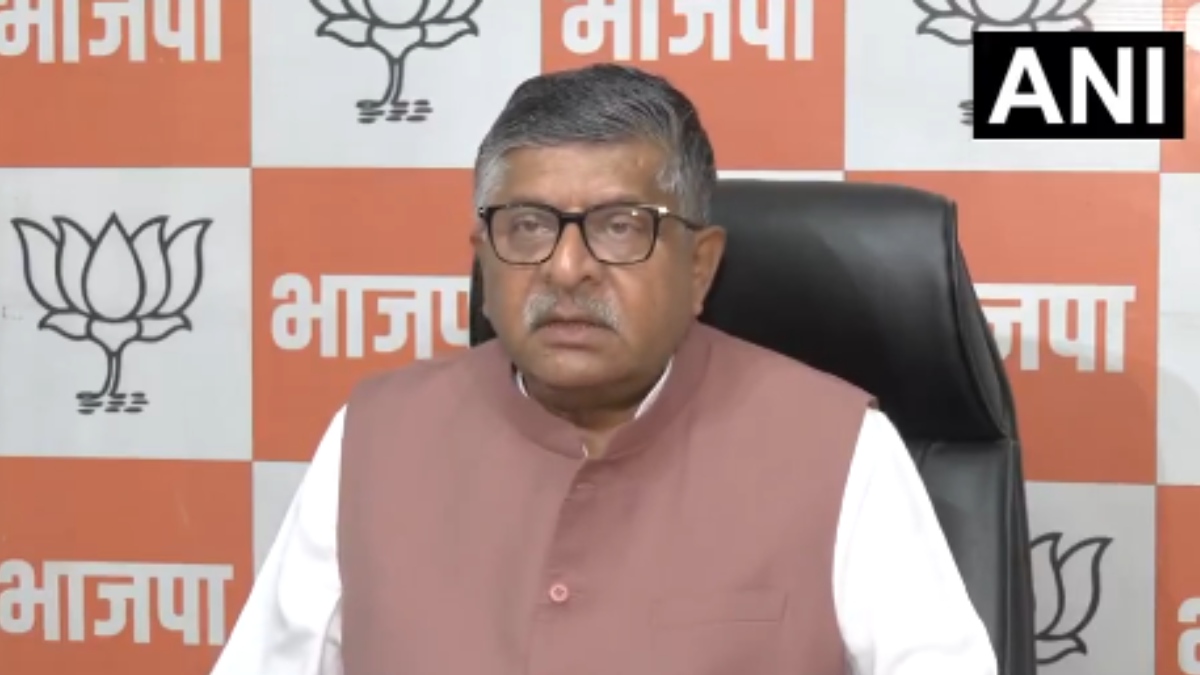
Calling the demonstration “shameful,” Prasad said the Congress leader and the Opposition are crossing democratic lines and attempting to incite unnecessary confrontation through their protest.
The comments came at a time when political tensions are boiling in Parliament and the National Democratic Alliance (NDA) and Opposition parties have been at odds with each other repeatedly over several issues in national politics. The protest close to the Prime Minister’s residence added another flashpoint to an already tense political climate— and leaders on both sides instantly fired back at each other.
Ravi Shankar Prasad made some comments to the media about the Congress party’s decision to hold a protest close to the Prime Minister’s official residence. “While peaceful protests are a democratic right, political protests should respect constitutional institutions and established security protocols."
As Prasad said of the protest: “Shameful,” Rahul Gandhi was trying to make political mileage by engaging in confrontational politics in Parliament rather than constructive debate in the public sphere. The Opposition needs to use parliamentary forums to express its concerns rather than hold demonstrations that he believes are in breach of democratic conventions, he said.
BJP leader also accused Congress of continuously disrupting parliamentary proceedings while demanding discussions on important national issues. Parliament is still a forum for debate and accountability and for legislative scrutiny and therefore Opposition members should have a seat in the House, he continued.
But the Congress defended the protest and said it was a tool to raise the public’s consciousness of problems and to highlight what it called the government’s unwillingness to address Opposition concerns. Party leaders have said peaceful protest is a part of democratic expression and elected representatives should be able to voice public grievances through parliamentary debate and public demonstrations.
It is the BJP vs Congress fight that is now turning into a war, at present in Parliament. The two sides have been arguing over education, governance, law enforcement, and public policy in recent days. And in both Houses of Parliament, there have been frequent interruptions, slogans, and procedural bickering.
Opposition leaders outside Parliament protests are a regular part of Indian politics, and such demonstrations can be used to draw public attention to specific issues when Opposition parties feel that they are not getting enough attention from state institutions. At the same time, ruling parties often dismiss these protests as political theatre in an effort to generate media attention.
The residence of the Prime Minister is one of the country’s most secure, and so any demonstration in its vicinity naturally attracts heavier security measures. For public safety and order, these areas are intensely protected and police officers are very strict. This makes protests close to government venues in these areas politically sensitive.
Opposition to the BJP was also voiced by Ravi Shankar Prasad, who commented that political disagreements cannot be grounds for demonstrations near government buildings which are well protected from attack. He explained that democratic institutions enable debate through Parliament and committee meetings and public discussion.
On the other hand, Congress leaders insisted that democratic systems allow peaceful protest as an authentic political activity. They maintained that demonstrations do not undermine parliamentary democracy, but in fact, they add to it by galvanizing citizens' feelings on the issue.
The latest war of words underscores the widening divide between the ruling alliance and the Opposition as Parliament continues to witness intense political exchanges. With a number of important legislative and policy issues still to be discussed, more confrontations between them are likely in the coming days.
#WATCH | Delhi: On Congress protest outside LKM, BJP MP Ravi Shankar Prasad says, "It was a really shameful day in India's democracy and democratic history. LoP Rahul Gandhi sat on a protest at the Prime Minister residence's gate, forcibly and without permission. His father,… pic.twitter.com/XUeyTTQUsm
— ANI (@ANI) July 22, 2026
Political analysts predict the controversy will continue to keep headlines up and the two sides will continue to feed off of it and keep on repeating their narratives. The BJP has sought to keep the focus on parliamentary procedure and institutional norms, but we’ve also seen the Congress’ right to protest and demand more accountability from the government.
The political debate will continue in Parliament, too, where lawmakers will keep to talk on governance, public policy, and national development. Ravi Shankar Prasad vs Rahul Gandhi is just the latest example of how the political discourse in India is getting much more rowdy and toxic.