Environmental activists and local residents in Rishikesh protested the proposed felling of hundreds of Sal trees for the widening of the Dehradun-Rishikesh National Highway and said that the project would have to be done at the cost of long-term ecological damage for the benefit of infrastructure.
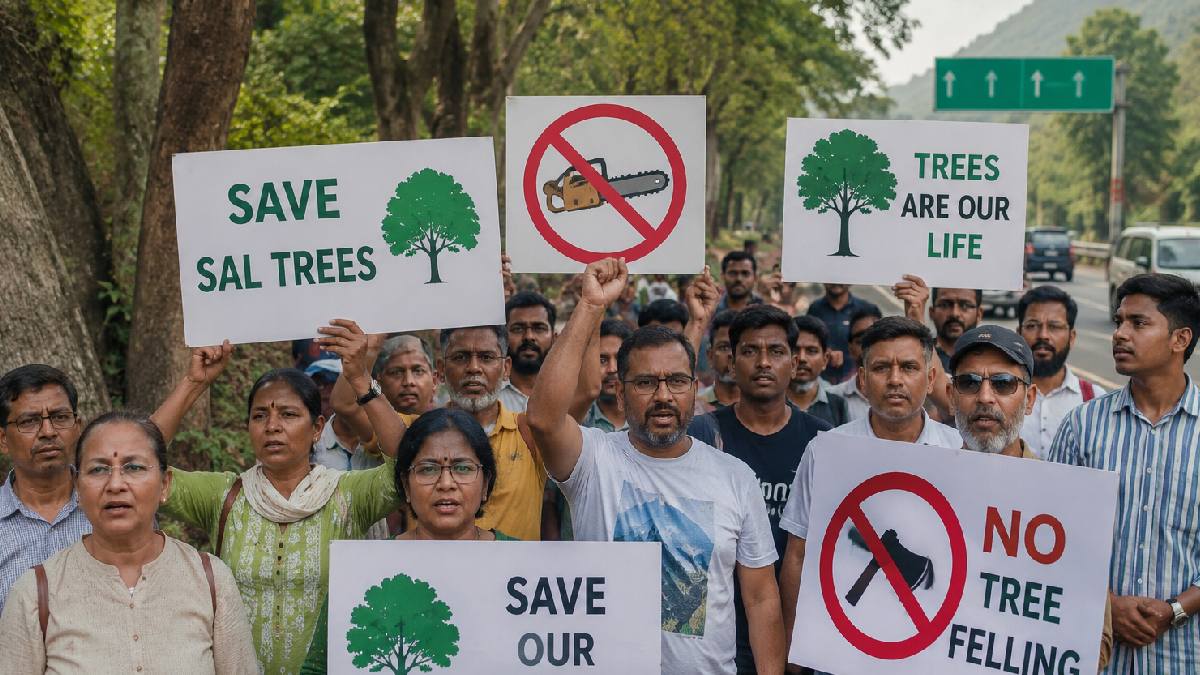
The demonstration was organized in protest against the proposed expansion of the Bhaniyawala-Ranipokhari stretch of the highway that connects Dehradun, Jolly Grant Airport and Rishikesh. The road-widening project would increase the connectivity and cut travel time by about 30 minutes but the protesters have said development shouldn’t take place at the expense of the forest.
Placards and slogans were held up by activists who had asked authorities to reconsider the plan and consider alternatives to protect the ancient Sal trees along the route.
Protesters Raise Environmental Concerns
The population argued that cutting down large numbers of Sal trees would not only reduce the area’s green cover but would also lead to higher temperatures, lower groundwater levels and worsening climate-related issues.
The protest was organised to save trees that have been standing for decades and play a crucial role in the local ecosystem, Ashutosh Kothari, a local advocate said.
"Those who leave the country tend to say India is beyond repair," he said. “Uttarakhand is our hope, at least to repair our own state. Please don’t cut these huge trees that provide us with oxygen. When they are gone, the road will be exposed to direct sunlight and temperatures will rise," he said.
The protesters said mature trees provide shade, enhance air quality, provide moisture and support local biodiversity. The loss of them would destroy the environmental balance of the region’s ecosystem, they said, and they would like to help safeguard local biodiversity.
Climate Change Concerns
Environmental activist Shilpi who was also involved in the protest asked why big infrastructure projects should continue at the expense of forests.
"We don’t want these trees to be cut just to make the road four lanes," she said.
She also connected the issue to the larger impact of climate change and changing temperatures and rainfall patterns in Uttarakhand.
"Does this mean that in the future they will cut down entire mountains to build wider roads? The temperature has already increased significantly, and climate change is happening right before our eyes. Rishikesh receives much less rainfall than it used to, and local people have seen this change firsthand," she said.
Environmentalists believe keeping the present forests is necessary to protect groundwater recharge, reduce heat and maintain ecological stability in the foothills of the Himalayan Mountains.
Highway Project Aims to Improve Connectivity
The proposed road expansion will form part of Dehradun-Rishikesh National Highway development project that will improve the connectivity between Dehradun, Jolly Grant Airport and the pilgrimage town of Rishikesh.
The 20 km highway stretch will also help to relieve traffic congestion and facilitate the movement of pilgrims travelling for the Char Dham Yatra, which is one of India’s largest annual pilgrimage routes.
The four-lane road should also reduce travel time and improve road safety and transport efficiency, they say.
Balancing Development and Conservation
The protest once again underscores the convergence in India’s ecologically sensitive regions between development and environmental conservation.
As better roads are so central to tourism, economic growth and disaster management, environmental organisations believe that projects in forested areas should minimize tree loss if possible.
In the face of the growth of the highway, local people and environmental activists want to see the development framework that is good for both public infrastructure and Uttarakhand’s fragile natural heritage.