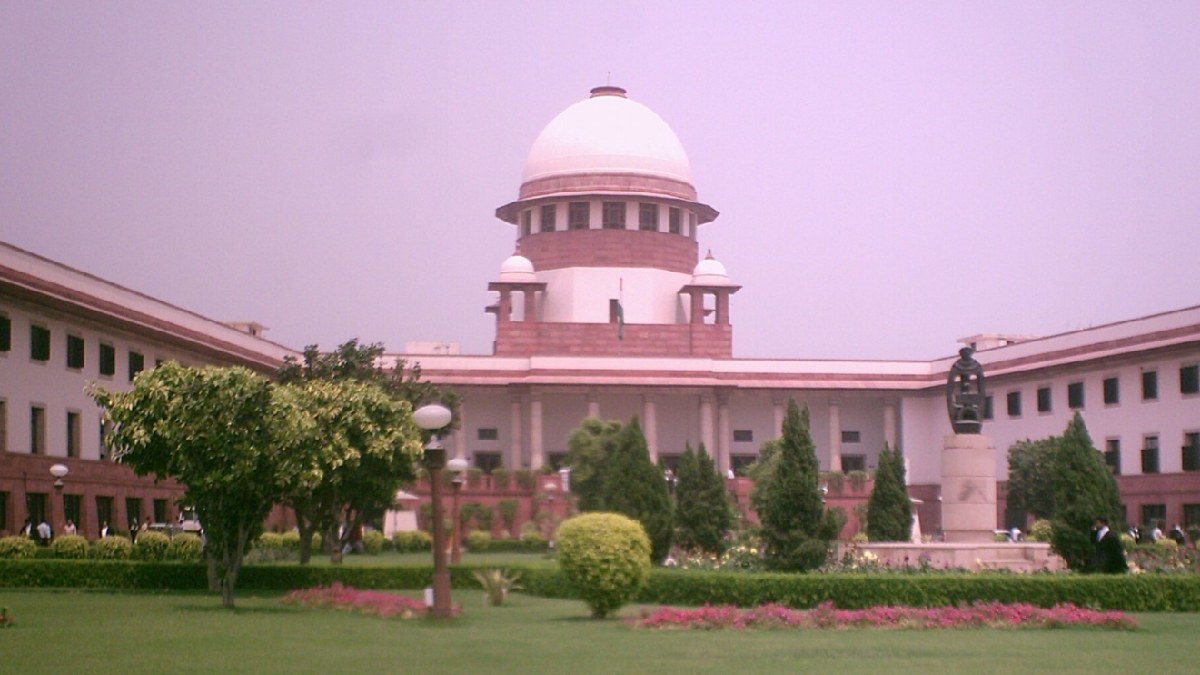
The Supreme Court on Tuesday declined to hear another challenge to amendments to the Scheduled Castes and Scheduled Tribes (Prevention of Atrocities) Act and said it had already found the constitutional validity of the amendments in its previous 2020 ruling.
The petition was filed by Brijbhushan Saini and the case was made by advocate Vishnu Shankar Jain. The petitioner challenged the absence of a mandatory preliminary inquiry before registration of an FIR and that no arrest without prior approval was made and that the right to hold an FIR is not in force. The argument was that the provisions could be abused and accused persons could be harassed.
The court’s bench, which includes Chief Justice Surya Kant, Justice Joymalya Bagchi and Justice V. Mohana, refused to reopen an issue that had already been heard by the Supreme Court. The judges cited the Supreme Court’s 2020 ruling in Prathvi Raj Chauhan v. Union of India which upheld the amendments to the SC/ST Act.
Arrest Rules Under Challenge
One of the main issues before the Supreme Court was whether to register FIR and make arrest under SC/ST Act. Vishnu Shankar Jain raised concerns about procedural safeguards when a man is arrested without an investigation and prior approval.
The petition also questioned the restrictions on anticipatory bail under Section 18 of the SC/ST Act. It bars giving anticipatory bail in cases of alleged offence under the legislation. The petitioner said the law must be kept in place so that it wouldn’t be used if the provisions of it were misused.
Another issue discussed in the hearing was compensation for complainants at a very early stage of the proceedings. Jain cited the information in Parliament and mentioned government expenditure of Rs 493 crore on compensation to complainants. Justice Joymalya Bagchi, in the submission also referred to the quality of the argument as "cruel."
Supreme Court's 2020 Ruling
The current proceedings are closely linked to the Supreme Court’s decision about safeguards under the SC/ST Act. In 2018, the court in Subhash Kashinath Mahajan v. State of Maharashtra had issued directions to prevent potential misuse of the law and their provisions of preliminary inquiry and approval before arrest.
The 2018 judgment caused a lot of debate on whether to protect people of Scheduled Castes and Scheduled Tribes from atrocities and also to provide procedural safeguards for accused persons. Parliament later revised the law through Section 18A of the SC/ST Act.
Section 18A states, among other things, that a preliminary inquiry is not required for registration of an FIR under the Act. It also provides that an investigating officer does not require prior approval for the arrest of a person accused of an offence under the legislation, subject to the statutory framework.
The amendments themselves were challenged before the Supreme Court. In 2020, a Constitution Bench in Prathvi Raj Chauhan v. Union of India upheld the constitutional validity of Section 18A and amendments introduced following the 2018 judgment.
Anticipatory Bail Provision
Despite maintaining the amendments, the 2020 Supreme Court ruling also addressed anticipatory bail. The court held that the statutory bar would not prevent courts from considering anticipatory bail in exceptional circumstances where a complaint, on its face, did not constitute an offence under the SC/ST Act.
This distinction is important because the law aims to provide strong protection to members of Scheduled Castes and Scheduled Tribes against atrocities and the judicial framework also recognises limited circumstances in which an accused may seek relief.
The new petition sought to revisit some aspects that had already been considered in the earlier constitutional challenge. By declining to entertain the new challenge and referring to the 2020 ruling, the Supreme Court has left the existing legal framework governing FIR registration, arrest and anticipatory bail under the amended SC/ST Act intact.
The development points to a continuing legal debate surrounding the SC/ST Act and the safeguards in place for it. The legislation was passed to prevent atrocities against members of Scheduled Castes and Scheduled Tribes and provides a specific legal framework for dealing with such offences. The Supreme Court’s earlier rulings have dealt with how those protections interact with constitutional and procedural safeguards.