The Supreme Court Wednesday refused to stay the Madhya Pradesh High Court's decision to declare the disputed Bhojshala-Kamal Maula complex in Dhar a temple. But it also suggested an interim arrangement for Muslim community members to offer Friday namaz in front of the monument in an open area and no prayers should be held inside the Bhojshala.
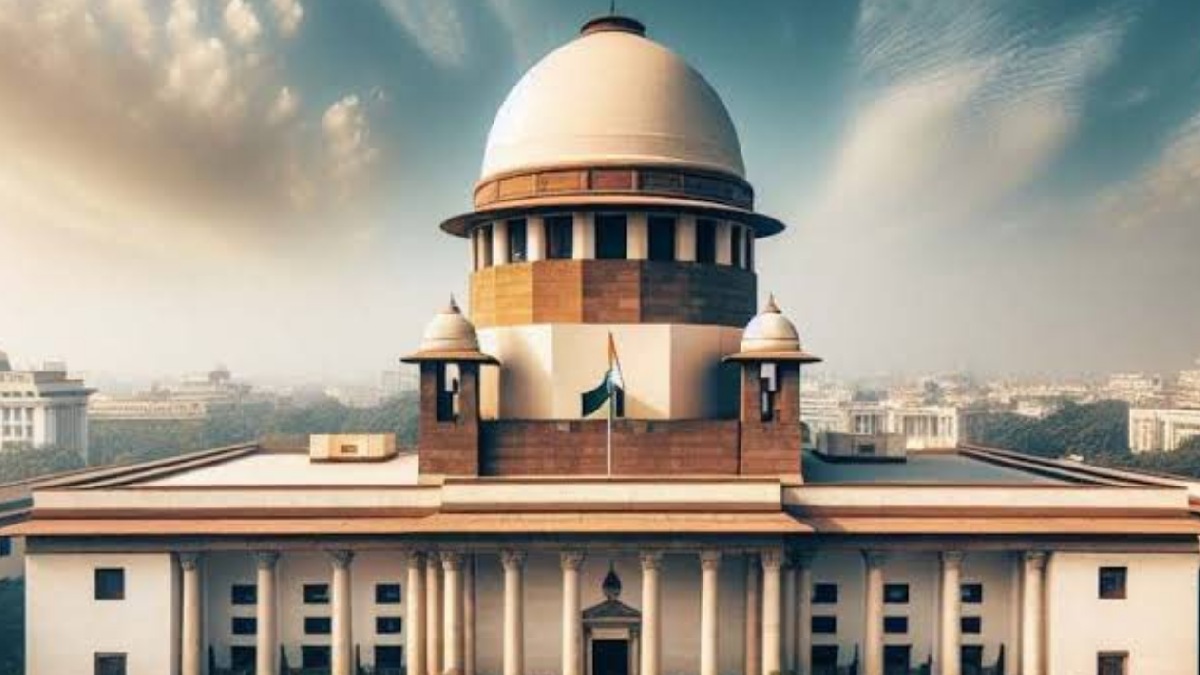
We hope that this interim order can maintain peace and the status quo until the Supreme Court has a more in-depth discussion of this issue later this month.
A Bench under Chief Justice of India (CJI) Surya Kant issued notice on the appeal filed by the Muslim side and sought responses from the Hindu petitioners, the Centre, the Madhya Pradesh government, the Dhar district magistrate and the Archaeological Survey of India (ASI).
The court also directed the ASI not to make any structural changes at the disputed site without getting prior permission from the Supreme Court.
## Interim Arrangement for Friday Prayers
The top court further stated in its interim directions that Friday namaz will not be allowed in the Bhojshala complex. Instead, it ordered an open area adjacent to the monument to be allocated for prayers every Friday between 1:00 pm and 3:00 pm.
The arrangement is to avoid the escalation as the court considers the legal issues arising from the Madhya Pradesh High Court's judgment.
## Background of the Dispute
The case is based on a May 15 decision of the Madhya Pradesh High Court which ruled that the 11th-century Bhojshala-Kamal Maula complex is a temple dedicated to Goddess Vagdevi (Saraswati) and had been a centre of Sanskrit learning for a long time.
The High Court also set aside a 2003 Archaeological Survey of India (ASI) arrangement under which Hindus were allowed to perform पूजा on Tuesdays and Muslims were allowed to offer Friday namaz inside the premises.
As a result, the Muslim community was no longer allowed to pray inside the protected monument. The High Court had instead ruled that the community could find alternative land in Dhar for the construction of a mosque.
The ruling was challenged in the Supreme Court by Qazi Moinuddin, caretaker of the Kamal Maula Mosque, and other petitioners. Meanwhile, Hindu parties filed caveats demanding that no order be passed without hearing them.
## CJI Calls for Patience
The Chief Justice Surya Kant gave oral observations during the hearing on the need for restraint and communal harmony.
CJI warned against issuing any order that would lead to law-and-order problems and said the court was prepared to hear the matter on a day-to-day basis if needed.
He also commented that some orders issued by the Archaeological Survey of India had made matters much more complicated and asked that all parties should just play it cool in this time of law and order.
The Chief Justice also described the matter as highly sensitive and said action or public statements that escalate tensions should be avoided.
He said the High Court also had observed that the state administration had problems in maintaining law and order, and so the Supreme Court should be thoughtful and not rushed.
## Next Hearing
The Supreme Court has listed the matter for hearing in the third week of July when it will consider the appeals against the Madhya Pradesh High Court's verdict.
The Bhojshala-Kamal Maula dispute remains one of the most sensitive religious and archaeological issues in Madhya Pradesh. Hindus consider the site the Bhojshala Temple dedicated to Goddess Saraswati, and Muslims say it is the Kamal Maula Mosque where Friday prayers have been held for centuries.
Until the Supreme Court makes a final decision, the interim arrangement of allowing namaz in the adjacent open space and prohibiting structural changes at the monument will remain in place.