The Supreme Court has come down strongly on the Greater Noida administration for issuing a notice to a student who allegedly participated in a recent protest led by Chief Justice of India (CJI) Surya Kant at Jantar Mantar. “How can an executive magistrate issue such a notice in light of the clear directive from the top court that no punishment should be taken against students who participated in such a protest?
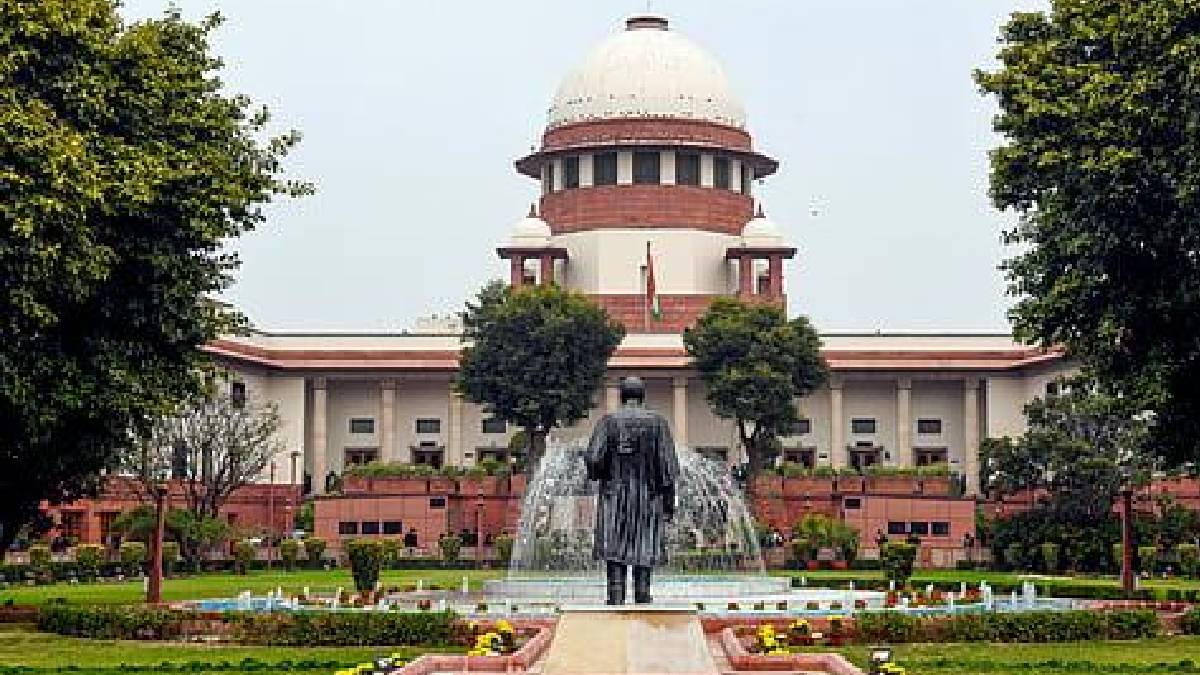
The issue was raised before a three-judge bench headed by CJI Surya Kant. The bench also consisted of Justices Joymalya Bagchi and V Mohana. Senior Advocate Biswajeet Bhattacharya brought the matter to the court’s attention during the hearing.
Supreme Court Questions Magistrate’s Action
According to Bhattacharya, the notice issued by the Greater Noida Executive Magistrate was subsequently revoked. But he said the move appeared to be against the Supreme Court's order on September 1.
The notice required the student to provide a personal bond of Rs 5 lakh for peace. The Supreme Court was surprised that such proceedings were initiated when the court had already passed directions protecting students from penal action.
CJI Surya Kant made it very clear that the court's earlier order was unambiguous and questioned the authority of the executive magistrate to issue the notice.
The Chief Justice indicated that an explanation would be sought from the magistrate as to the circumstances in which the notice was given.
‘No Question of Taking Action Against Youth’
At the hearing, the CJI told the senior advocate that there was no question of taking action against the youth and reiterated that the Supreme Court had already issued a clear order.
The court also asked Bhattacharya to put the relevant facts on record so that the circumstances of the notice could be examined.
The Supreme Court’s observations are clear about the need for the faithful execution of judicial orders by executive authority. The court’s demand for explanation from the magistrate is also clear: it has a goal to determine how the notice was issued, when the magistrate had already given its order.
Student Asked to Furnish Rs 5 Lakh Bond
And then there is Akshat Tripathi, a student of Gautam Buddha University (GBU) who allegedly participated in the CJP-controlled protest at Jantar Mantar.
After his alleged participation, the Greater Noida Executive Magistrate served him a notice reportedly requiring a personal bond of Rs 5 lakh as a measure for maintaining peace.
The notice was later withdrawn, but the matter was brought before the Supreme Court on the basis that the action was inconsistent with the court's September 1 order.
That has raised questions about how administrative authorities interpret and implement judicial directions, especially if those directions are specifically for students and peaceful participation in protests.
Supreme Court to Seek Explanation
The Supreme Court’s intervention will be even more critical of the Greater Noida administration’s actions in this matter. The court has called for an explanation from the executive magistrate as to why the notice was issued and under what authority.
The case also demonstrates limits on executive action when a matter has already been addressed through a specific Supreme Court order. The court’s words were that its direction on the treatment of students and the punishment should have been followed.
With the notice already revoked, it is no longer the issue of the Rs 5 lakh bond. But the Supreme Court’s examination of the circumstances behind the notice can have implications for administrative compliance with judicial orders as well.