The court has recommended a number of reforms to improve the recovery of unpaid traffic challans to bridge the gap in the recovery of traffic challans and even suggested linking outstanding traffic fines to electricity bills. The suggestion was raised during the Court’s discussions in the long-running road safety case S Rajaseekaran v. Union of India & Ors. as the court considered the problem of recovering large sums of outstanding e-challan fines in India. A Bench of Justices JB Pardiwala and KV Viswanathan heard the case.
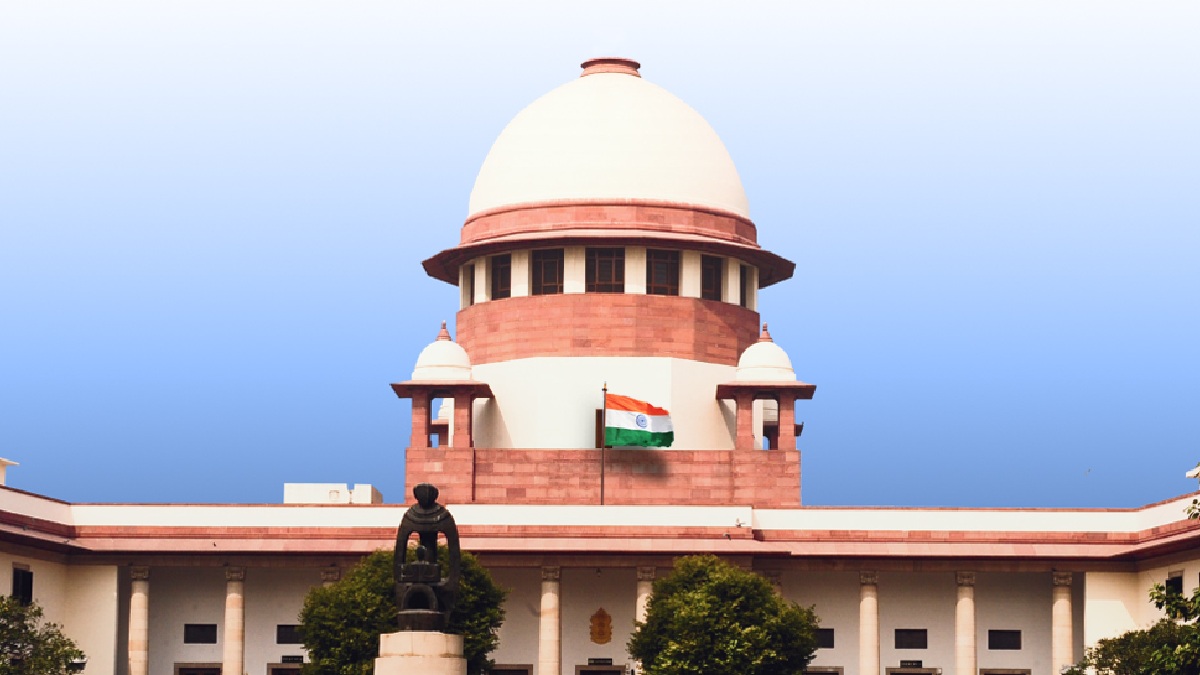
The Court emphasized that issuing electronic challans alone would not solve the problem if motorists still left fines unpaid. Enforcement agencies should concentrate not only on issuing e-challans but also ensure that the penalties imposed are actually recovered, Justice Pardiwala noted. With that in mind, the emphasis was on finding practical methods that could encourage defaulters to pay their outstanding dues.
Supreme Court Suggests Linking Traffic Fines With Electricity Dues
One of the Supreme Court’s suggestions was to add unpaid traffic challans to electricity dues. This was discussed during the hearing in order to create an additional mechanism through which outstanding traffic fines could be recovered.
The Court said authorities would need to figure out how such a system would work. The suggestion came to the attention of the authorities struggling to recover thousands and lakhs of e-challan penalties. It was offered as one possibility to ensure that unpaid fines do not remain pending indefinitely.
According to figures before the Court, States and Union Territories collectively have around Rs 45,000 crore to recover in e-challan fines while about Rs 25,000 crore has already been recovered. The numbers showed the scale of the outstanding amount and the need for more effective enforcement mechanisms.
Vehicle Services Could Be Restricted Over Unpaid Challans
The Supreme Court also discussed several measures directly related to vehicles whose owners have unpaid challans. These include preventing registration certificate renewals and preventing the issuance of duplicate registration certificates until outstanding fines are cleared.
The Court also discussed blocking changes in vehicle ownership details where unpaid challans remain pending. One other idea was to blacklist vehicles with outstanding fines on the Parivahan portal, which would make it difficult for owners to complete certain vehicle-related transactions until the dues are settled.
Some measures discussed were withholding fitness and Pollution Under Control, or PUC, certificates for vehicles with unpaid challans. The Court also considered restrictions on driving licences such as not renewing them and taking steps on licences that are already in force.
The emphasis throughout the hearing was on enforcement mechanisms that would work at the ground level rather than simply issuing directions that remain on paper.
Random Vehicle Checks Also Discussed
The Bench also suggested random checking of vehicles to find motorists who have failed to honour e-challans. If a vehicle is found to have an unpaid fine, authorities may take appropriate action under the applicable rules, with vehicle impounding also discussed during the hearing.
The Court's remarks reflected its concern that enforcement mechanisms need to translate into actual compliance. This is particularly true now that electronic traffic enforcement is more sophisticated and authorities can issue challans digitally for violations detected using cameras and other electronic systems.
The Supreme Court has also asked the amicus curiae, Senior Advocate Gaurav Agarwal, to prepare a chart showing the directions issued in the road safety proceedings, the deadlines given for their implementation, their current status and observations on implementation.
Case Is Part Of Long-Running Road Safety PIL
The case arises from a public interest lawsuit filed by orthopaedic surgeon S Rajaseekaran from Coimbatore in 2012. Many Supreme Court directions have been given for road safety, enforcement of the Motor Vehicles Act and measures to reduce accidents and improve post-accident care.
The Supreme Court's official records show that the Rajaseekaran matter has continued to be part of the Court’s long-running road safety proceedings. A 2025 order in the case describes the petition as a public interest matter concerning safer roads, driver and vehicle licensing, road-safety enforcement and treatment and compensation for accident victims.
The most recent hearing is therefore part of a much wider study of how road safety directions are implemented in States and Union Territories. The Court’s focus on unpaid e-challans adds an enforcement dimension to those proceedings.
What The Proposed Measures Could Mean For Vehicle Owners
If the Supreme Court eventually acts on the kind of measures discussed by the Supreme Court, motorists with unpaid challans could face consequences beyond the original monetary penalty. As with all such fines, those on the way forward, vehicle registration services, ownership transfers, fitness certification, PUC-related processes and driving licence renewals might be affected (or blocked) if the rules that are being framed and implemented by the concerned authorities are not met.
But the electricity-bill linkage that is mentioned by the Court is a suggestion that arises from the proceedings and it is not meant as an immediate nationwide rule. Any such mechanism would need to be implemented in an administrative and legal way.
Likewise, restrictions on vehicle services or licence-related action would have to be made within the provisions of the Motor Vehicles Act, Central Motor Vehicles Rules and other relevant regulations.
Supreme Court Seeks Ground-Level Implementation
A central theme of the proceedings has been the gap between directions issued by courts and their implementation by authorities. The Bench asked whether directions issued over several years had brought about the intended results on the ground.
The Court has therefore sought a detailed status chart from the amicus curiae to establish which directions have been implemented, which remain pending and what timelines were originally prescribed.
The latest discussion on unpaid e-challans is not only about penalties but enforcement. For motorists, the developments underscore that there should be checking pending e-challans and clearing legitimate outstanding fines while for the authorities, recovery systems are needed to work well across different States and Union Territories.
The Supreme Court's suggestions such as linking traffic fines to electricity dues remain part of the discussions. Any final solution would take some further action and be enforced by the authorities.