Karnataka's Nandini milk price is once again in the spotlight as the state government ponders a possible revision in milk prices. Milk producers and district cooperative milk unions are eager for higher procurement and selling prices as production and operating costs increase.
The decision is expected to be taken after discussions in the Karnataka Cabinet. Chief Minister D.K. Shivakumar has said the government will consider the matter in the Cabinet before deciding on the extent of the price revision.
For consumers, the main question to be answered is how much Nandini milk might cost if the government approves an increase.
How much Hike Are Milk Unions Seeking?
The demand has changed during discussions. Karnataka milk unions initially asked for an increase of around ₹8 to ₹10 per litre. A few days later, all 16 district milk cooperative unions proposed a ₹5-per-litre increase.
The unions have cited increased costs of cattle feed, veterinary services, transportation, and other inputs as a reason for seeking a revision. They have also pointed to financial pressure on cooperative milk unions and private dairies.
Chief Minister D.K. Shivakumar said on September 26 that milk unions have offered a ₹12-per-litre increase, with ₹2 of that amount for societies. He said the government would examine milk prices in other states before coming to a decision.
So ₹10 should not currently be treated as the confirmed increase. Different proposals have been discussed in the consultations.
What is the current Nandini milk price?
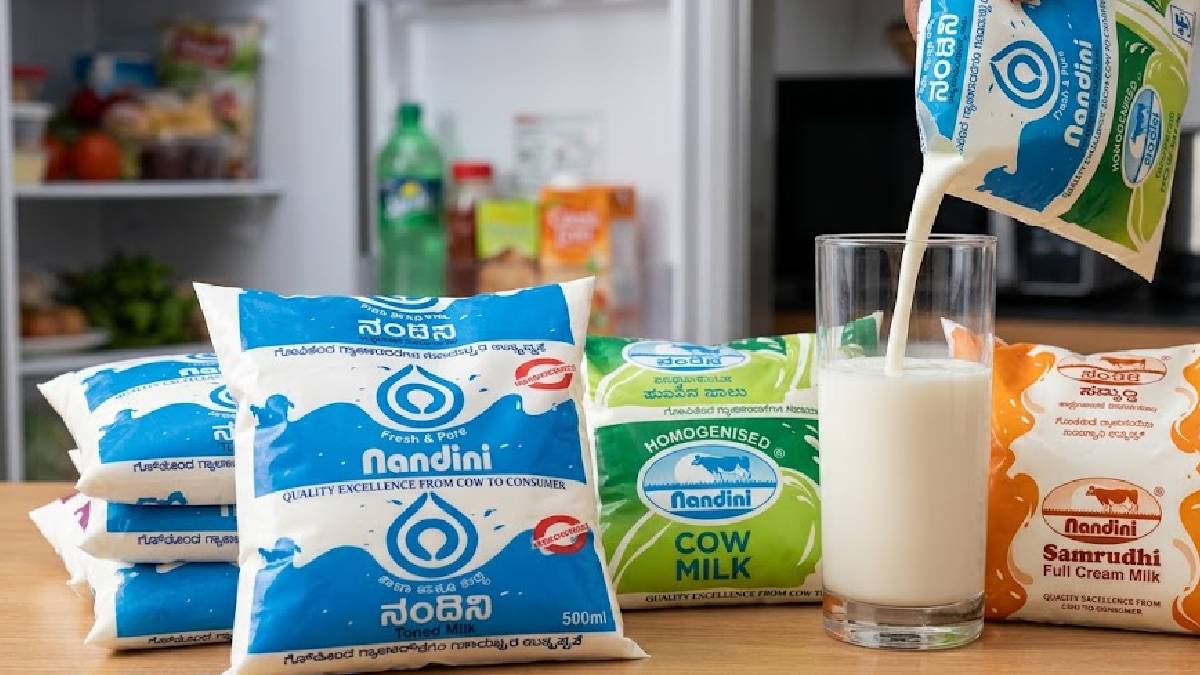
At present, a litre of blue-pack toned Nandini milk is priced at around ₹46. Other variants are priced differently.
Recent reports have put the prices at approximately:
| Nandini Milk Variant | Current Price Per Litre |
|---|---|
| Toned/Blue Pack | ₹46 |
| Special/Green Pack | ₹50 |
| Orange Pack | ₹52 |
If a ₹5 increase is approved, the toned milk price would move mathematically from ₹46 to ₹51 per litre. This is only an illustration based on the reported ₹5 proposal and not an officially announced new retail price.
The actual price will depend on the final government decision and the applicable revision for different Nandini variants.
Why is the government looking at a price increase?
Milk unions have said that the current pricing structure is no longer viable because of high production costs.
Cattle feed, animal care, veterinary treatment, transportation, and other dairy-related costs have increased over time. Cooperatives are also being challenged by private dairy companies that are reportedly offering farmers higher procurement prices.
In a recent report, Karnataka's milk producers receive around ₹35 per litre, with a ₹5 state subsidy, while some private dairies are procuring milk at much higher rates.
Milk unions have thus sought a change that would improve returns to dairy farmers and also keep cooperative institutions afloat.
What is the Government's Concern?
The government has two competing considerations.
On the one hand, dairy farmers and milk unions are hungry for better returns. On the other side is the impact that a retail price increase will have on millions of consumers.
A sharp increase in milk prices could also affect businesses that are dependent on milk, such as hotels, restaurants, bakeries, tea and coffee shops, and sweet manufacturers.
That’s why the government has said that the final decision will be made after considering the overall impact (that is why they will not just accept the highest demand made by the milk unions).
Will Curd and other Nandini products become more expensive?
A change in the price of raw or packaged milk does not automatically set the new price of every Nandini product.
Products such as curd, buttermilk, flavoured milk, sweets, and other dairy products have separate pricing structures. Any changes to those products would depend on the Karnataka Milk Federation and its respective authorities.
So consumers should wait for an official announcement before assuming that all Nandini products will become more expensive.
Cabinet Decision Remains Crucial
The proposed Nandini milk price revision is now under the microscope of both dairy farmers and consumers in Karnataka.
The government will need to weigh milk unions, procurement costs, the financial condition of cooperative societies, prices in neighbouring states, and the effect on consumers before finalising the revision.
For now, ₹5, ₹8-₹10, and ₹12 have all been included in various stages of the discussion, but none of these figures should be taken as the final retail hike until the government formally announces the revised prices.
When the Cabinet takes a decision and the Karnataka Milk Federation announces the revised rates, consumers will know exactly how much they will have to pay for Nandini milk.
Nandini milk is currently being considered for a price hike, but the final increase has not been officially announced yet. The Cabinet decision will determine whether the increase is ₹5, ₹10, or some other amount.