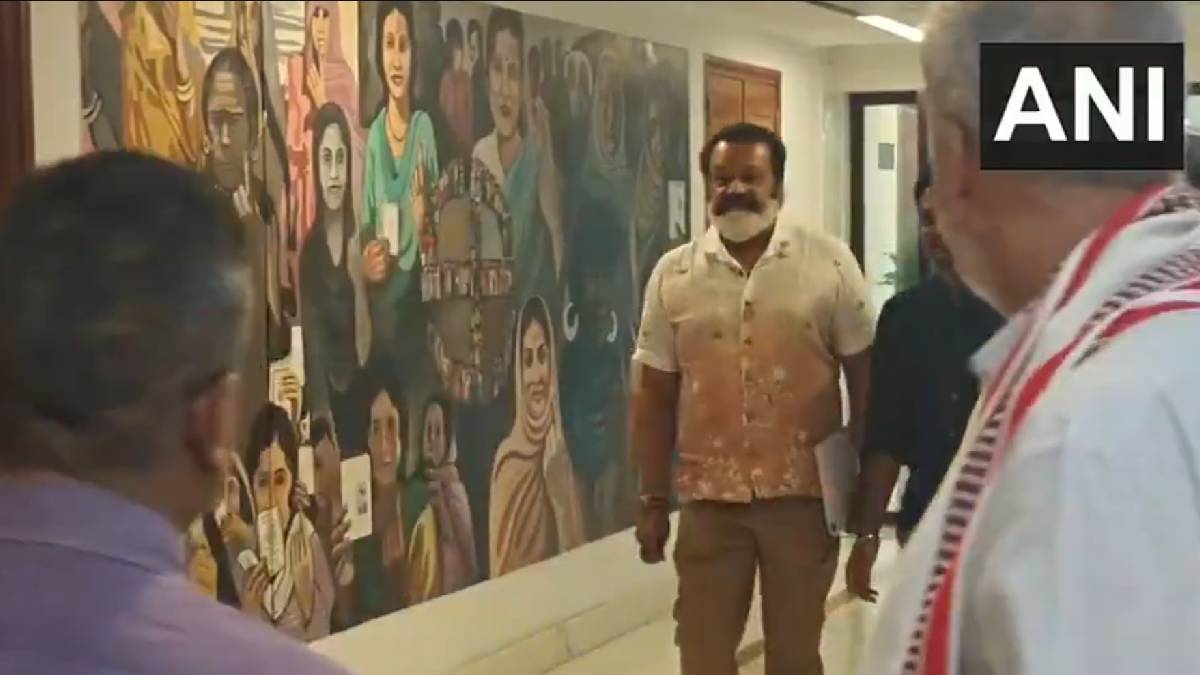
Union Minister of State Suresh Gopi arrived at the Parliament Annexe Building to attend a meeting held by Union Health Minister J.P. Nadda on the government’s mission to make India TB-free.
The meeting has brought together Members of Parliament from Karnataka and Kerala, and discussions on better strategies to eradicate tuberculosis in the country are expected.
Suresh Gopi’s participation comes as the Union government continues to put tuberculosis elimination among its major public health priorities. India has been working on an intensified strategy to detect TB cases early, ensure patients complete treatment and strengthen community-level awareness and screening.
The meeting with MPs is important because elected representatives can play an important role in communicating public-health programmes at the grassroots level. Karnataka and Kerala have unique healthcare systems and demographic profiles, making state-specific engagement key to the successful implementation of national TB-control initiatives.
#WATCH | Delhi: Union MoS Suressh Gopi arrived at a meeting called by Union Health Minister JP Nadda in Parliament Annexe Building on TB Free Mission in the country. Karnataka and Kerala MPs have been invited to the meeting. pic.twitter.com/WNLF2NXSN4
— ANI (@ANI) August 11, 2026
Union Health Minister J.P. Nadda is expected to discuss the progress of the TB-Free India campaign and seek stronger coordination between the Centre, state governments and parliamentarians.
Tuberculosis remains a major public-health problem in India despite the huge progress made in diagnosis and treatment. It can affect the lungs as well as other parts of the body and spread through the air when infected individuals cough, sneeze or speak.
Early diagnosis and ongoing treatment are critical to controlling transmission. Government programs have since become more involved in active case finding, screening vulnerable populations and making sure that patients have medication and follow-up care.
The involvement of MPs might help to increase the extent to which awareness is promoted in constituencies and encourage people with symptoms to seek testing at government health facilities.
The meeting also underscores the Centre’s focus on political and administrative coordination in the fight against TB. Parliamentarians can also help to bridge the gap between government programmes and local communities, particularly where awareness of symptoms, testing and treatment is low.
Karnataka and Kerala have a large public-health infrastructure and large networks of healthcare institutions. Engagement with the MPs from both states could help address problems and accelerate the implementation of national health initiatives.
The Centre has been working within the framework of a multi-pronged approach to TB elimination: with increased diagnostic capacity, screening and treatment support. Nutrition and social support are also considered vitally important aspects of TB care, as undernutrition can lead to increased risk of TB infection and complicated recovery.
Community participation is another part of the TB-Free India mission. Government campaigns are more often focusing on overcoming the stigma associated with tuberculosis and encouraging people to come forward to seek diagnosis and treatment.
At the Parliament meeting, we can discuss how these efforts can be strengthened at the local level.
For MPs, the discussions could also offer them a way to raise constituency-specific concerns about access to diagnostic services, availability of medicines, awareness programs and support for vulnerable populations.
Suresh Gopi also contributes to the participation of Union ministers and parliamentarians in the government's health agenda.
The Centre's aim of eliminating TB requires the cooperation of national and state governments, health care providers, local administrations, community organisations and citizens.
Although India has developed its TB detection and treatment network, more work is needed to identify cases early and to provide uninterrupted treatment to patients.
The meeting between J.P. Nadda and the parliamentarians from Karnataka and Kerala will therefore focus on translating the national TB-free aim into more robust implementation at the state and constituency level.
At the same time, our discussions also underscore the government’s ambition to involve elected representatives more closely in major public-health programmes.
In this context, the Centre is seeking more political and grassroots involvement as India moves toward a TB-free country, and Karnataka and Kerala MPs have been invited to the meeting.