Defence Secretary Rajesh Kumar Singh has highlighted how modern warfare is changing, and long-range weapons, drones and air-defence systems are expected to be playing a more and more important role in the early stages of future conflicts.
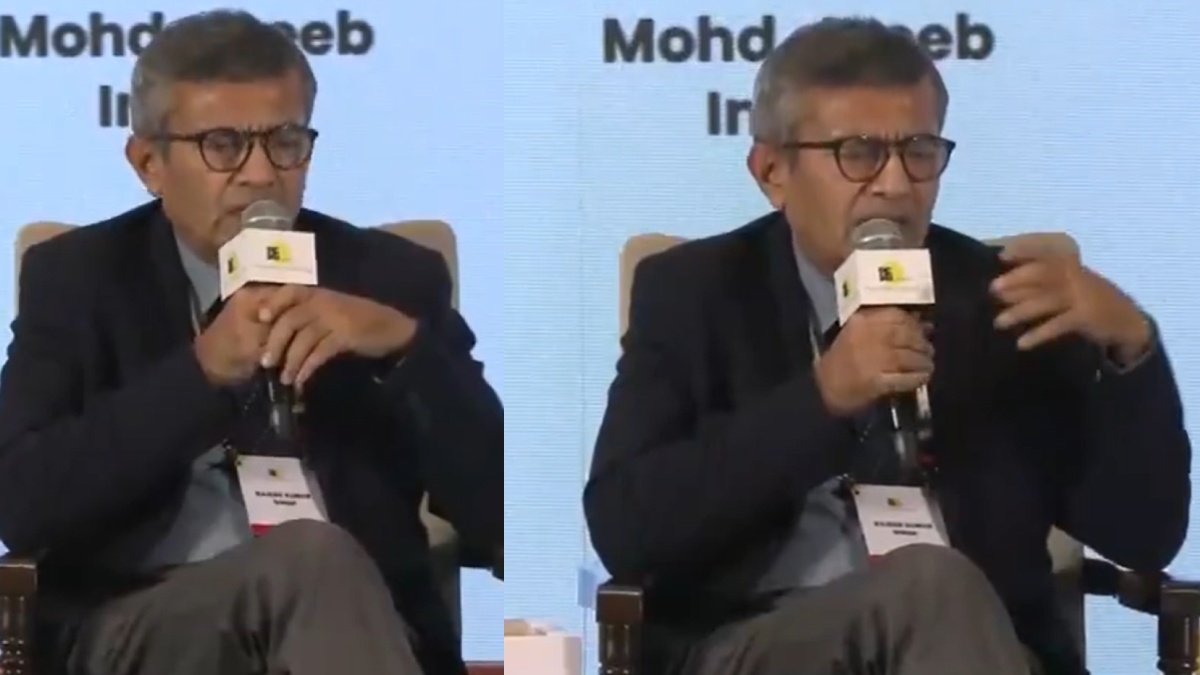
In New Delhi during the 13th annual forum of the Public Affairs Forum of India (PAFI), Singh discussed the changing battlefield landscape and the significance of traditional military platforms, such as infantry and tanks for old-school fighting methods, which are still needed, Singh said.
The PAFI Annual Forum took place on September 24 and 25, 2026. Senior government officials, policymakers, industry representatives and other experts participated in the two-day forum to discuss key national and global issues.
Long-Range weapons might dominate the first battle.
Such a war in the first phase of a future struggle would likely involve more long-range and stand-off weapons rather than infantry or armoured forces immediately, Singh said.
Such weapons could range from expensive missiles to relatively low-cost drones, he explained. With drones and such increasing use by the military today, what is the role of unmanned systems?
The Defence Secretary also stressed the importance of air defence as countries are faced with a wider variety of aerial threats.
India’s Sudarshan Chakra Air Defence Mission
Singh referred to India's planned Sudarshan Chakra air-defence initiative, which he described as a nationwide shield.
The mission was announced by Prime Minister Narendra Modi as a long-term initiative to strengthen India's ability to protect important infrastructure and public areas against aerial and other threats. Modern technologies and indigenous defence capabilities will be involved, the government has said.
Singh compared India's planned system with the United States' Golden Dome concept, while noting that India's initiative is known as Sudarshan Chakra.
Work on the mission had already started. In November 2025, Singh said groundwork had started on the multi-layered air-defence programme, including efforts involving counter-unmanned aircraft systems.
Are tanks about to be obsolete?
One of the key points in Singh's remarks concerned the future of tanks.
He said tanks should not be considered obsolete even though drones and other precision weapons are now a threat.
India is studying how to make tanks more resistant to drone attacks, he said. He mentioned a proposal approved the previous day for the procurement of tanks with counter-UAS capabilities.
Counter-UAS systems are designed to detect, track, and neutralise hostile unmanned aircraft. Such systems can potentially provide additional protection to armoured vehicles operating in environments where drones are widely used.
Singh also said Indian technology and defence industry capabilities could support the integration or retrofitting of such systems onto tanks.
#WATCH | Delhi: At the 13th Annual Forum 2026, Defence Secretary Rajesh Singh says, "There's no doubt that the number of active conflicts around the world, according to the World Bank's development report, is the highest since World War II, and these conflicts are teaching us a… pic.twitter.com/0Lxys9JziE
— ANI (@ANI) September 25, 2026
Drones Changing the Battlefield
The increasing use of drones is a growing problem for militaries worldwide. Small unmanned aircraft can provide surveillance, targeting and strike capabilities at considerably lower costs than some traditional weapons.
India has already been developing integrated air-defence and counter-drone capabilities. Defence officials have said that counter-UAS grids and integrated air-defence systems are being developed as part of the country’s wider air-defence efforts.
Global conflicts and changing warfare.
Singh also pointed out the increasing number of conflicts throughout the world and said the wars are teaching us about the changing nature of warfare.
The World Bank has reported that the number of interstate and intrastate conflicts reached its highest level since World War II. Recent international assessments have continued to show historically high levels of conflict.
His comments underline how more and more modern militaries are adopting drones, precision weapons, integrated air defence and other emerging technologies yet they remain dependent on conventional platforms such as tanks.