Tamil Nadu’s Legislative Assembly on Friday passed a resolution to the Union government to ensure fair tax devolution to the state, calling for the central government to ensure the distribution of central tax revenues is based on fiscal federalism and cooperative federalism.
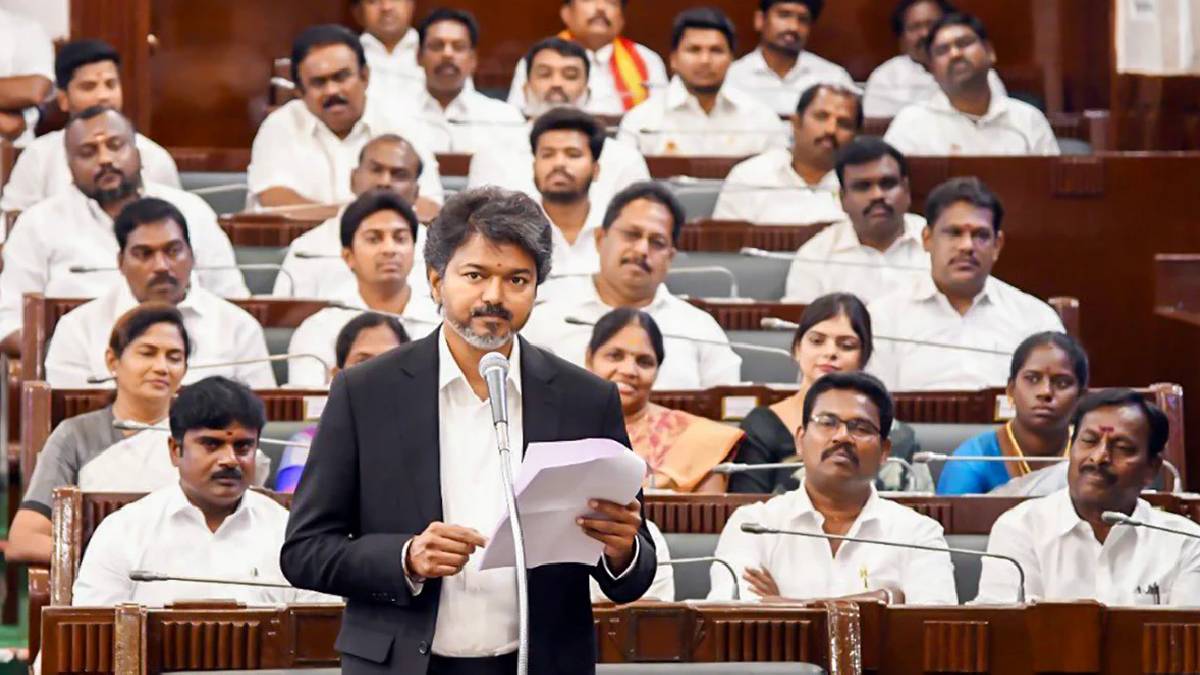
The resolution is consistent with Tamil Nadu’s long-standing demand for a more equitable share of central tax revenues, the state asserting that financially prudent and economically stronger states should not be put at a disadvantage under the existing devolution formula.
Demand for Equitable Distribution
The Assembly expressed its position by calling on the Centre to revamp tax devolution in the country so that states that contribute to the national economy will also have a fair and just share of the revenue. It would balance equity with fiscal discipline and economic performance, the state government argued.
Tamil Nadu has always justified that it contributes significantly to the country’s GDP, industrial output, exports and tax collections and therefore deserves an allocation that adequately reflects its contribution while respecting the constitutional spirit of federalism.
Fiscal and Cooperative Federalism
The resolution emphasized that India’s federal structure works only when the Union and the states are working in partnership. Fiscal federalism, an important principle in the Constitution, is to make sure that states have enough money to be able to exercise their responsibilities in education, healthcare, infrastructure, welfare and public services.
The Assembly said that predictable and fair financial transfers from the Centre are important for states to plan and implement long-term development programmes without resource constraints.
Long-Standing Concern
Tamil Nadu has also expressed concern about the criteria adopted by successive Finance Commissions for the distribution of central taxes among states. One of the major issues raised by the state has been the increased weightage given to population figures from later Census years, which it argues disadvantages states that successfully implemented population control measures.
Successive governments in Tamil Nadu, across political lines, have maintained that states with better governance, fiscal responsibility, and economic performance should not be given proportionately lower financial allocations.
Wider Debate on Centre-State Financial Relations
And the resolution is only part of the larger national issue of Centre-State finance relations. Some states have frequently raised questions about the balance between the Centre's fiscal powers and states’ autonomy.
The supporters of fiscal decentralisation argue that by giving states more financial resources, they can better govern and develop regionally. Tax devolution and grants are also given by the Union Government according to the recommendation of the Finance Commission, which, by definition, is a constitutional body that considers different objectives in making its recommendations.
Political and Economic Significance
The resolution will also aid Tamil Nadu in the ongoing debate on fiscal federalism and Finance Commission recommendations for the future. It shows the state will continue to push for changes to the tax-sharing system to ensure that there is fairness, transparency, and equality in the distribution of national resources, not just for the state but for the whole country.
As debates over fiscal federalism continue, tax devolution will be a key issue in Centre-State relations, as states will probably remain central to Centre-State relations, as they seek more financial autonomy and keep the nation’s development priorities in mind.