The Tamil Nadu government has put a three-month ban on the transportation of construction materials to Karnataka, Kerala, and Andhra Pradesh due to shortages in the state and the requirement for adequate supplies for ongoing infrastructure and housing projects.
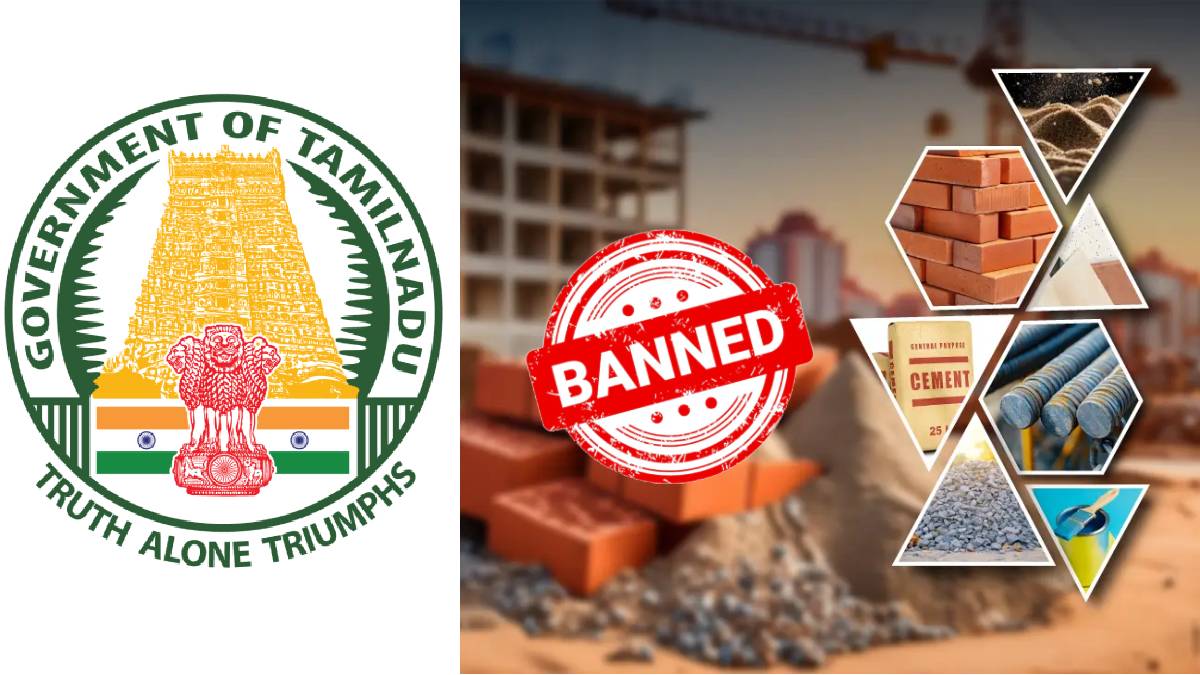
The decision is expected to have a significant impact on the construction industry in southern India, as other states, especially those dependent on Tamil Nadu for construction materials like manufactured sand (M-sand), blue metal, gravel, and other aggregates.
Decision Aimed at Addressing Local Shortages
It is a temporary restriction, the state government said, to address shortages in the supply of construction materials in Tamil Nadu. The domestic demand must be maximized to carry out government infrastructure construction activities, affordable housing schemes, and private construction activities as well, it added.
So far, officials said that the policy is temporary and will remain in place for three months, and the government will assess the supply situation in the meantime and decide whether to extend, modify, or withdraw the restrictions.
Impact on Neighboring States
The ban will affect construction activity in Karnataka, Kerala, and Andhra Pradesh, where builders and infrastructure developers usually source materials from Tamil Nadu due to its well-established quarrying and manufacturing network.
Industry experts think that it would lead to:
Higher prices for construction materials due to reduced supply. Slowdown in ongoing residential, commercial, and infrastructure projects. More sourcing from other suppliers in other states. Higher transportation costs as builders seek replacement supplies.
Developers in neighboring states may have to lean on locally available materials or imports from other parts of the world until the restrictions are lifted.
Relief for Tamil Nadu Projects
The government expects the decision to stabilize the availability of construction materials and reduce supply bottlenecks that affect several ongoing projects in Tamil Nadu will help to bring some of the construction projects forward.
The state is currently seeing huge investments in roads, industrial corridors, urban development, public infrastructure, and housing. A constant supply of building materials is important if project timelines are to be maintained.
Officials believe improved local availability may help to moderate price fluctuations for contractors and home builders in the state.
Industry Reaction
Construction companies will be monitoring the economic impact of the temporary ban closely. Although many stakeholders feel the government ought to address domestic needs, suppliers and transporters in interstate trade will probably suffer from reduced business during the restriction period.
As shortages become acute, builders' associations in other neighboring states may talk to the Tamil Nadu government to find exemptions for projects underway that would have to be completed in the present period to meet the need.
Economists say that such restrictions on trade in essential construction materials can temporarily disrupt regional supply chains, and coordination between states is essential to minimize the negative economic impact.
Looking Ahead
The Tamil Nadu government has maintained that the restriction is a temporary measure for short-term shortages, not a long-term policy change. The market conditions, production levels, and domestic demand will be assessed over the coming weeks, and authorities will make a decision.
With South India’s construction sector growing rapidly, a constant supply of basic building materials is a priority for governments, developers, and infrastructure agencies. In the months to come, how effective the temporary ban will be in meeting the needs of neighboring states that depend on Tamil Nadu’s construction material supply will be determined.